

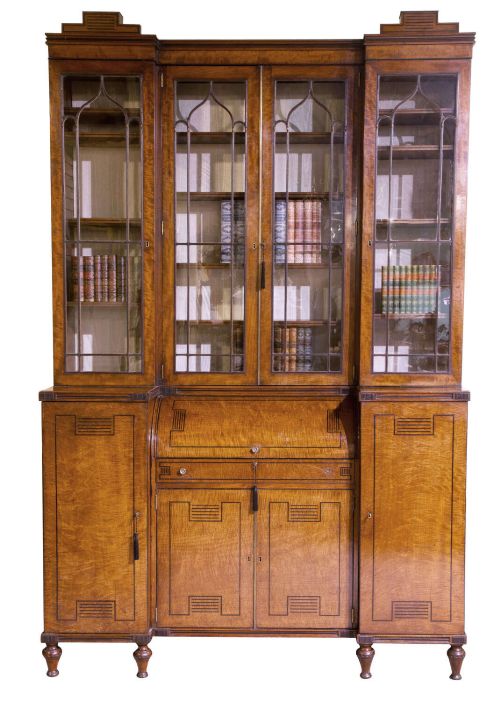
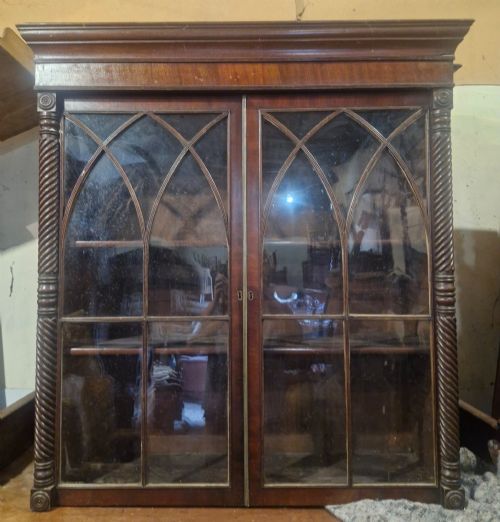
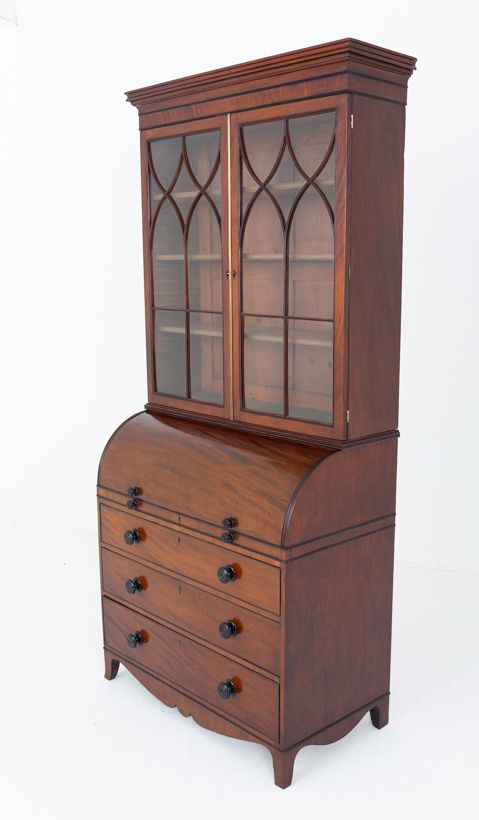
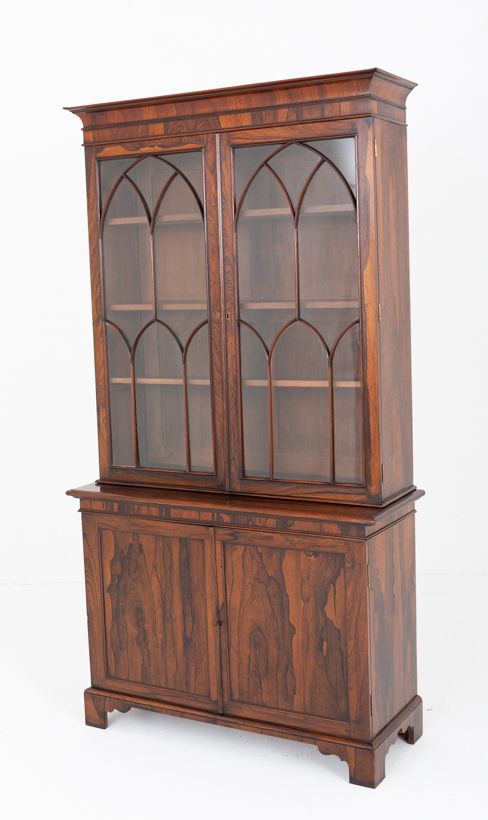



Regency Gothic Cabinet
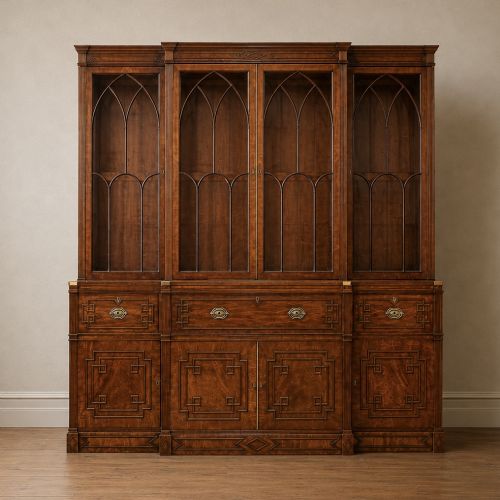
A regency gothic cabinet brings together classical proportion and pointed archwork, offering serious storage in richly grained timber.
Regency Gothic Cabinet
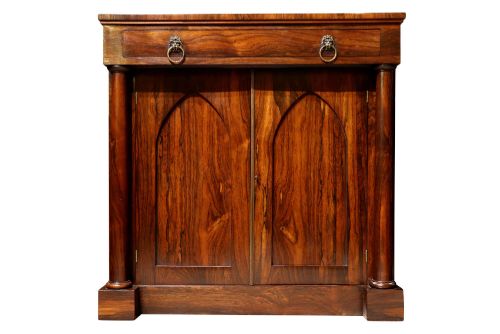
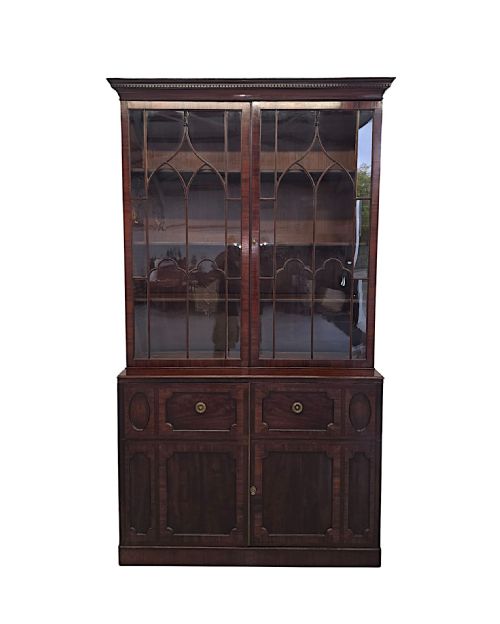
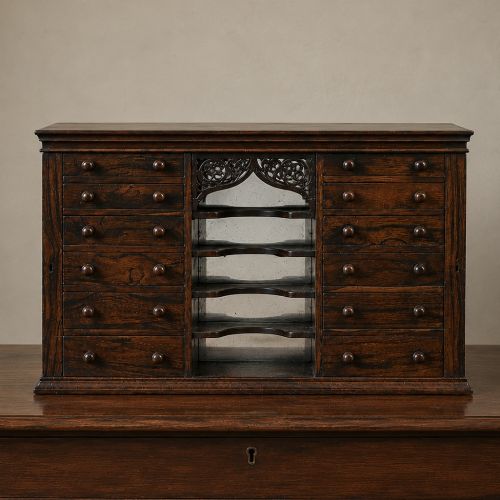
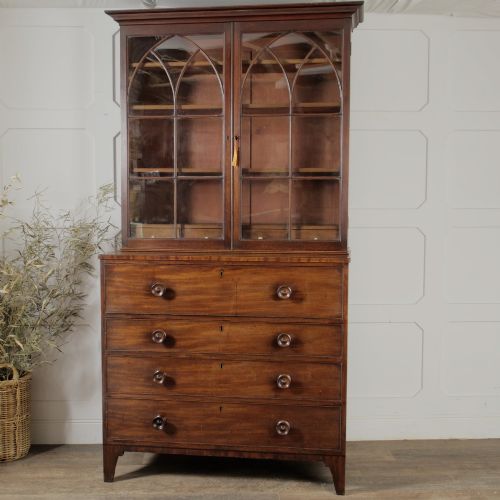
A regency gothic cabinet is an architectural storage piece, often taking the form of a bookcase, chiffonier, or glazed display unit. These pieces combine the symmetry of the nineteenth century with medievalising motifs such as arched doors and crenellated cornices.
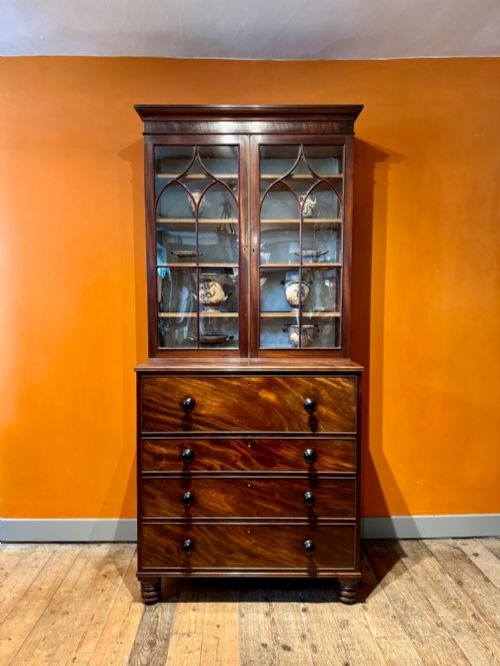
The versions most commonly met on this page date from the nineteenth century, spanning periods from George IV and William IV through to the broader Victorian era. They utilise rich timbers like mahogany and rosewood, frequently fitted with glass doors or brass mounts.
How they were made
Cabinet makers built these pieces using solid timbers alongside figured veneers, applying flame mahogany and rosewood to large flat surfaces to create striking grain patterns. Brass and mirror glass were integrated into hardware and backing panels for functional elegance.
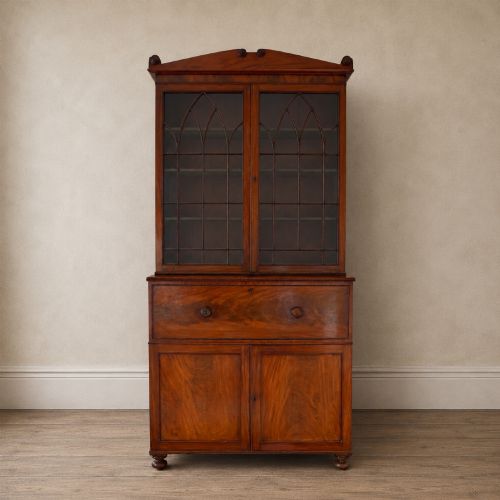
Joinery techniques focused on housing glazed doors and constructing sturdy cabinet bases, sometimes incorporating secretaire drawers with fitted writing interiors. Gothic panelled doors and arched top sections required precise carpentry to maintain structural integrity.
Regency Gothic Cabinet Retail Price Guide 2026
Typical asking prices for regency gothic cabinet among the pieces listed under this phrase on Sellingantiques today, from the lower quarter to the upper quarter. They describe what is for sale here now, not the wider market.
One exceptional piece hides a secretaire drawer right inside a tall library bookcase.
What varies in quality
The selection of timber dictates much of the visual weight, with well-figured flame mahogany and solid rosewood marking out the superior examples from plain utility pieces. Depth of colour and the preservation of original surface patination separate untouched specimens from later restorations.
Architectural ambition also defines the tier of a piece, distinguishing simple glazed cupboards from grand breakfront library bookcases or cabinets with intricate Gothic panelling and crenellations. The crispness of carved details on arched doors reflects the original maker's skill.
James Winter & Sons·Gillows
The Regency Gothic Cabinet Glossary
- Secretaire bookcase
- A tall storage unit featuring a pull-down writing drawer that conceals small pigeonholes and internal compartments. This fitted drawer sits above lower cupboard doors or shelving.
- Chiffonier
- A low sideboard or cabinet developed in the nineteenth century, often fitted with enclosed cupboards below and sometimes a small shelf superstructure above. They frequently appear in rosewood with panelled doors.
- Flame mahogany
- A veneer cut from the fork of a mahogany tree where the branch joins the trunk, producing a distinctive rippled, flame-like pattern. It was highly prized by nineteenth-century cabinet makers.
- Crenellated cornice
- A decorative top moulding carved or shaped to resemble the battlements of a medieval castle. It is a signature motif of the Gothic Revival style.
Regency Gothic Cabinet: Frequently Asked Questions
How do I identify the period?
You can identify the period by looking at the timber selection, such as flame mahogany or rosewood, combined with specific revival styles like Gothic panelling.
Many examples date from the Regency, George IV, and William IV eras of the nineteenth century.
Where were they used?
These cabinets were designed for libraries, grand country houses, and principal reception rooms to store books and display collections.
Their glazed upper sections and enclosed lower cupboards served both decorative and practical functions.
How do I care for rosewood and mahogany?
Protect these nineteenth-century timbers by keeping them away from direct sunlight and sudden changes in room temperature.
Maintain the polished surface with occasional gentle dusting using a dry cloth without harsh chemical polishes.