
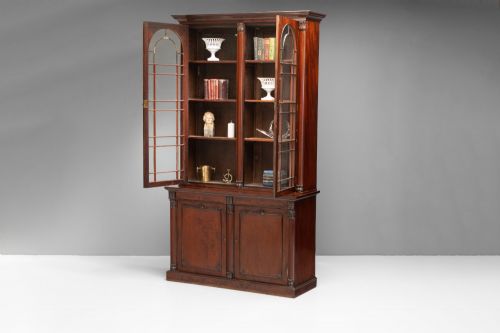


Regency Glazed Library Bookcase
A regency glazed library bookcase brings architectural proportion and figured timber to a room, offering adjustable display behind glass.
Regency Glazed Library Bookcase
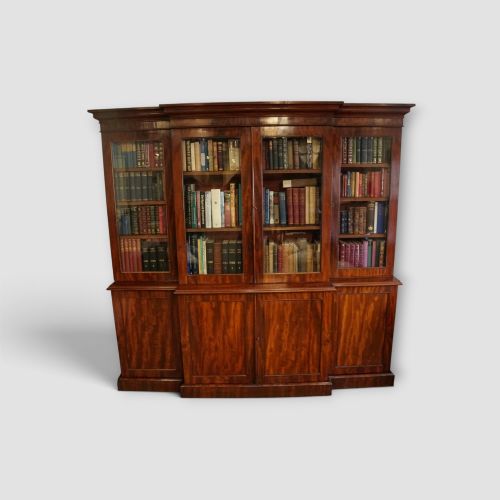
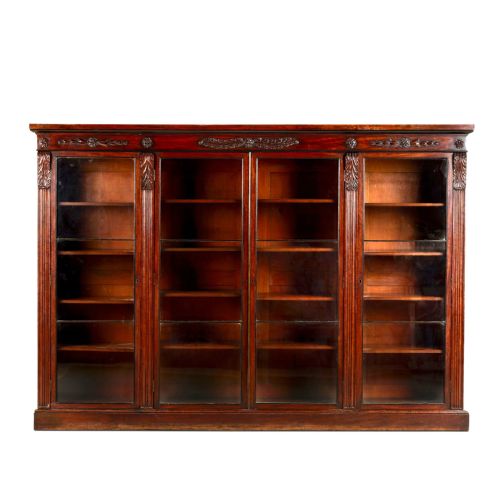
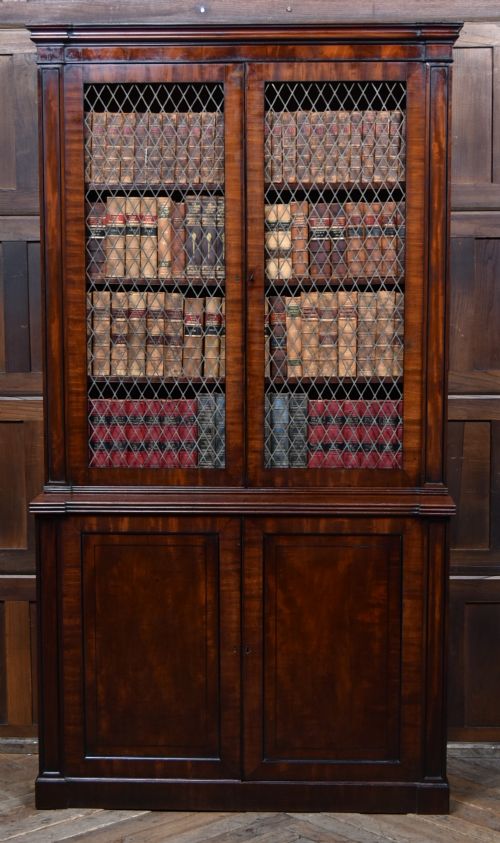
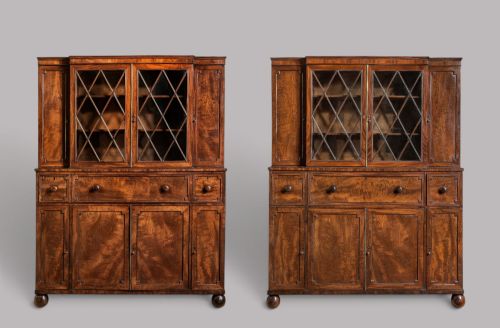
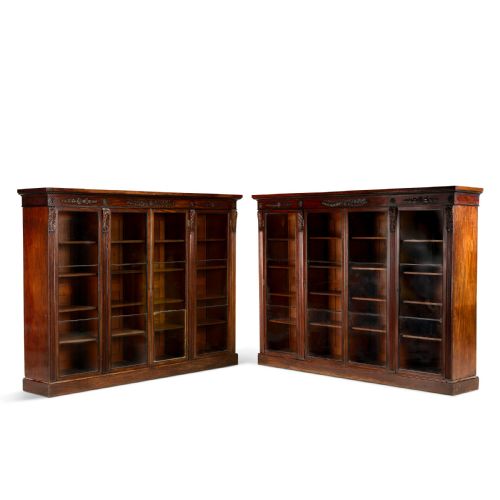
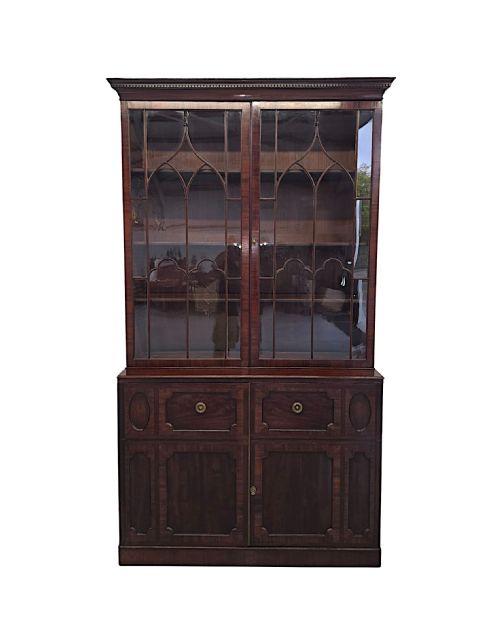
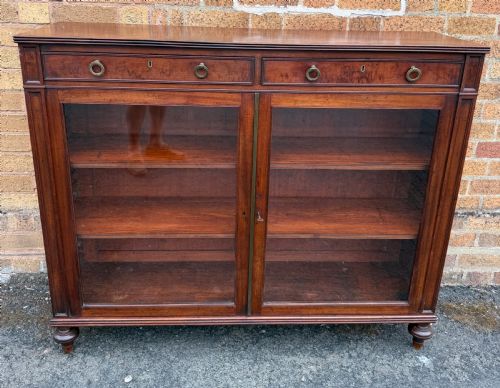
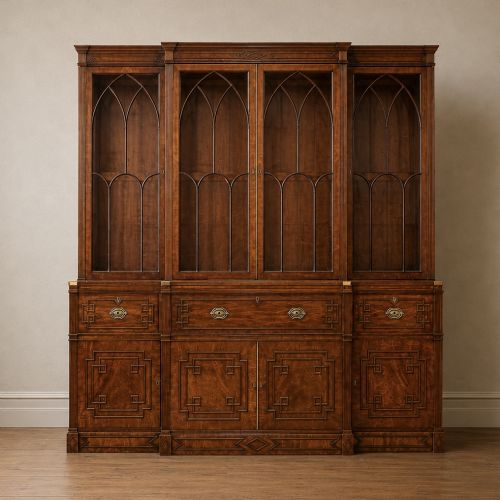
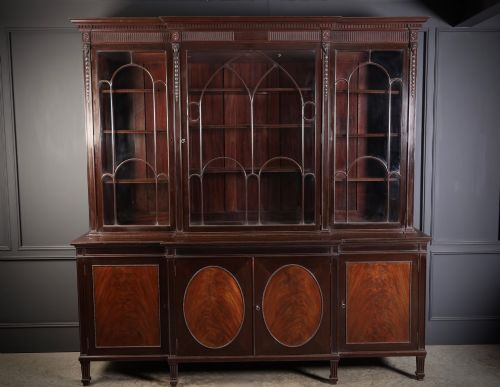
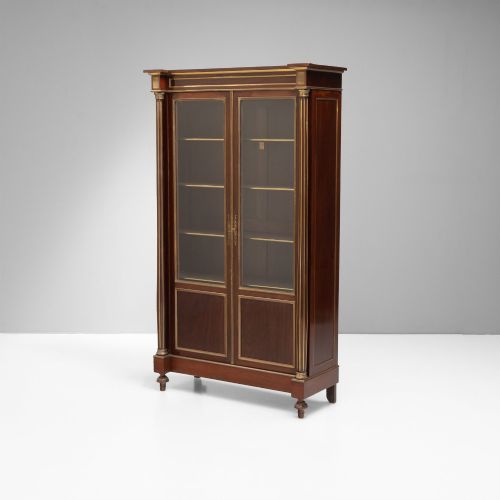
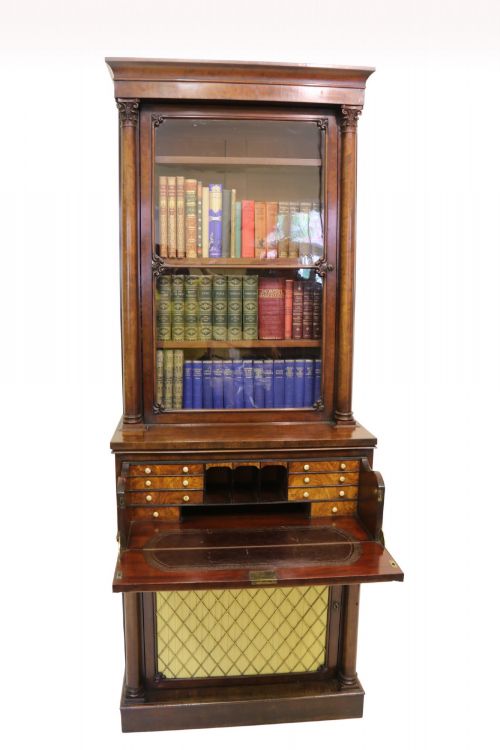
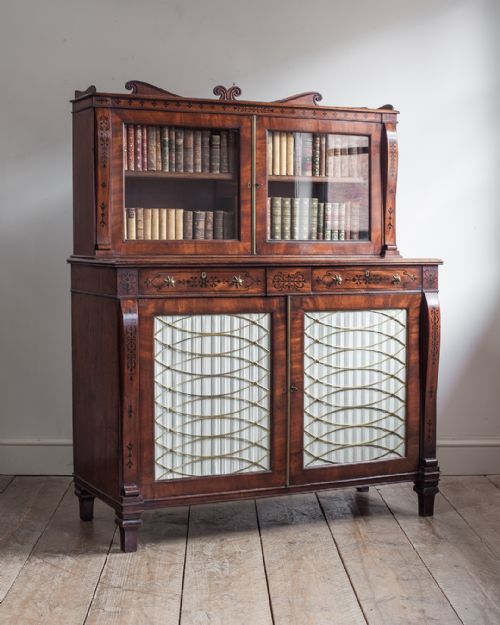
A regency glazed library bookcase is a substantial timber cabinet designed to house volumes behind glazed doors, appearing most frequently from the nineteenth century in forms such as breakfronts, secretaires, and two-door cupboards.
The pieces on this page span the Georgian, Regency, George IV, and Victorian periods, reflecting the classical proportions and architectural cornices favoured by cabinet makers of those eras.
Makers and workshops constructed these large items in sections, combining upper glazed display areas with lower enclosed cupboards or drawers to serve domestic libraries.
How they were made
Joiners relied on solid timber and veneers, frequently selecting figured mahogany, flame mahogany, walnut, and rosewood to cover large cupboard doors and breakfront facades.
Glazing bars divided glass panes into geometric patterns, while brass inlay, brass grilles, and carved mouldings added detail to cornices and pilasters.
Listings feature mahogany, flame mahogany, walnut, and rosewood alongside glass, brass, leather, and fabric.
What varies in quality
The choice of timber grain dictates visual impact, with matched flame mahogany and figured rosewood marking out pieces intended for principal rooms.
Proportion and cabinet-making restraint separate standard workshop output from exhibition pieces attributed to prominent makers such as Gillows.
Gillows·Marsh & Tatham·James Winter & Sons
The Regency Glazed Library Bookcase Glossary
- Breakfront
- A cabinet design where the central section projects forward from the flanking wings. This architectural arrangement creates depth and shadow across large bookcases.
- Secretaire
- A desk component fitted with a drop-front writing drawer containing pigeonholes and small drawers. It integrates a writing surface into the upper or middle section of a bookcase.
- Astragal
- A moulded strip of wood or metal used to hold panes of glass within a sash frame. These bars form intersecting grid patterns across the glazed doors.
- Cornice
- The ornamental horizontal moulding that crowns the top of a bookcase. Regency versions often draw upon classical architectural orders.
- Flame mahogany
- Timber cut from the fork of the mahogany tree where branches meet the trunk, producing a rippling, flame-like grain pattern. Cabinet makers reserved this veneer for principal doors and drawer fronts.
Regency Glazed Library Bookcase: Frequently Asked Questions
How do I identify a true period piece?
Examine the construction methods inside the carcase, including drawer dovetails and timber shrinkage. Period pieces from the nineteenth century show hand-cut joinery and aged patina rather than modern machine finishing.
Check the glass panes for slight bubbles and uneven thickness, which indicate early cylinder or crown glass production methods used before mass manufacturing.
Can shelves be adjusted easily?
Many nineteenth-century examples feature wooden rack-and-pinion systems or traditional rows of support slots inside the cabinet sides. These allow the shelves to be moved to accommodate books of different heights.
Original adjustable mechanisms operate with timber pegs or brass studs that fit securely into vertical pilaster grooves.
How should I care for the timber?
Keep large timber cabinets away from direct sunlight and sudden temperature shifts caused by radiators or air conditioning. Maintaining stable indoor humidity prevents the veneers from lifting and the solid mahogany or rosewood from splitting.
Apply traditional beeswax occasionally to nourish the polished surface and buff gently with a soft cloth to maintain the natural lustre of the grain.
What rooms suit a breakfront bookcase?
These grand cabinets require generous wall space and sufficient ceiling height to accommodate their architectural cornices and breakfront proportions. Libraries, studies, and principal reception rooms provide appropriate settings for their scale.
Ensure floor levels are even before positioning a heavy multi-section bookcase to prevent doors from binding in their frames.