
Large Mahogany Bookcase Cabinet
When you search for a large mahogany bookcase cabinet, you are looking at substantial pieces built to house serious libraries.
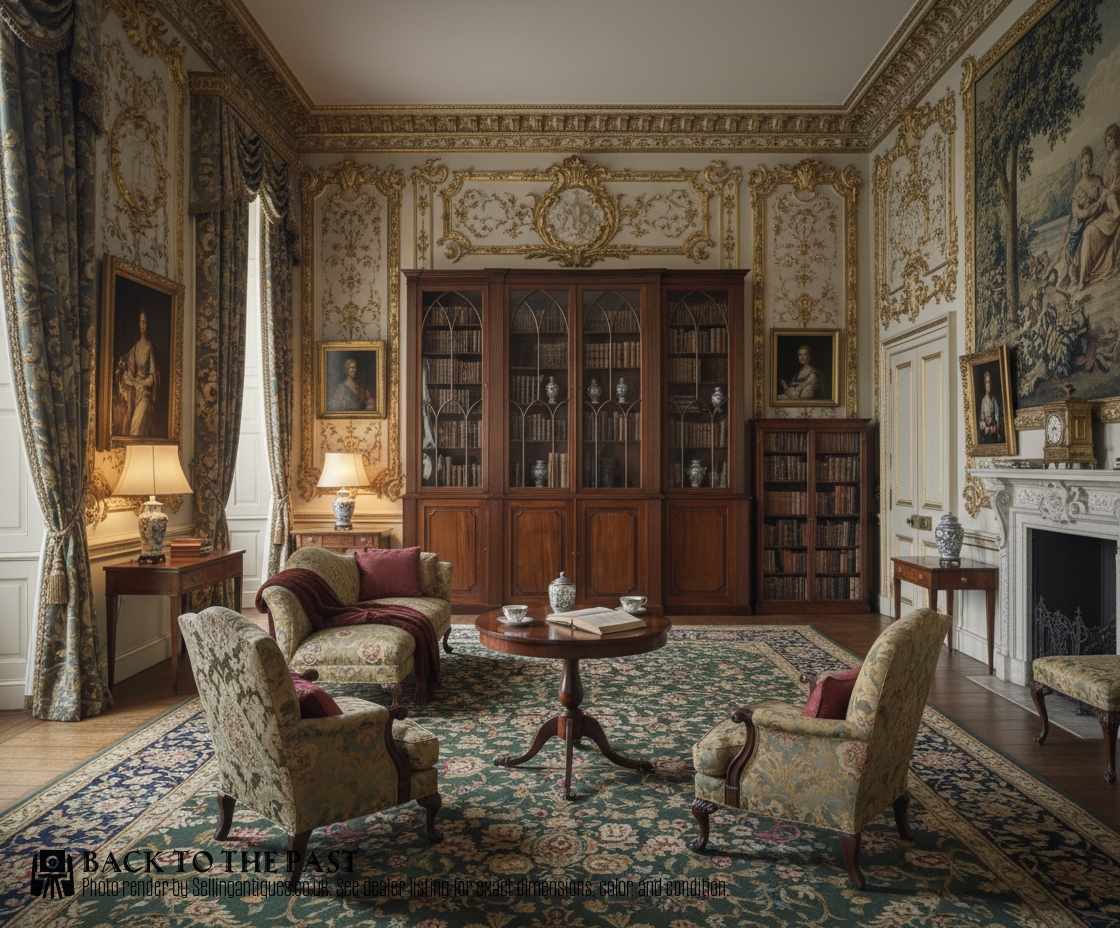
Large Mahogany Bookcase Cabinet
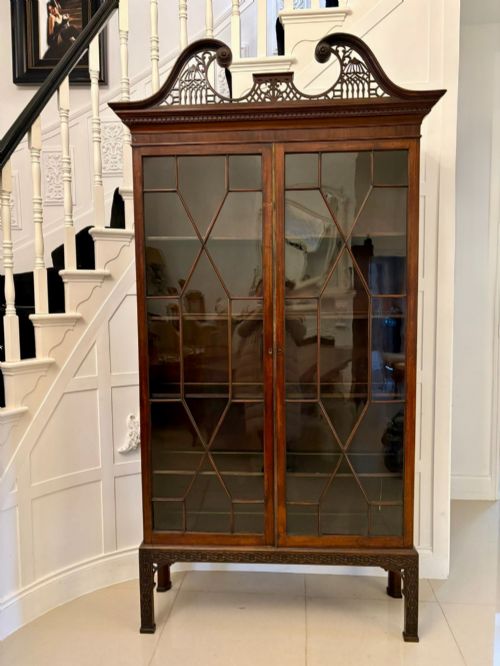
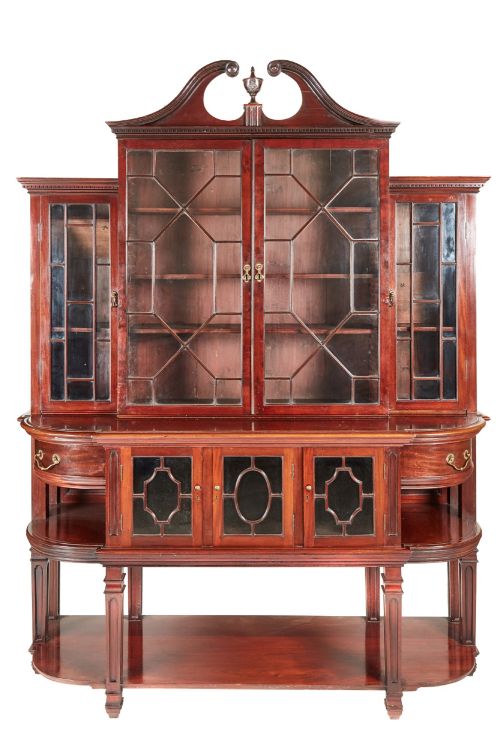
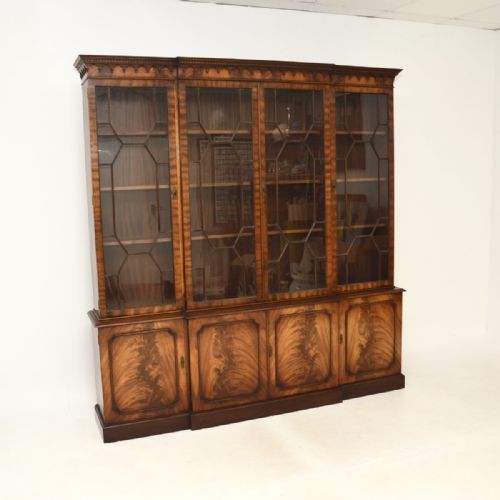
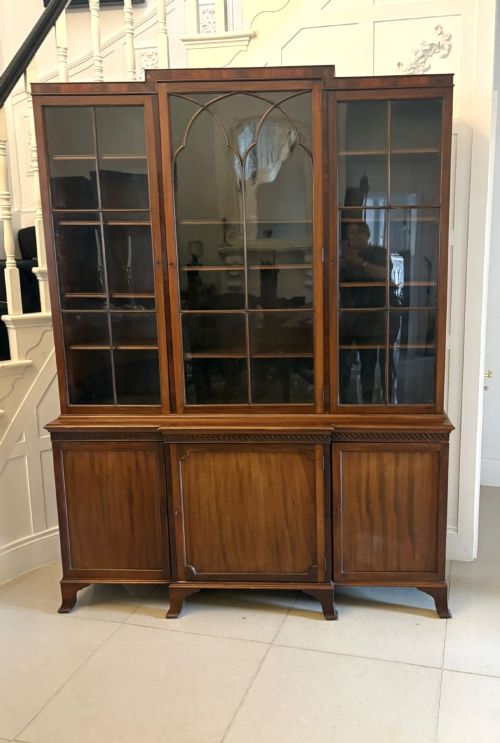
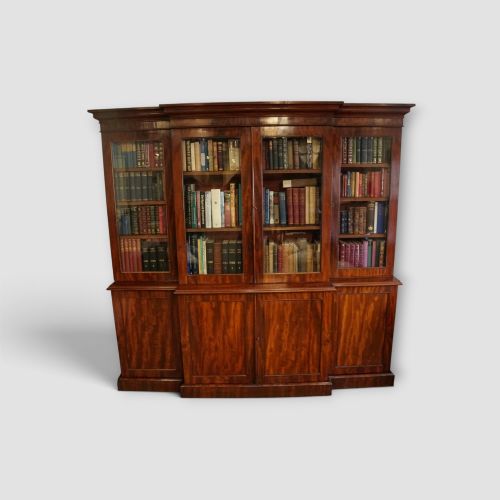
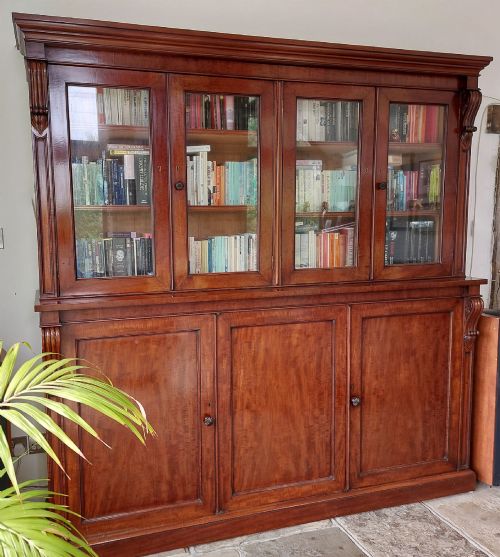
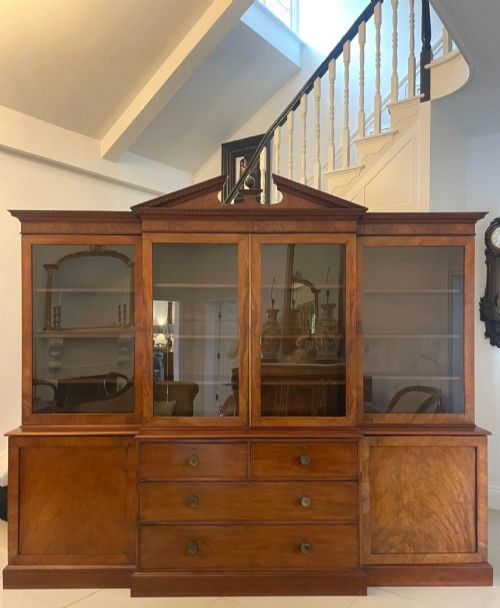
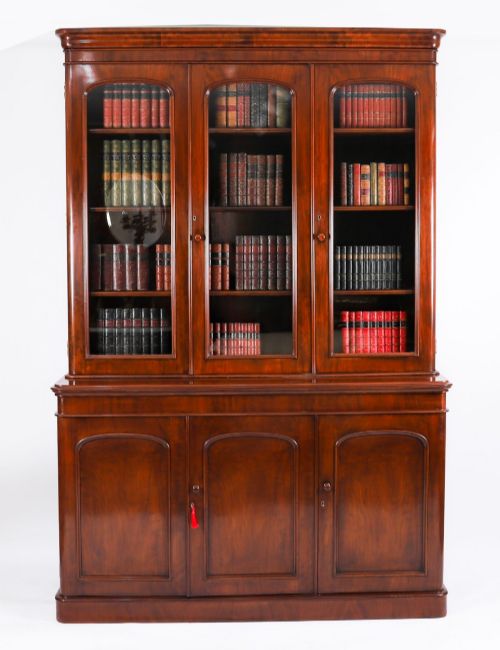
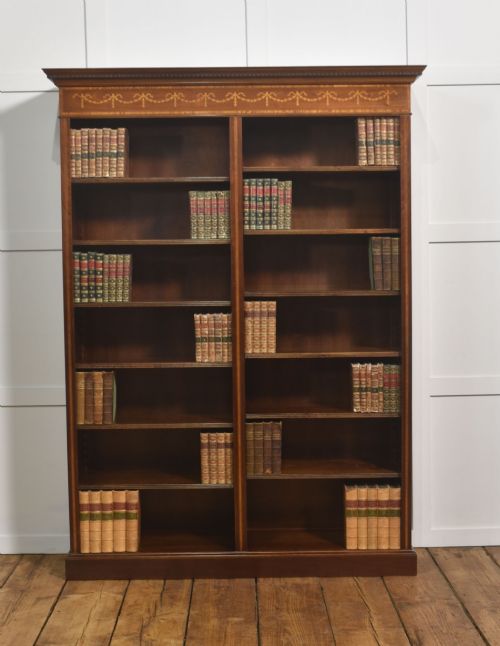
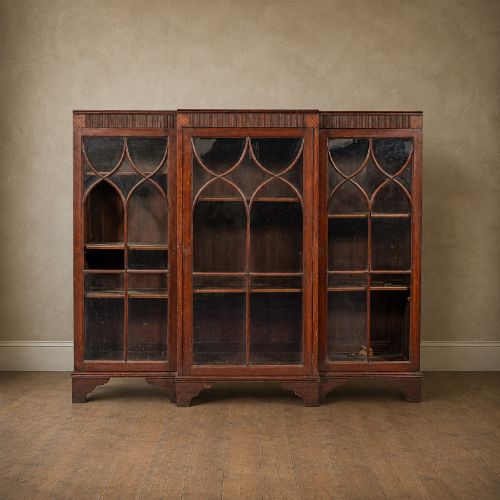
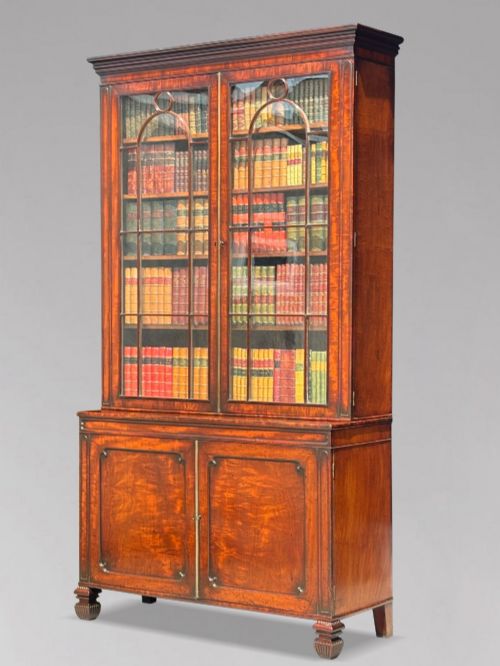
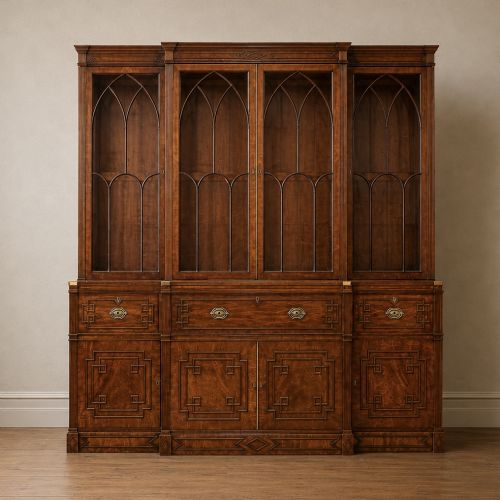
A large mahogany bookcase cabinet is a towering piece of furniture designed for organising and displaying extensive collections of books. The versions most commonly encountered on this page date from the Victorian and Georgian periods, often featuring breakfront profiles and glazed upper doors.
Many examples incorporate lower cupboards or secretaire drawers, making them functional for both storage and writing. These grand pieces originated in large estate libraries, country houses, and solicitors offices where heavy-duty storage was required.
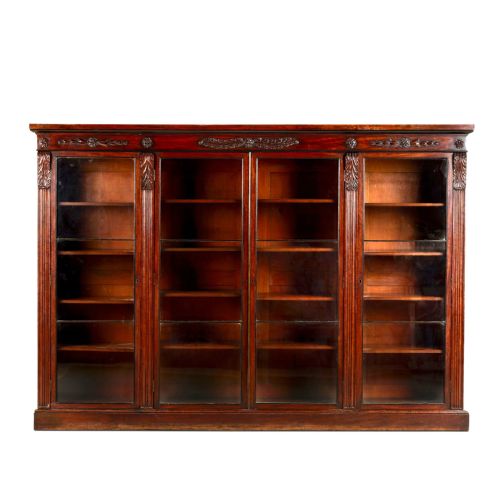
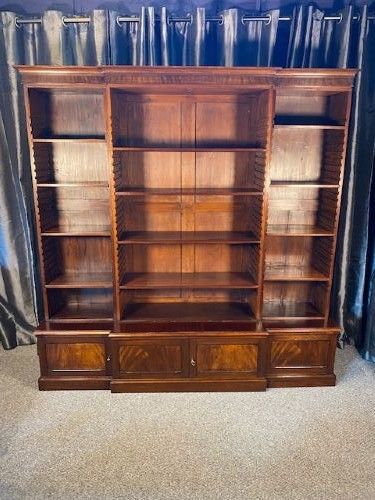
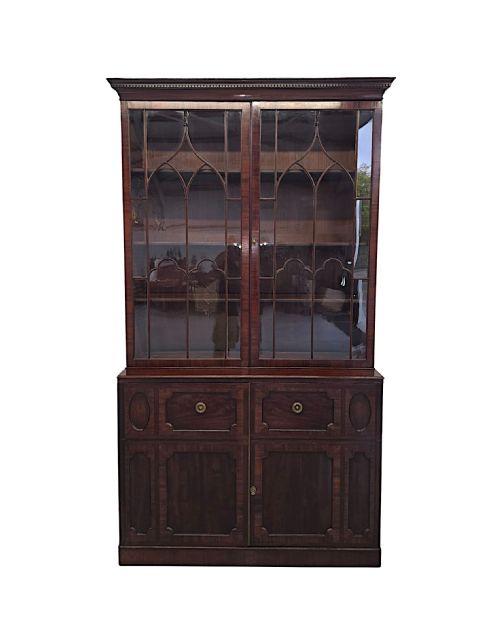
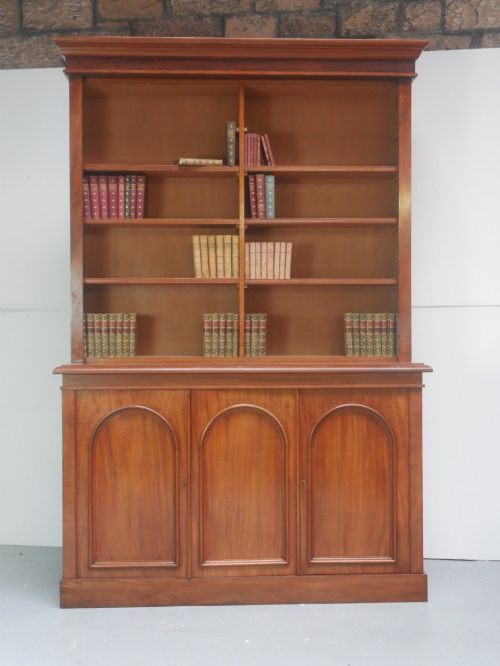
Formations range from open shelving units to multi-door library bookcases outfitted with wire mesh or glass panels. They vary from formal George III designs to imposing Victorian Gothic revival styles.
How they were made
Makers utilised solid mahogany and flame mahogany veneer laid over secondary timbers to achieve rich, figured surfaces. Decorative contrast is often provided through inlaid details in satinwood or accents of brass hardware.
Glazing in the upper doors relies on wooden astragals or delicate wire mesh frames to protect the books within. Structural integrity is maintained through heavy breakfront cabinetry techniques and substantial plinth bases.
Listings feature mahogany, flame mahogany veneer, and satinwood across Victorian and Georgian periods.
What varies in quality
The choice of timber grain sets the visual hierarchy, with figured flame mahogany and subtle satinwood inlay marking out the superior examples. The crispness of carved mouldings and the precision of the joinery distinguish bespoke cabinet work from standard production pieces.
Hardware selection and internal fittings also indicate the grade of the piece, from simple wooden shelving to fitted secretaire drawers with brass mounts. Proportion and the architectural balance of the breakfront facade determine the overall presence of the cabinet.
Gillows·Wylie and Lochhead·Gunn
The Large Mahogany Bookcase Cabinet Glossary
- Breakfront
- A cabinet design where the central section projects forward from the flanking wings. This architectural arrangement creates depth and shadow across the front elevation.
- Astragal
- The wooden moulding strips that divide panes of glass within a glazed door. They form geometric or arched patterns across the bookcase front.
- Secretaire
- A desk component incorporated into a drawer that pulls down to reveal a writing surface and pigeonholes. It adds a practical workspace to the centre of the bookcase.
- Flame mahogany
- A veneer cut from the fork of the mahogany tree where the branch meets the trunk. This creates a distinctive, rippled flame-like pattern across the wood.
- Plinth
- The heavy horizontal base upon which the entire bookcase cabinet rests. It grounds the tall structure visually and physically.
Large Mahogany Bookcase Cabinet: Frequently Asked Questions
How do I fit a large bookcase cabinet in a modern room?
These tall pieces require generous wall space and high ceilings to sit comfortably without dominating the room. Measure your clearance carefully, accounting for both the cornice at the top and the projecting breakfront base.
Position the cabinet away from direct sunlight to protect the mahogany polish and the books inside. Ensure the floor can support the substantial weight of solid timber and glass.
What is the difference between George III and Victorian bookcases?
George III pieces generally display lighter proportions, refined astragal glazing patterns, and restrained classical lines dating from the eighteenth century. They often favour simple elegance over heavy ornamentation.
Victorian cabinets tend to be heavier and more imposing, frequently featuring deep architectural breakfronts, bold cornices, and sometimes gothic revival influences. The timber used in Victorian pieces can also exhibit more dramatic flame mahogany figuring.
How should I care for the mahogany finish?
Maintain the wood by applying a quality beeswax periodically to nourish the dry timber and enhance the natural grain. Avoid silicone-based polishes that can build up a cloudy residue over time.
Keep the room at a stable humidity level to prevent the mahogany and its veneers from warping or cracking. Dust the carved details and astragal bars gently with a soft brush.