

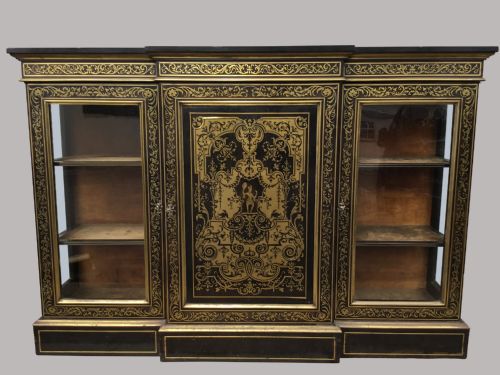


English Breakfront Cabinet
An English breakfront cabinet organises a room with projected central sections and generous shelving for libraries or dining spaces.
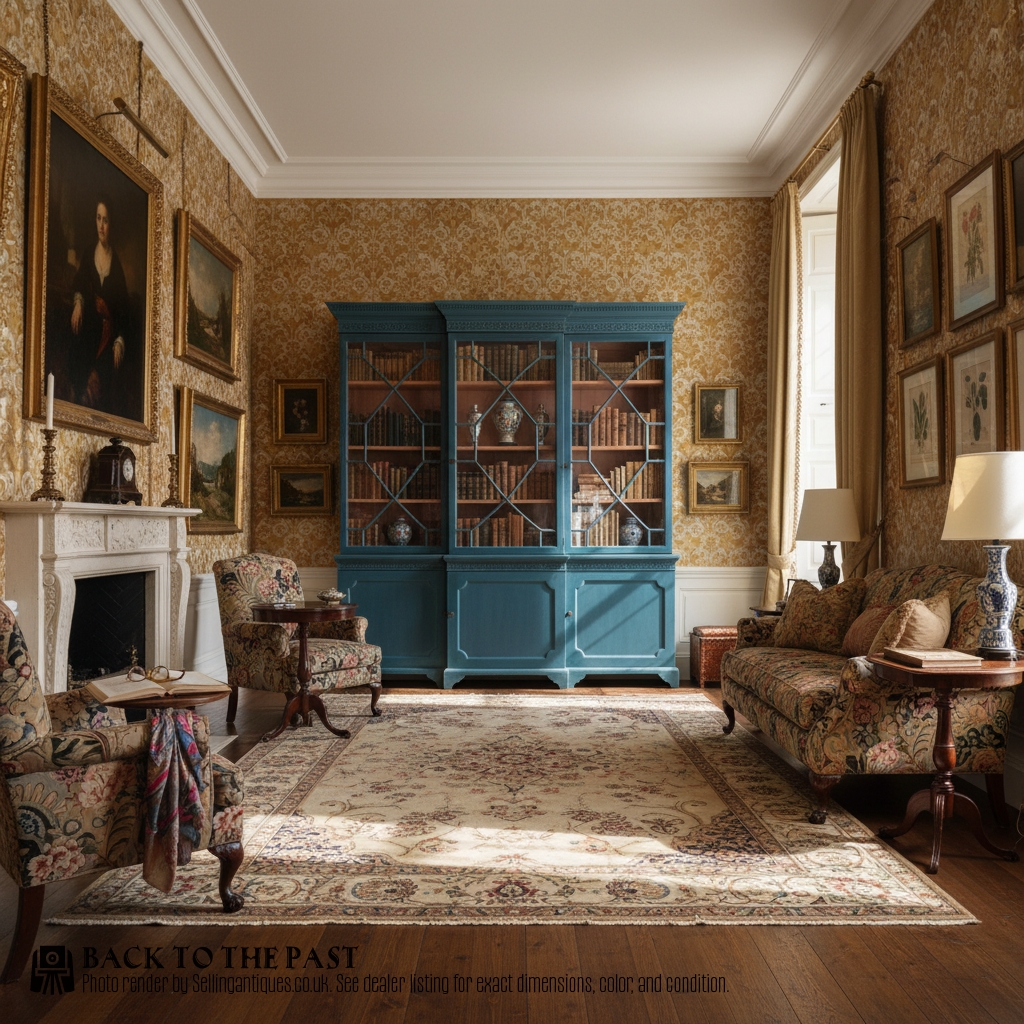
English Breakfront Cabinet
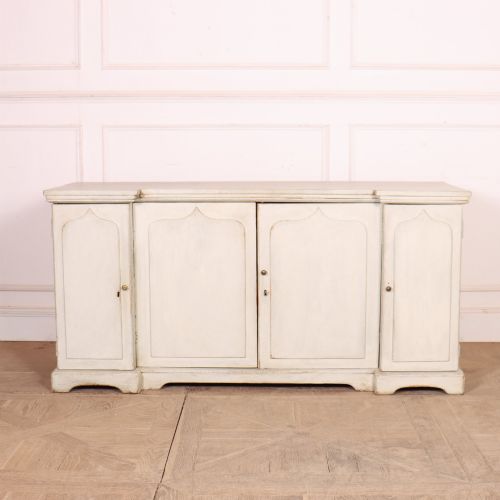
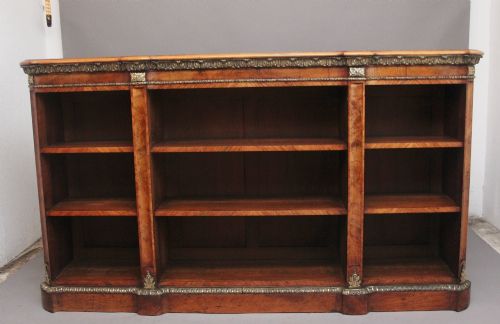
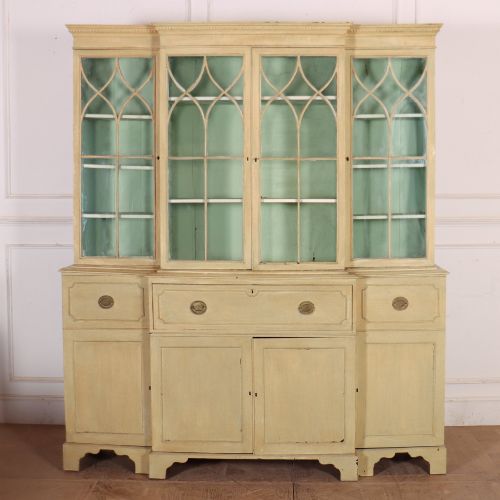
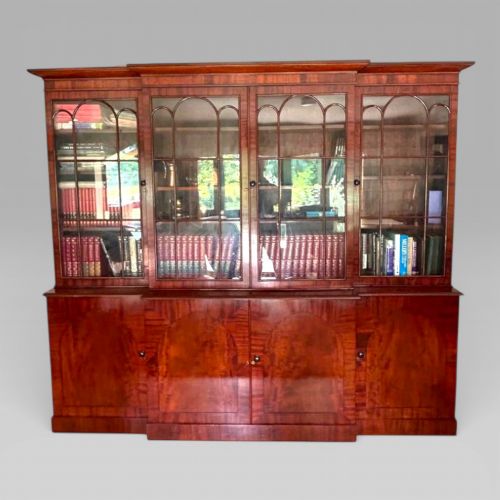
The English breakfront cabinet stands out through its distinctive recessed wings flanking a forward-projecting centre section, creating a tiered facade that commands attention in any large interior. These substantial pieces frequently appear as grand library bookcases, side cabinets, and housekeepers cupboards dating from the eighteenth and nineteenth centuries.
The materials span rich timbers like mahogany, rosewood, walnut, and oak, often detailed with glass panes, painted finishes, or contrasting brass and ormolu mounts. Makers utilised these dense woods to build imposing storage units designed to house scholarly volumes, fine china, or household linens.
Examples on this page draw from Georgian, Regency, Victorian, and William IV periods, showing how cabinetmakers adapted the architectural silhouette across successive eras. Whether configured as open shelving units, glazed display cases, or enclosed cupboards with wooden doors, the underlying tripartite geometry remains constant.
Defining factors of quality
The finest pieces demonstrate superior timber selection, utilising heavily figured flame mahogany or book-matched rosewood veneers across the entire breakfront facade rather than only on the central doors. Detail work such as crisp hand-cut brass inlay, finely chased ormolu mounts, and meticulously fitted original glass elevates an example above standard production.
Structural integrity and proportion separate workshop-built masterworks from utilitarian storage. Master cabinetmakers balanced the weight of heavy projecting cornices and multi-door configurations with robust internal framing and precise joinery that keeps large doors hanging true.
Some nineteenth-century housekeepers cupboards still retain faint traces of flour dust and dried lavender trapped inside their deep pine shelves.
Johnstone and Jeanes·Lamb of Manchester·Gillows
The English Breakfront Cabinet Glossary
- Breakfront
- A piece of furniture with a central section that projects further forward than the flanking side sections. This architectural feature creates visual depth and breaks the monotony of a long flat wall.
- Ormolu
- Gilded bronze mounts applied as decorative ornaments to furniture. Master craftsmen cast and gilded these metal elements to accent key architectural lines on high-status cabinets.
- Marquetry
- The art of applying pieces of veneer to a structure to form decorative patterns and pictures. Workshops used contrasting woods to create elaborate floral or geometric tableaus across drawer fronts and cabinet doors.
- Credenza
- A low dining room cabinet or sideboard used for serving food and displaying plate. Nineteenth-century examples often feature glazed doors and delicate brass ormolu enrichments.
- Housekeepers cupboard
- A large storage piece traditionally used in country houses for linen and dry goods. These utilitarian yet well-constructed pine or oak cupboards offer substantial enclosed shelving.
English Breakfront Cabinet: Frequently Asked Questions
How do I date an English breakfront cabinet?
Dating relies on observing the secondary timbers, hardware styles, and veneer choices characteristic of specific design periods from the eighteenth to the late nineteenth centuries.
Construction techniques like hand-cut dovetails and glass manufacture methods further help establish the era in which the cabinet was built.
Where should I place a large breakfront bookcase?
These imposing pieces require a substantial wall with enough clearance to accommodate both their width and the central projection without crowding the room.
Libraries, large living rooms, and formal dining spaces provide the proper scale and architectural context to support such furniture.
How do I care for antique mahogany and rosewood?
Protect antique timber surfaces by maintaining stable room humidity and keeping the pieces away from direct sunlight or intense heat sources.
Apply a microcrystalline wax periodically to nourish the wood and maintain the natural lustre of the historical finish without building up heavy residues.