
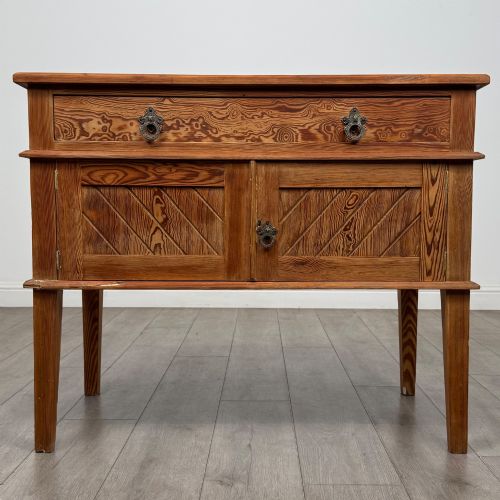
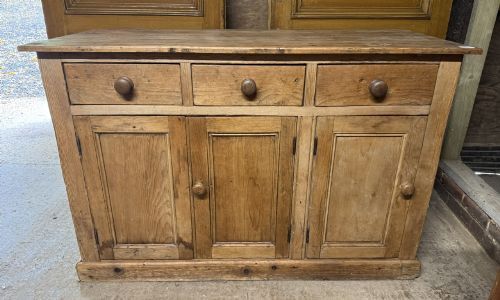
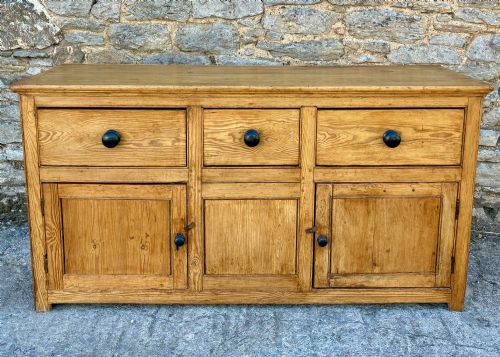
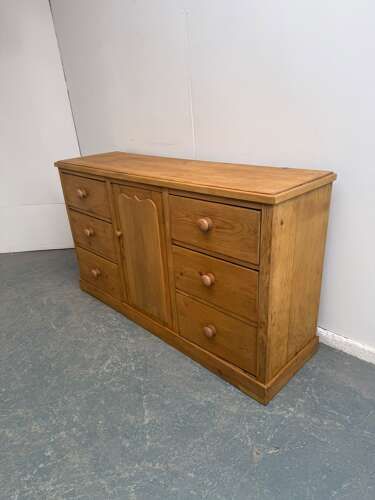
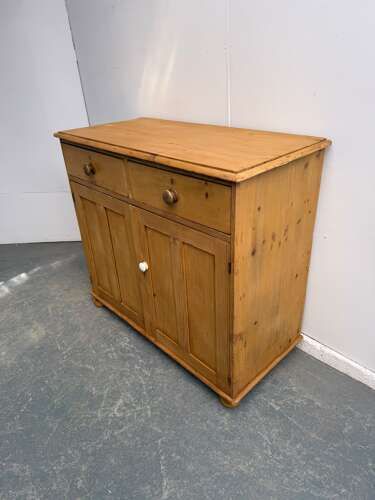
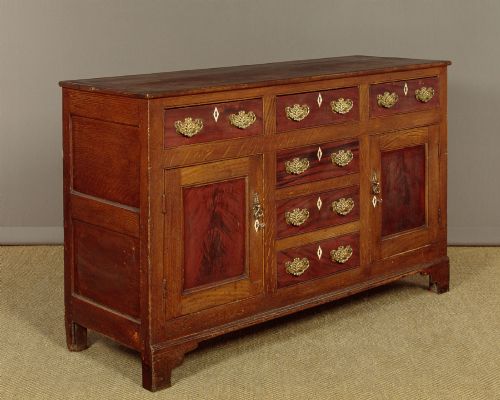
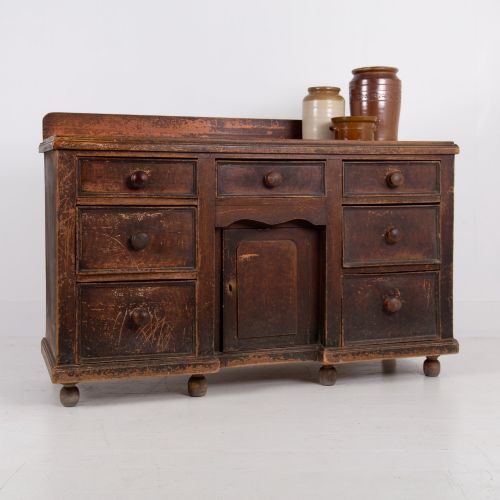

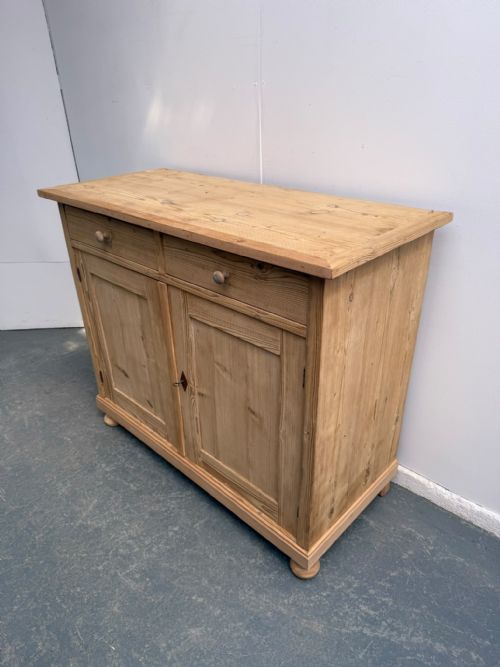
Victorian Pine Credenza
A victorian pine credenza brings robust nineteenth-century utility and painted or waxed character to a room.
What victorian pine credenza pieces are
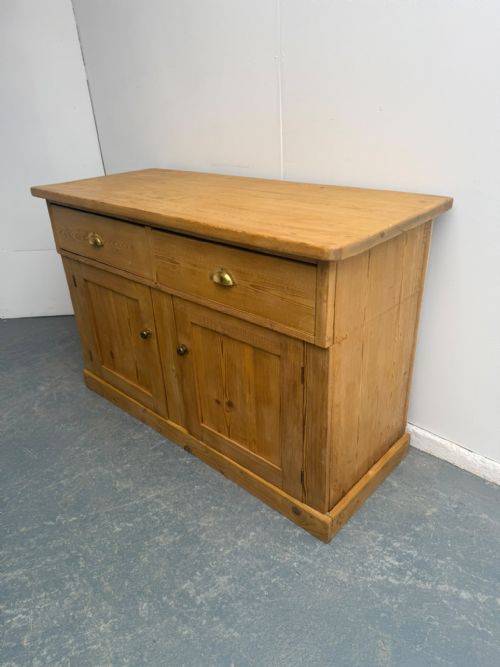
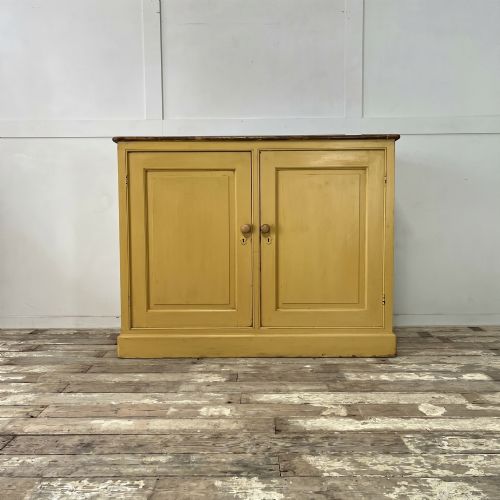
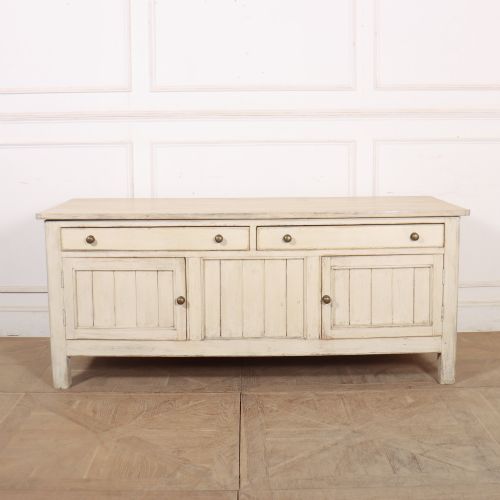
Buyers searching for a victorian pine credenza encounter sturdy nineteenth-century storage pieces including dresser bases, kitchen dressers, bread slides, and linen cupboards. These items originate from English and Welsh country workshops, serving traditional domestic storage functions.
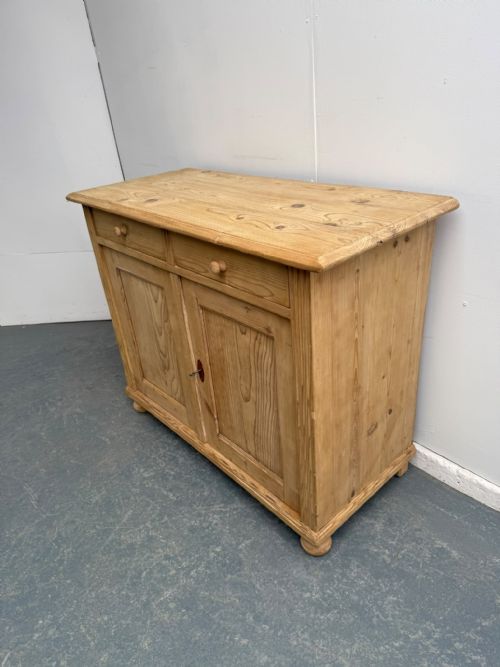
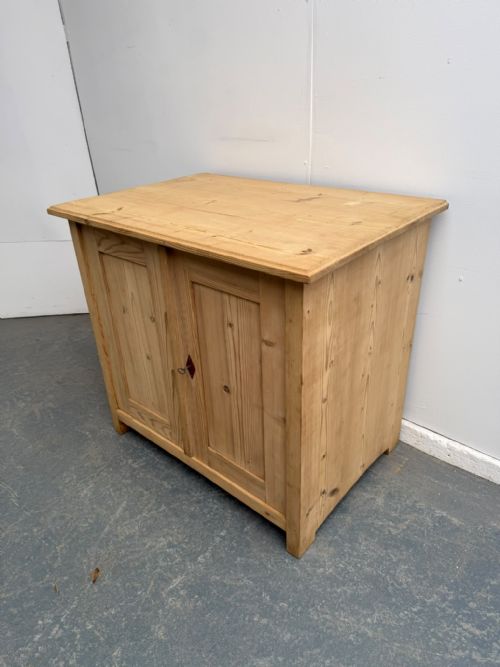
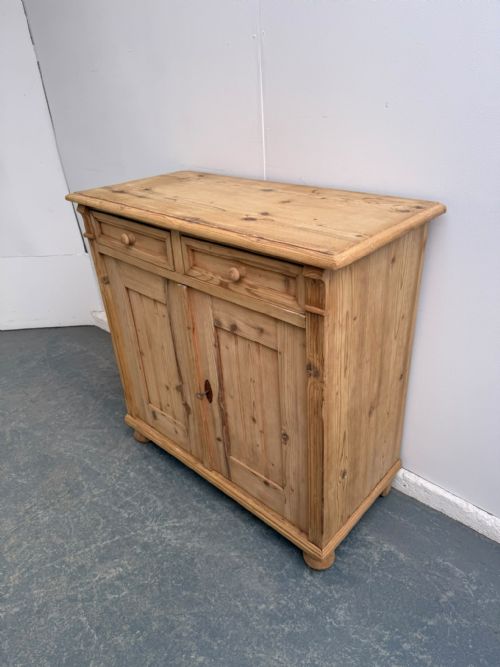
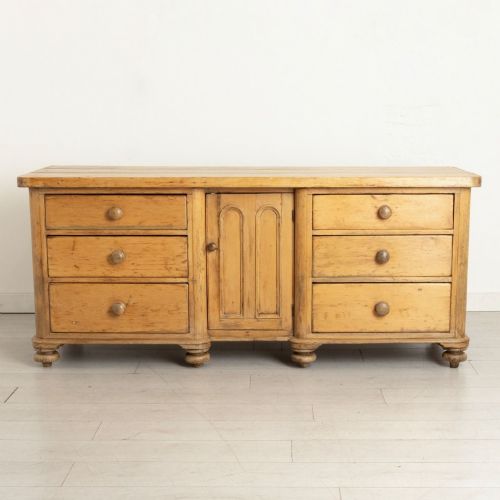
The pieces appearing on this page span the Victorian era, specifically around eighteen ninety, and showcase both waxed timber surfaces and painted finishes. Forms range from two-door two-drawer cupboard bases to breakfront linen cupboards fitted with iron, metal, and brass hardware.
How they were made
Craftsmen built these items using solid pine, shaping timber for functional household use with iron, metal, and brass hinges, handles, and pulls. Surfaces were either left with a waxed finish to highlight the natural grain or coated in paint.
Construction techniques focus on everyday practicality, uniting large timbers for durability in kitchens, sculleries, and linen rooms. The physical hardware remains functional, employing straightforward metal fastenings.
Retail Price Guide 2026
Typical UK retail prices for victorian pine credenza, calculated from the Sellingantiques database of over a million retail prices indexed since 2003. This retail price guide relies exclusively on Sellingantiques data; no external sources or auction records are used, so the figures do not describe the wider market.
Some nineteenth-century dresser bases still smell faintly of flour and generations of country baking.
What varies in quality
Quality rests in the integrity of the timber, the preservation of original painted or waxed finishes, and the presence of period hardware in iron, metal, or brass. Pieces showing honest domestic wear sit above those with unsympathetic alterations.
The construction of internal shelving, drawers, and bread slides demonstrates the maker's hand, while proportions range from simple rustic country pieces to more ambitious breakfront forms.
The Victorian Pine Credenza Glossary
- Dresser base
- A low sideboard or cupboard featuring drawers and lower doors, designed for food preparation or storage in country kitchens.
- Bread slide
- A pull-out wooden board integrated into a dresser base, historically used for cooling or cutting loaves of bread.
- Breakfront
- A cabinet design where the central section projects forward from the flanking outer sections, adding architectural depth to large cupboards.
- Linen cupboard
- A tall storage piece dedicated to holding household textiles, sheets, and blankets away from dampness.
- Waxed pine
- A softwood surface treated with natural wax to protect the timber and develop a warm sheen over decades of handling.
Frequently Asked Questions
Where were these pieces used?
Nineteenth-century pine storage items served working domestic spaces such as kitchens, sculleries, and utility rooms. They held heavy cookware, provisions, and household linens.
Over time, these functional items migrated into dining rooms and living spaces as buyers sought practical storage with rustic character.
How do I care for waxed pine?
Waxed pine surfaces benefit from occasional applications of natural beeswax to nourish the soft timber and maintain protection against moisture. Avoid placing these pieces near direct heat sources.
Regular dusting with a dry cloth keeps the finish intact without stripping the accumulated character of the wood.
What is a bread slide?
A bread slide is a dedicated pull-out wooden shelf built into the upper section of a dresser base. Bakers used this surface to cool freshly baked loaves.
In modern homes, this feature provides a convenient temporary shelf when serving food or organising kitchen items.
How do I identify a nineteenth-century piece?
Nineteenth-century construction relies on solid pine timbers, hand-cut joints, and period metal hardware such as iron and brass pulls. Tool marks and natural timber shrinkage reveal age.
Makers built these items for daily utility, resulting in honest wear patterns across the waxed or painted surfaces.