
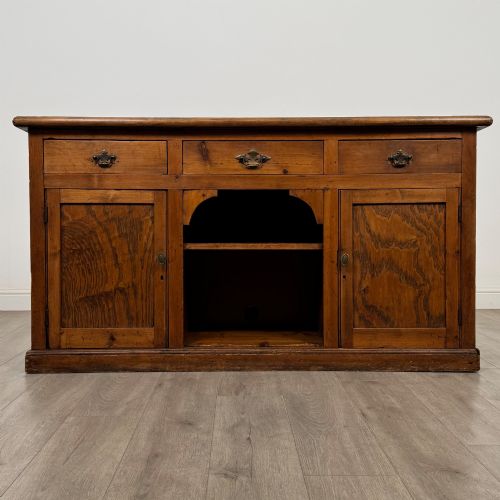
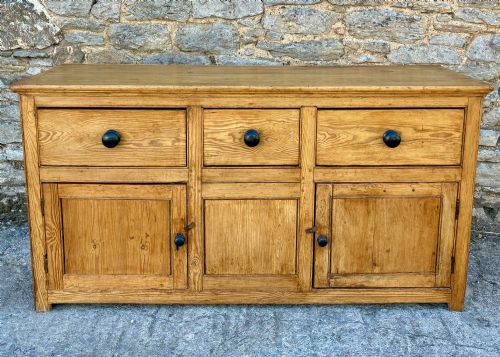
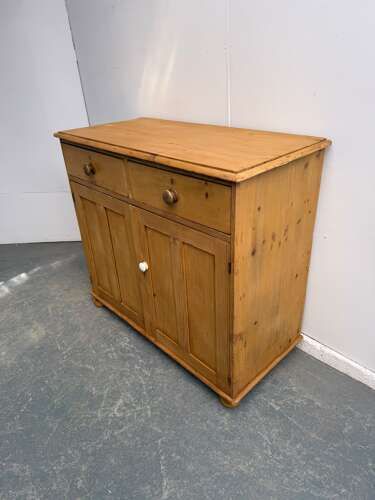


Nineteenth Century Pine Sideboard
A nineteenth century pine sideboard offers honest utility and enduring grain, bringing warmth to any room through practical timber and time-worn character.
Nineteenth Century Pine Sideboard
When you search for a nineteenth century pine sideboard, you are looking at sturdy utilitarian furniture designed for storage and food preparation in domestic spaces. The pieces appearing under this description include dresser bases, painted kitchen dressers, and two-door cupboards spanning the Victorian era and the broader nineteenth century. These items range from vernacular English workshops to French country origins, reflecting practical rural living.
You are most likely to meet two-door, two-drawer dresser bases and painted pine kitchen units from the eighteen-fifties onwards. Styles stretch from Victorian country and rustic farmhouse to Georgian vernacular and French country interpretations. They serve as functional storage pieces with drawers for linens and cupboards for heavy crockery.
How they were made
Carpenters constructed these items using solid pine timbers combined with iron and brass hardware for hinges, pulls, and drawer construction. Surfaces often received coats of paint or protective layers of wax to preserve the soft wood against daily kitchen use.
Construction techniques relied on traditional joinery suitable for domestic timber furniture intended for hard labour. Makers integrated galleries, panelled doors, and sturdy shelving into dresser bases and console prep tables.
The documented styles span rustic farmhouse, French country, and Georgian vernacular traditions within nineteenth-century domestic furniture.
What varies in quality
The distinction between standard utility furniture and finer examples lies in the integrity of the original timber and the survival of early painted surfaces. Pieces retaining genuine old paint finishes or original hardware display a more cohesive historical character than heavily restored equivalents.
Proportion and structural honesty separate the best regional workshop pieces from simpler utilitarian output. Well-balanced proportions in two-door cupboards and dresser bases demonstrate superior vernacular design.
The Nineteenth Century Pine Sideboard Glossary
- Dresser base
- The lower section of a kitchen dresser featuring cupboards and drawers without the upper plate rack. This form provides low-level storage and a useful surface top.
- Gallery
- A raised wooden or metal rim running along the top edge of a chest of drawers or sideboard. It prevents items from sliding off the surface.
- Vernacular
- Everyday architecture and furniture built by local tradesmen for regional use rather than high-style metropolitan design. It prioritises utility and local material availability.
- Drapers table
- A long utility table originally used in textile shops for folding cloth, featuring deep proportions and sturdy legs. These tables now serve as kitchen prep surfaces.
Nineteenth Century Pine Sideboard: Frequently Asked Questions
What is a nineteenth century pine sideboard?
A nineteenth century pine sideboard is a utilitarian storage item, typically encountered as a dresser base, kitchen unit, or two-door cupboard from the Victorian era. These pieces were built for everyday domestic labour in rural and provincial homes.
Constructed from solid pine with iron or brass hardware, they provide sturdy drawers and cupboards suited to modern storage needs.
Where were these pieces made?
These items originated in regional workshops across England, the West Country, Wales, and France during the nineteenth century. Local carpenters built them to satisfy the practical demands of rural kitchens and dining rooms.
Regional variations appear in the joinery, hardware choices, and the application of early paint or wax finishes.
How do I care for antique pine furniture?
Maintain antique pine by keeping it away from direct heat sources and sudden humidity changes to prevent timber movement. Regular dusting and occasional gentle waxing preserve the historic surface patination.
Avoid harsh chemical cleaners that strip away the layered history of old painted or waxed surfaces.
Are painted finishes original?
Painted finishes on nineteenth century pine can range from early or original coats to later decorative applications applied during subsequent decades of use. Evaluating the wear patterns and integration with the timber helps determine the age of the paint.
Original paint often exhibits natural crazing and wear consistent with decades of kitchen use.