

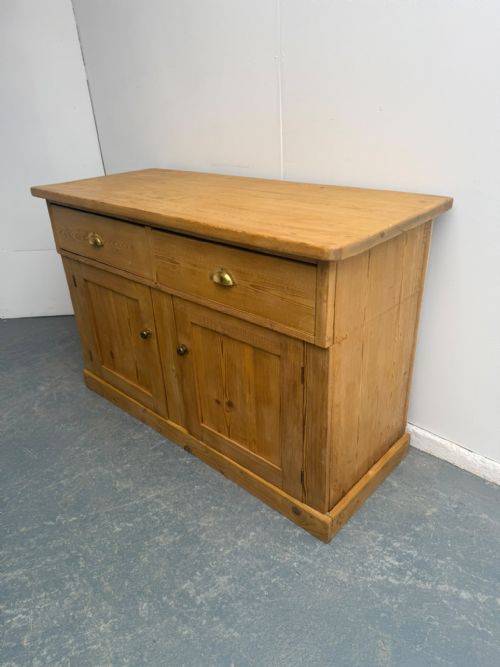


Traditional Pine Kitchen Buffet
A traditional pine kitchen buffet brings honest utility and warmth to a room, offering generous storage for daily provisions and tableware.
Traditional Pine Kitchen Buffet
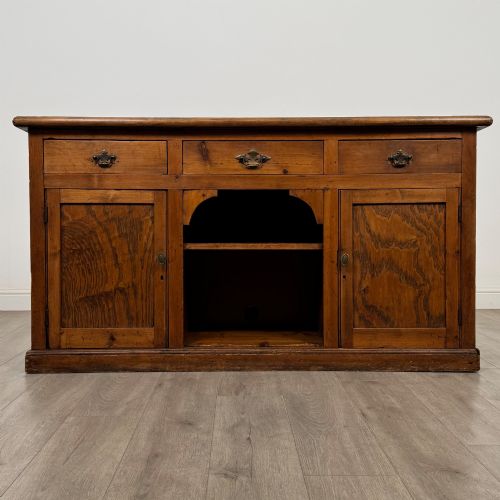
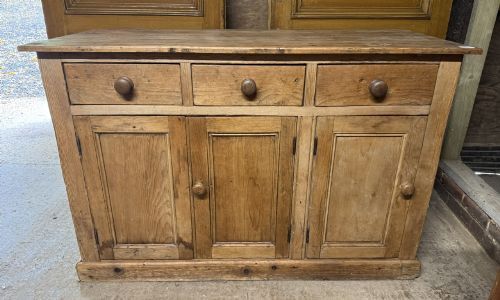
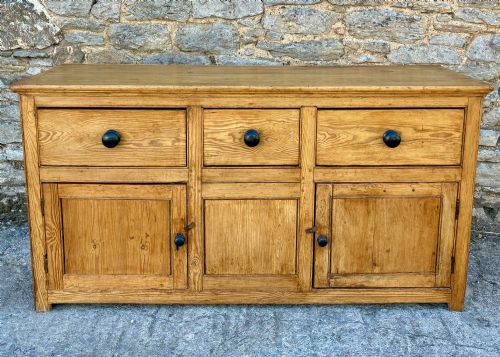
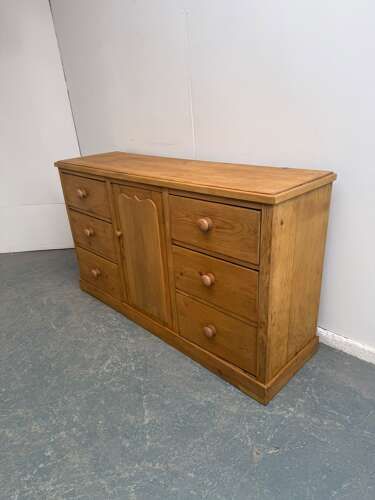
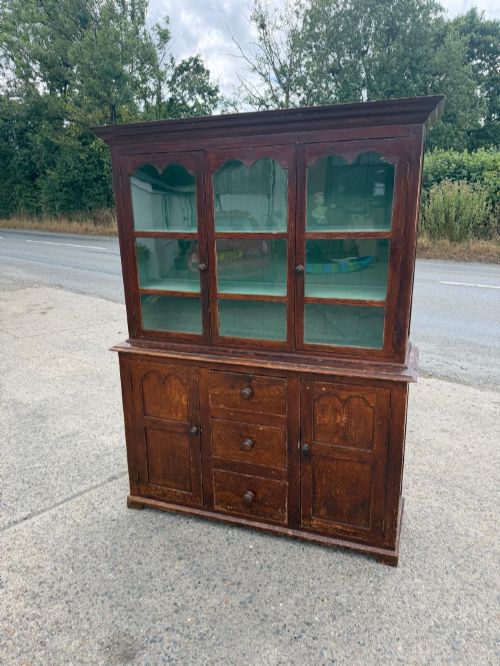
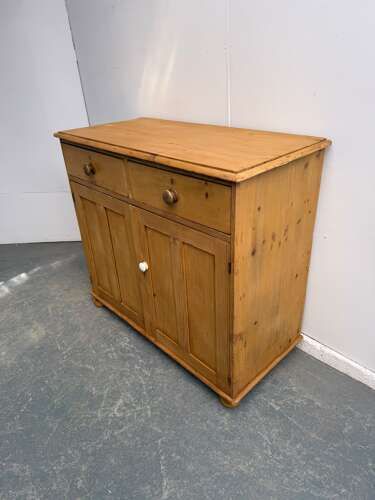
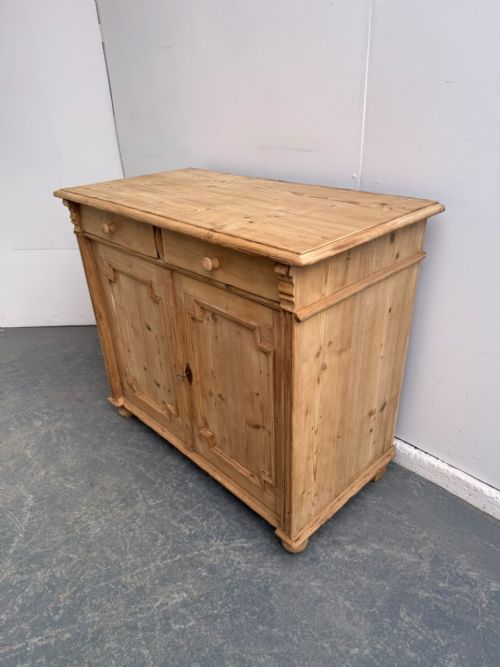
When searching for a traditional pine kitchen buffet, a buyer encounters practical storage furniture designed for food preparation and domestic organisation in domestic spaces. These pieces combine lower cupboards and drawers with surfaces suited for work or display.
The versions most frequently met on this page belong to the nineteenth century, including Victorian and Georgian examples, often categorized as dresser bases, sideboards, or kitchen dressers. English and Welsh country workshops produced the majority of these utilitarian forms.
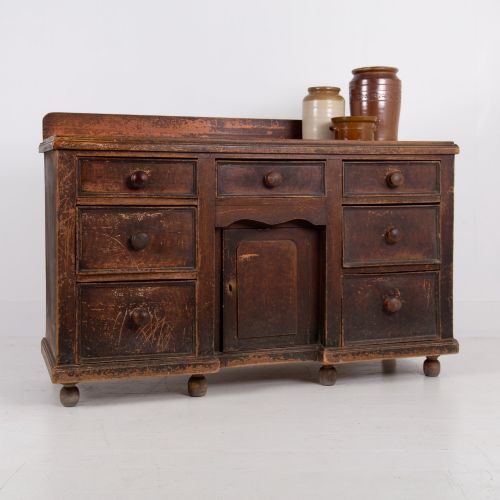
Regional variations appear across the selection, ranging from compact cottage pieces to monumental country house proportions and Hungarian designs with multiple doors. Some examples retain original paint finishes, while others present stripped or waxed timber surfaces.
What varies in quality
The distinction between ordinary and superior pieces rests on the integrity of the original construction and the handling of the timber. Proportion, balance, and the preservation of early surface treatments such as original paint or patinated wax elevate certain examples above standard utility furniture.
Subtleties in regional joinery and regional forms, such as breakfront drawer arrangements or potboard lower structures, reflect the competence of the original maker. The retention of original hardware and untouched timber surfaces rather than heavy modern restoration marks the more desirable specimens.
Hungarian pine dressers on this page show that even rural kitchens abroad appreciated the reliable charm of a three-door timber cabinet.
The Traditional Pine Kitchen Buffet Glossary
- Dresser base
- The lower section of a kitchen dresser, functioning as a sideboard or low cabinet with drawers and cupboards. These pieces provide surface workspace and enclosed storage.
- Potboard
- An open lower shelf built into a dresser base, traditionally used for storing heavy pots and pans. This structural feature is characteristic of English country furniture.
- Chiffonier sideboard
- A low cupboard or sideboard featuring drawers and doors, popular during the nineteenth century. It offered convenient storage for dining rooms and kitchens.
- Talwrn dresser
- A specific regional form of Welsh dresser associated with traditional vernacular cabinet making. These pieces display distinct local characteristics in their proportions and drawer layouts.
- Waxed pine
- Timber finished with beeswax to protect the wood while maintaining a soft matte appearance. This treatment highlights the natural grain and knots of the pine.
Traditional Pine Kitchen Buffet: Frequently Asked Questions
What is a traditional pine kitchen buffet used for?
These pieces served as functional workhorses in domestic kitchens and dining rooms for food preparation and storage. Cupboards and drawers kept provisions and tableware secure while the top surface provided workspace.
Today, they adapt easily to modern living spaces as sideboards in dining rooms or storage units in contemporary kitchens.
How do I care for a waxed pine buffet?
Maintaining waxed pine involves dusting with a soft cloth and occasionally applying a quality beeswax to nourish the timber. Avoid placing the furniture near direct heat sources or damp areas to protect the wood.
Regular care preserves the natural patina and prevents the surface from drying out over time.
How can I tell the age of a pine dresser?
Dating relies on observing construction methods, timber characteristics, and hardware types used in the piece. Eighteenth and nineteenth-century examples often display hand-cut joinery and signs of long-term wear.
Comparing the form and regional style against documented vernacular furniture helps narrow down the period of manufacture.
Are these buffets made of solid wood?
Traditional pieces of this type utilise solid pine throughout their construction, occasionally incorporating oak or other secondary woods for internal structures. Hand-selected timber boards formed the tops, sides, and drawer linings.
This solid construction accounts for their survival through generations of domestic use.