


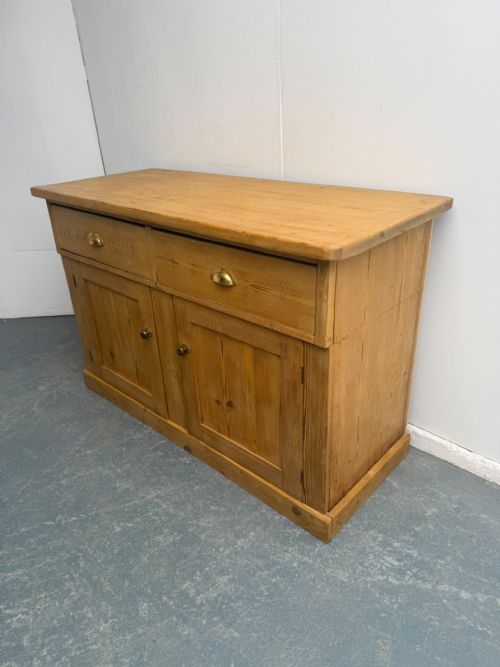
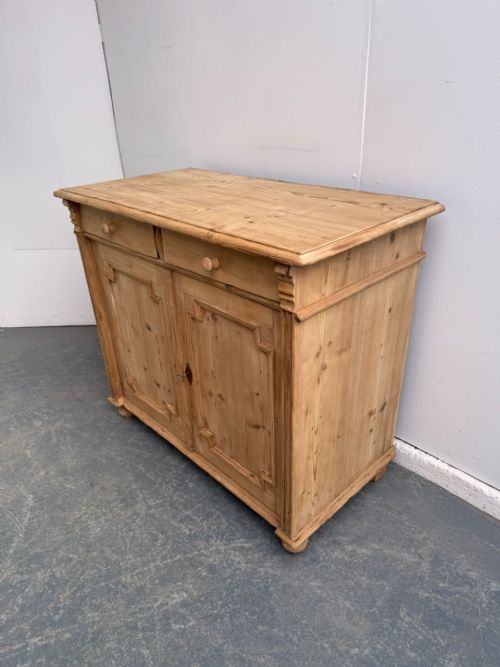
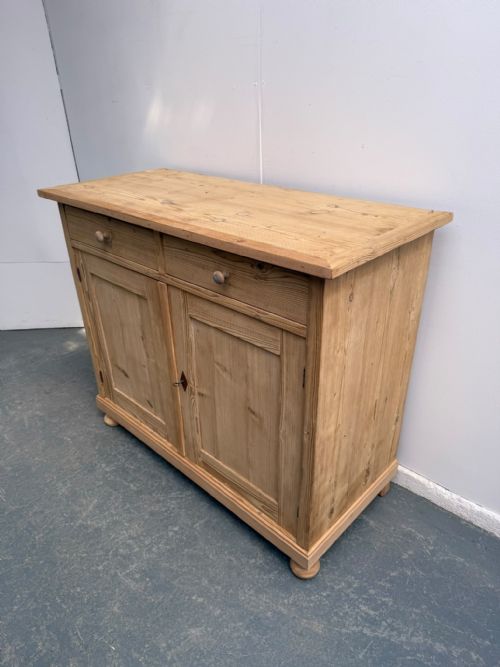
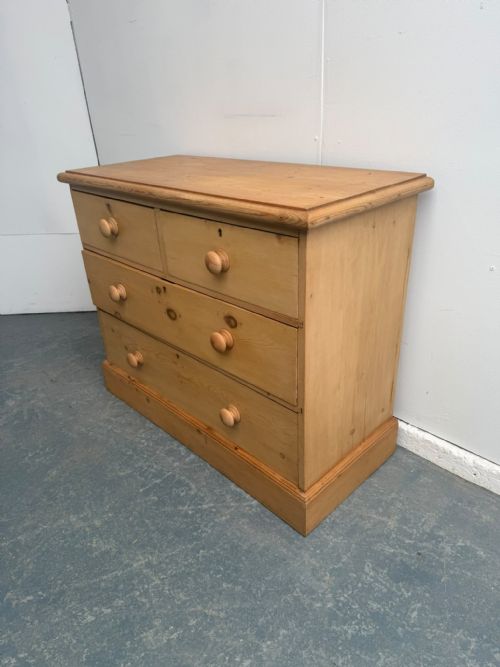
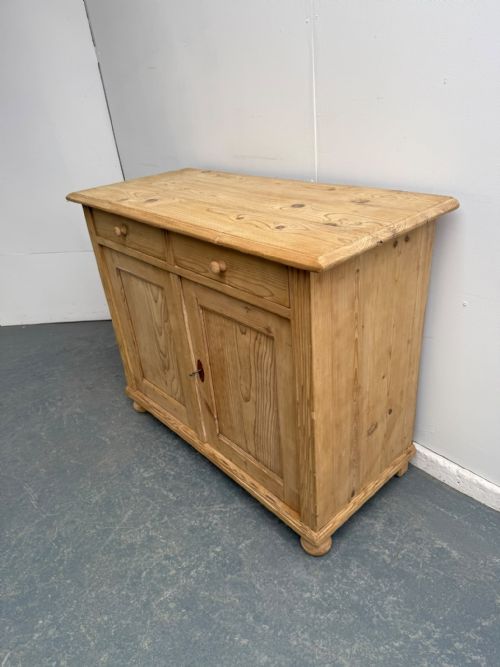
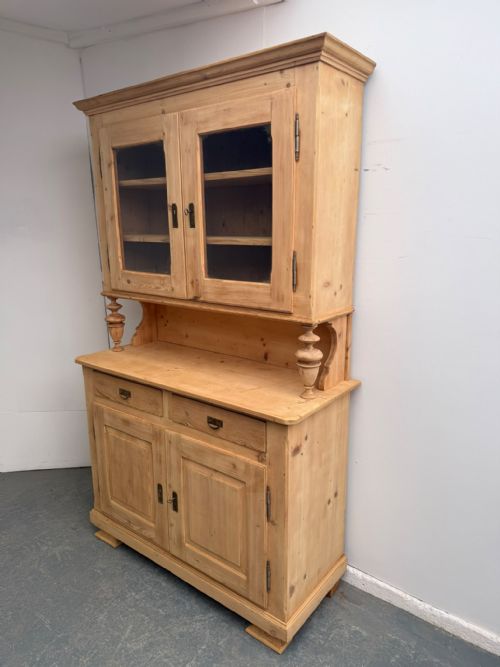


Waxed Pine Sideboard
A waxed pine sideboard brings honest utility and warm timber grain into a room, shaped by hands across the eighteenth, nineteenth, and early twentieth centuries.
Waxed Pine Sideboard
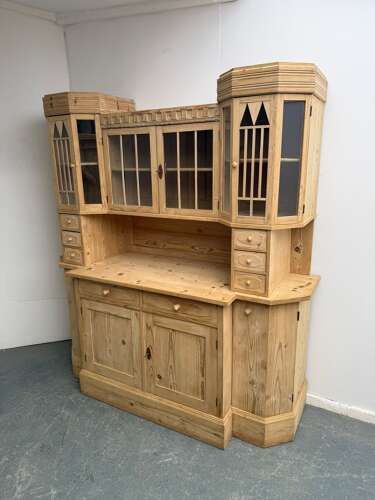
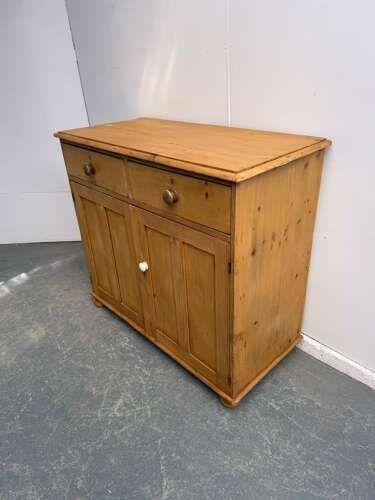
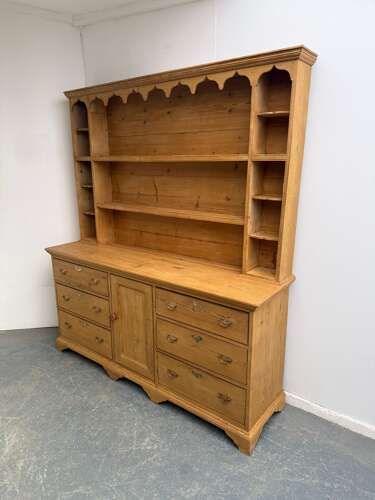
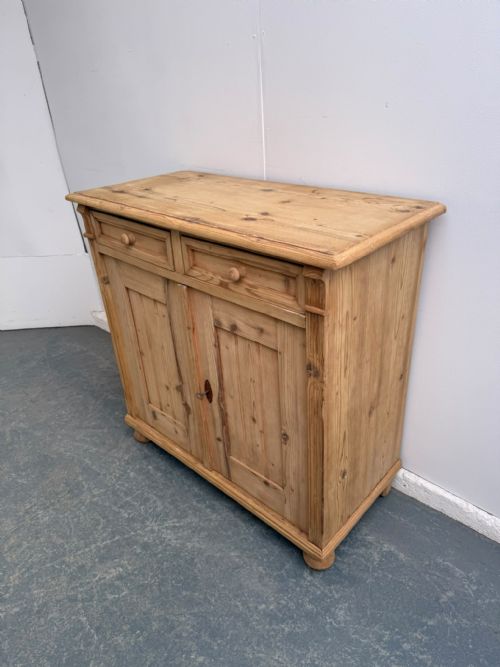
A waxed pine sideboard encompasses a range of robust storage furniture, from low dresser bases and wide cupboards to kitchen dressers originating from country workshops in England, Wales, France, and Hungary. When searching for a waxed pine sideboard, buyers most frequently encounter Victorian pieces featuring two doors and two drawers, alongside earlier Georgian examples and later Arts and Crafts interpretations.
These items served practical domestic roles in kitchens, halls, and pantries, designed to hold dry goods, linens, and tableware. The inventory spans straightforward storage cabinets, shallow dresser bases, and chests of drawers adapted to sideboard use, built with honest utility in mind rather than courtly display.
Materials and Construction Methods
Solid pine forms the primary body of these pieces, selected for its workability and abundance in country workshops, complemented by iron and brass hinges, handles, and occasional glass or ceramic details. Craftsmen utilised sturdy joinery to construct robust frames capable of withstanding heavy daily use in busy domestic spaces.
Surfaces are finished with wax applied to the bare timber, creating a soft sheen that protects the wood while highlighting the natural grain and knots. Some examples retain traces of earlier paint or show the characteristic warm hue developed through decades of domestic application and handling.
Waxed Pine Sideboard Retail Price Guide 2026
Typical asking prices for waxed pine sideboard among the pieces listed under this phrase on Sellingantiques today, from the lower quarter to the upper quarter. They describe what is for sale here now, not the wider market.
Listings feature solid pine pieces spanning the Georgian, Victorian, and Arts and Crafts periods, incorporating iron, brass, and ceramic details.
Distinctions in Quality and Proportion
Quality in these pieces rests upon the integrity of the original construction, the balance of proportions, and the depth of the timber's patina. Superior examples display thoughtful detailing such as panelled doors, dovetailed drawers, and well-preserved hardware rather than hurried assembly.
The degree of original preservation significantly influences the character of each piece, distinguishing items with untouched surfaces and period fixings from those subjected to later alterations. Well-proportioned framing and minimal restoration retain the functional dignity intended by the original country makers.
The Waxed Pine Sideboard Glossary
- Dresser base
- The lower section of a kitchen dresser, featuring cupboards and drawers beneath a flat top surface suitable for serving or storage. These units function independently as sideboards in modern interiors.
- Waxed pine
- Timber treated with natural wax to nourish the grain and provide a soft, protective finish. This treatment deepens the colour of the wood over time.
- Bread slide
- A pull-out wooden shelf integrated into the cabinetry of a dresser base, originally used for cooling or preparing bread. It adds a practical working surface to the front elevation.
- Arts and Crafts
- A design movement valuing handcraftsmanship, simple forms, and honest materials over mass production. Pieces from this tradition often show clean lines and understated construction.
- Gallery
- A low raised wooden barrier fitted to the top surface or back of a piece to prevent items from sliding off. This feature is frequently seen on chests of drawers and sideboards.
Waxed Pine Sideboard: Frequently Asked Questions
How do I date a pine sideboard?
Dating relies on examining construction methods, hardware, and stylistic clues within the woodwork. Georgian pieces tend to show hand-cut joinery and simpler proportions, while Victorian items often incorporate heavier mouldings and standardised iron or brass fittings.
Later pieces from around nineteen hundred or the Arts and Crafts period display more pared-back designs or decorative tile inserts. Comparing the timber patina and drawer construction helps confirm the period of origin.
Where were these sideboards used?
These pieces were primarily working furniture for domestic spaces such as kitchens, pantries, and large hallways. They stored everyday utensils, linens, and provisions required for running a household.
In contemporary homes, they function well in dining rooms, living spaces, and kitchens as practical storage units. Their durable construction makes them well-suited for daily use.
How do I care for waxed pine?
Caring for waxed pine involves regular dusting with a dry cloth and occasional re-waxing to maintain the moisture and sheen of the timber. Avoid placing the furniture in direct sunlight or near heat sources to prevent the wood from drying out.
Spills should be wiped away promptly to protect the wax barrier from water marks. Using a quality beeswax polish preserves the natural colour and texture of the pine.