


Regency Glazed Bureau
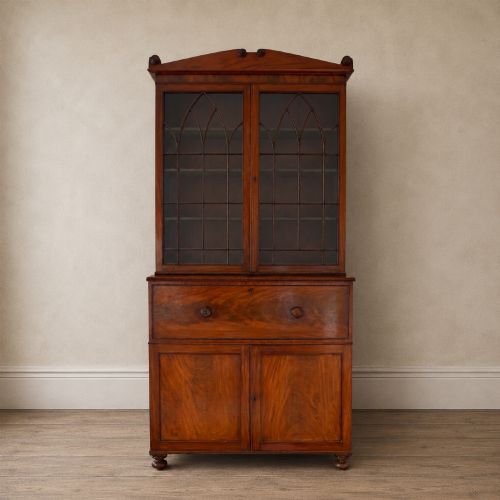
A regency glazed bureau combines a fitted writing drawer with enclosed shelving, offering a practical writing station and display cabinet in one handsome piece.
Regency Glazed Bureau
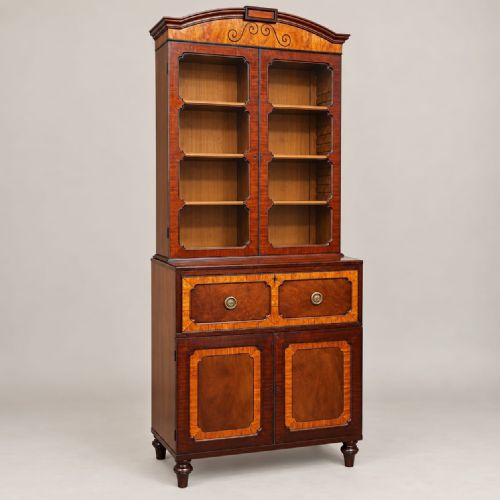
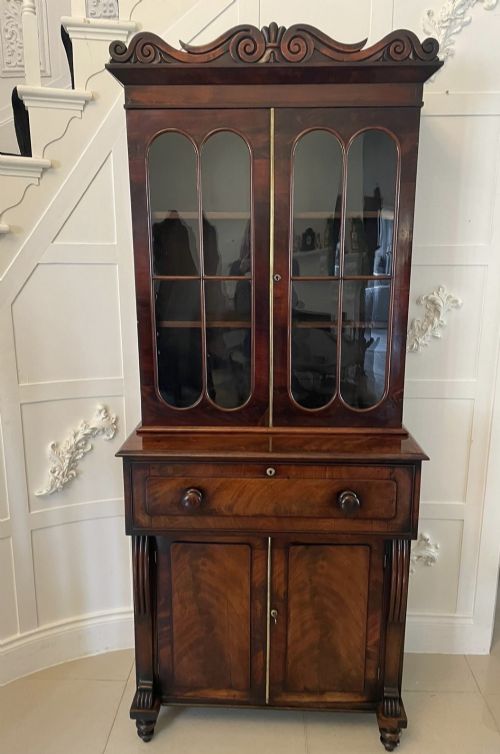
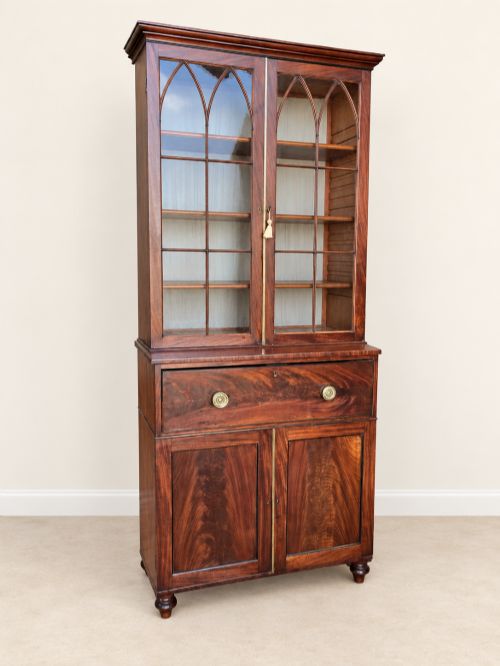
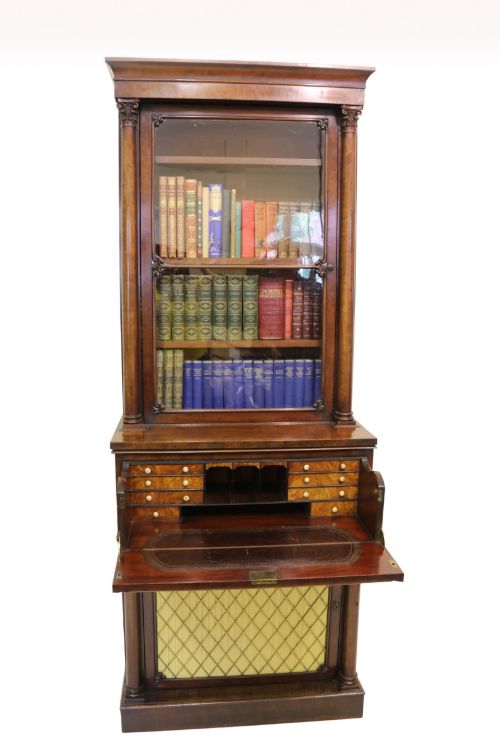
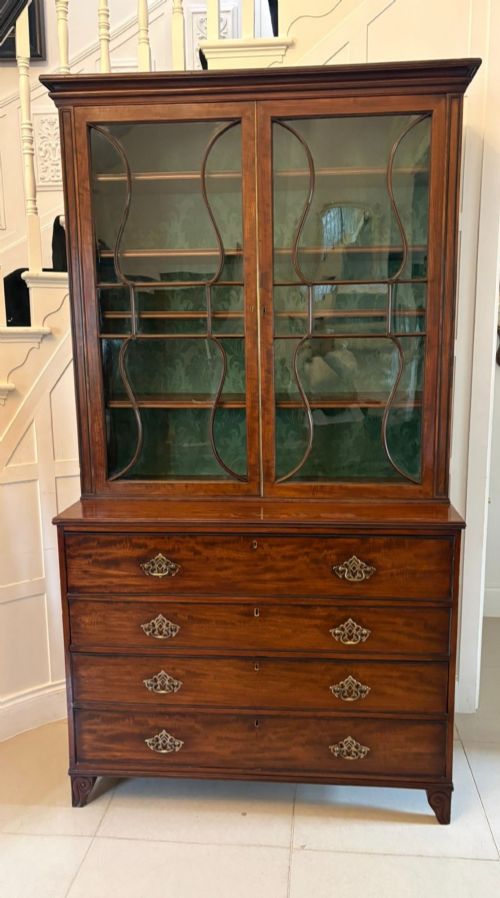
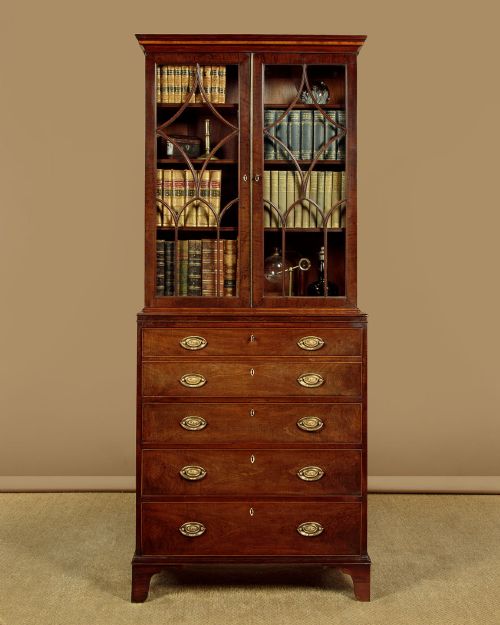
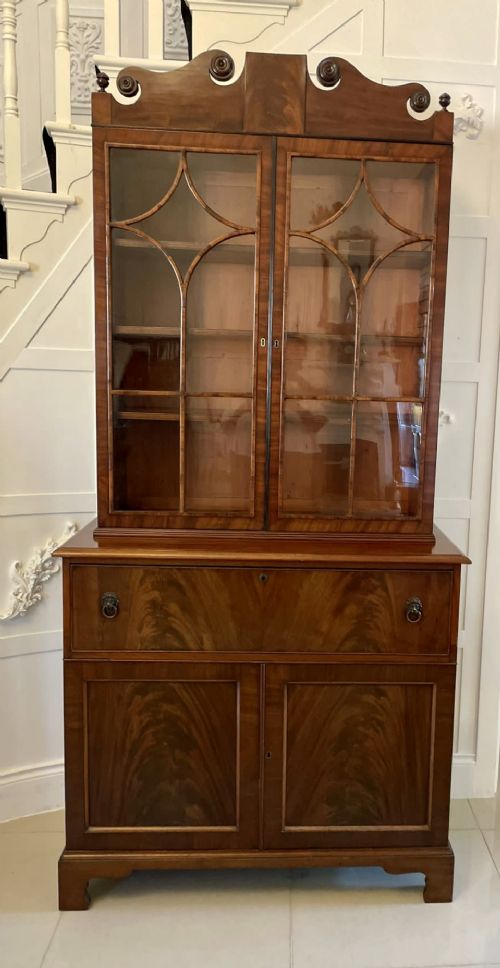
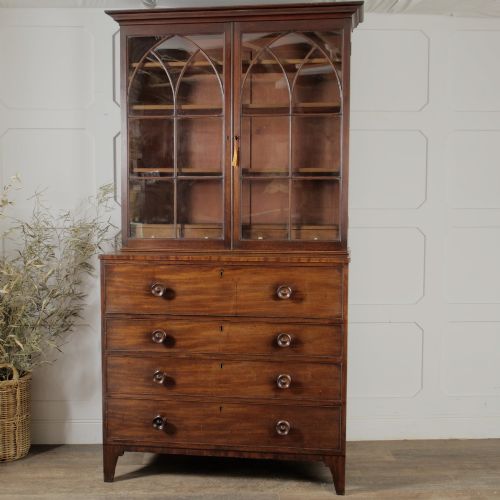
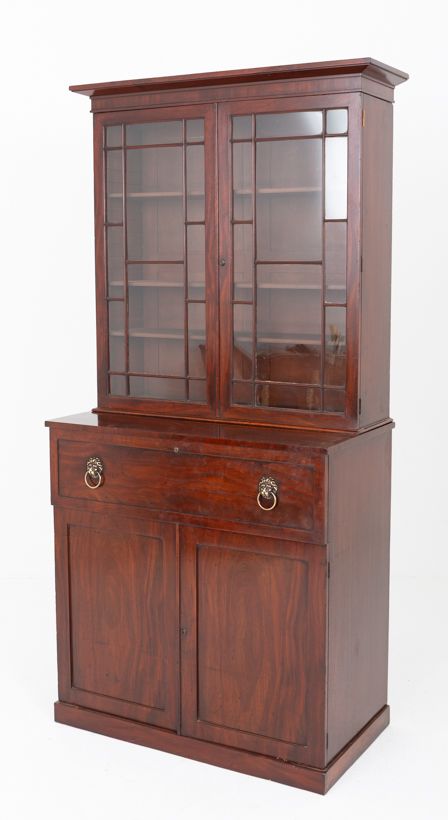
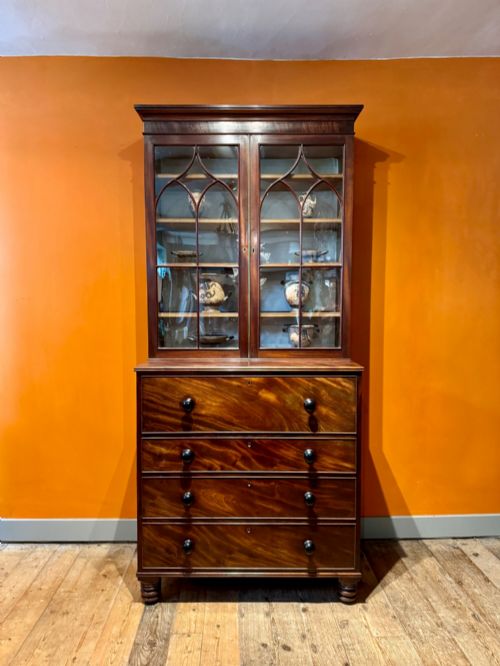
When you examine a regency glazed bureau on this page, you are looking primarily at secretaire bookcases and bureau bookcases originating from the nineteenth century, including Georgian, Regency, William IV, and George IV periods. These pieces combine a glazed upper cabinet for display with a drop-front or drawer-based writing compartment below.
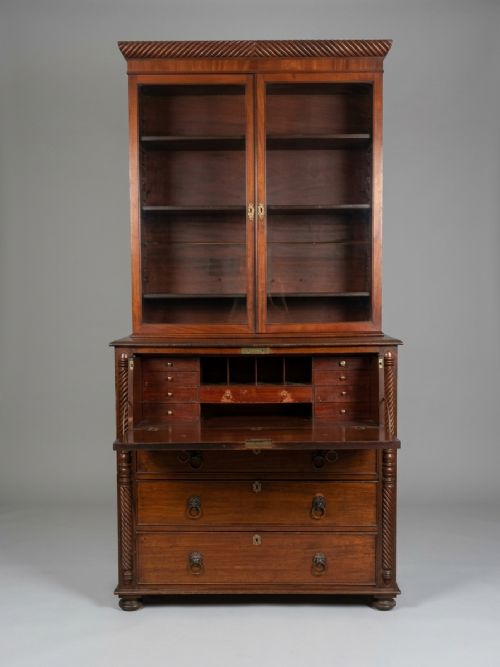
The form typically manifests as a tall mahogany cabinet featuring glass doors above a fitted interior writing drawer, though variations include brass-inlaid rosewood, cylinder desks, and breakfront designs. Most examples date from the Regency era up to the Victorian period, reflecting the refined tastes of early nineteenth-century cabinet makers.
How they were made
Cabinet makers constructed these pieces principally from solid mahogany and flame mahogany veneer, often incorporating secondary timbers and rich rosewood surfaces. Glass panels were secured within wooden framing bars to create glazed doors that protected books and papers while displaying them clearly.
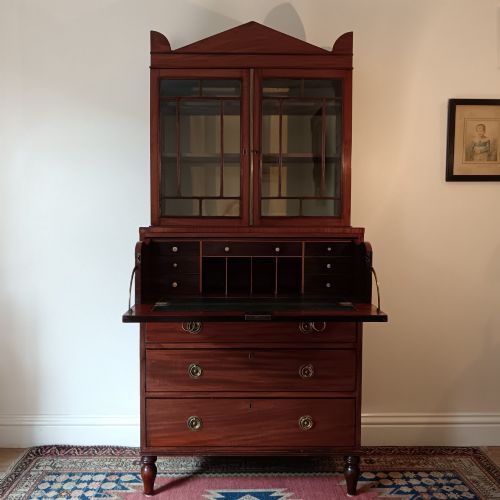
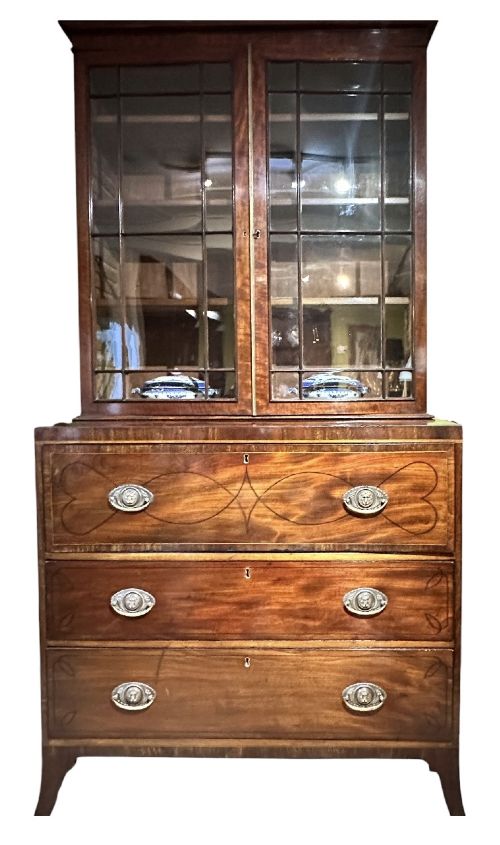
Interiors were meticulously organised with small drawers, pigeonholes, and leather-lined writing surfaces that pulled down or slid out. Advanced workshops added decorative details such as marquetry inlay, brass stringing, and bone escutcheons to elevate the visual appeal of the writing compartment.
Listings feature mahogany, rosewood, and brass materials across 19th-century Regency, Georgian, and William IV periods.
What varies in quality
The selection of timber dictates much of the visual hierarchy, with figured mahogany and flame mahogany veneers creating striking grain patterns on the best examples. Plain mahogany surfaces sit at the simpler end, whilst rosewood with brass inlay represents a more luxurious execution.
Internal complexity and secondary detailing also separate standard production from superior work. Elaborately fitted writing drawers with numerous compartments, secret drawers, and fine astragal glazing bars distinguish exceptional cabinet making from utilitarian workshop output.
George Oakley·Gillows of Lancaster·Thomas Hope
The Regency Glazed Bureau Glossary
- Secretaire
- A piece of furniture containing a drawer or compartment that folds down to form a writing desk. It usually houses a fitted interior with pigeonholes and small drawers.
- Astragal glazed
- Glass doors divided by slender wooden mouldings into smaller panes. This technique is typical of eighteenth and nineteenth-century bookcases.
- Flame mahogany
- A veneer cut from the fork of a mahogany tree where the branches join the trunk. It creates a distinctive, swirling flame-like pattern across the wood surface.
- Bureau bookcase
- A combination of a slant-front or drawer desk and a shelving cabinet above. The upper section is enclosed by doors, often glazed.
- Fitted interior
- The arrangement of small drawers, pigeonholes, and central compartments concealed behind the drop-front or drawer of a desk. It provides storage for writing equipment and documents.
Regency Glazed Bureau: Frequently Asked Questions
How do I use a secretaire drawer?
The front of the secretaire drawer pulls forward and drops down on hinges to create a flat writing surface. Inside, you find a collection of small drawers and pigeonholes for letters and stationery.
When you finish writing, the surface lifts back into place and secures with a key, hiding your correspondence away inside the main body of the cabinet.
How should I care for mahogany veneer?
Keep the wood away from direct sunlight and strong heat sources to prevent the mahogany veneer from drying out or splitting. Dust the carved mouldings and glass panels regularly with a soft, dry cloth.
Apply a light application of natural wax polish occasionally to nourish the timber and maintain the soft sheen on the figured surfaces.
Where did these cabinets sit in a period home?
These dual-purpose cabinets were typically placed in libraries, drawing rooms, or private studies where books and correspondence required secure storage. The upper glazed doors allowed owners to display leather-bound volumes protected from dust.
The pull-down desk provided a private writing station without requiring a separate full-sized table in the room.