



Regency Gilt Candlesticks
Regency gilt candlesticks combine the warm sheen of mercury gilding with dark patinated bronze, bringing classical proportion and dramatic lighting to an interior.
Regency Gilt Candlesticks
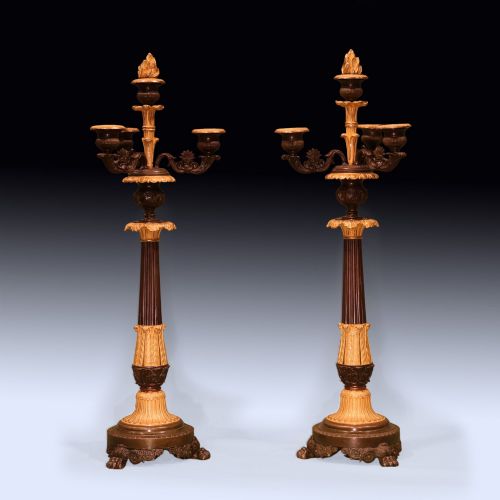
When you search for regency gilt candlesticks, you encounter formal lighting fixtures that reflect the neoclassical taste of the early nineteenth century. These objects typically take the form of pairs, frequently featuring a combination of gilt bronze, known as ormolu, alongside contrasting dark patinated bronze.
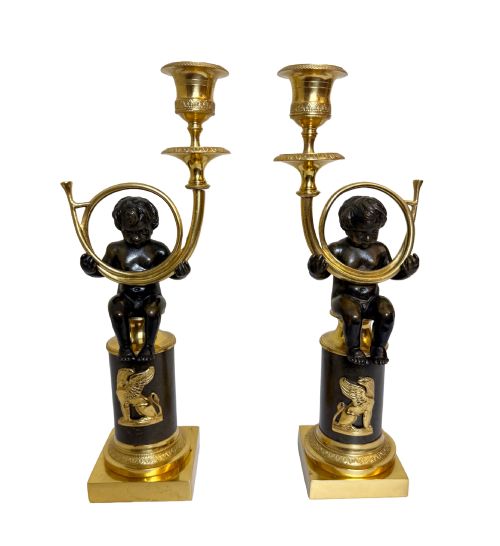
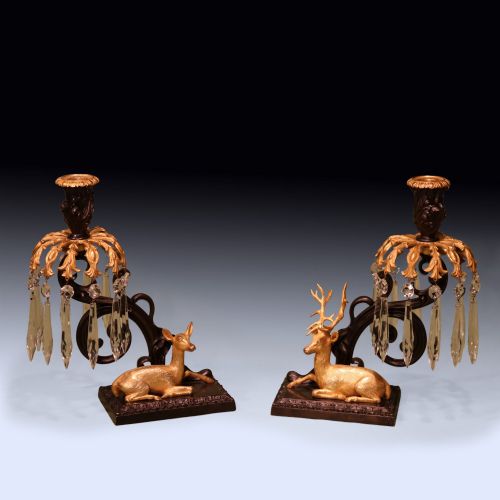
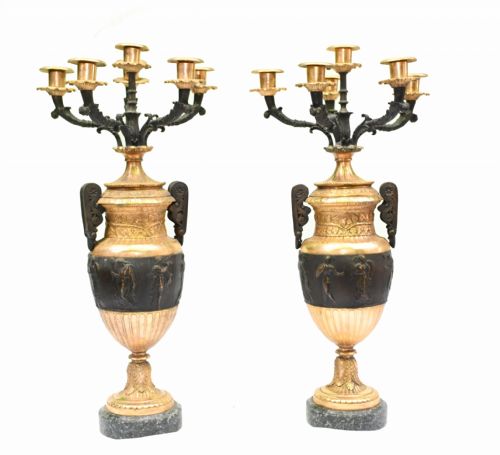
The selection ranges from simple chamber sticks to elaborate multi-light candelabra adorned with figurative motifs like cherubs, dolphins, and stags. Many examples incorporate marble bases or hanging cut glass lustres that refract candle flames across a room.
While authentic pieces date to the Regency period and the reign of George IV, later nineteenth century revivals from the eighteen-eighties also appear frequently. These revival pieces maintain the classical vocabulary of griffins, rams heads, and foliate scrolls established decades earlier.
Materials and manufacture
The construction relies heavily on the marriage of cast bronze and ormolu, created through a mercury gilding process that produced a deep, lasting metallic lustre. Artisans chased and burnished the highlighted areas of the cast bronze to create contrasting matte and bright surfaces.
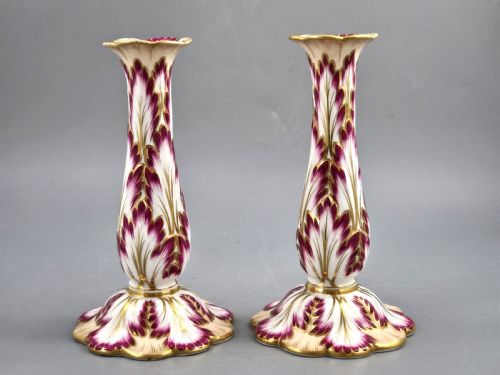
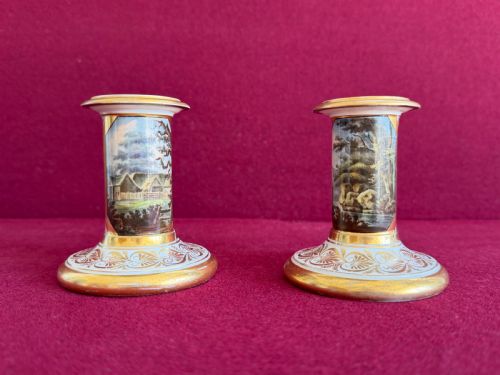
Many designs integrate secondary materials such as white or coloured marble for the plinths, and hand-cut glass pendants or drops known as lustres. Stoneware and porcelain elements from makers like Worcester and Ridgway also feature in the material mix of the period.
Regency Gilt Candlesticks Retail Price Guide 2026
Typical asking prices for regency gilt candlesticks among the pieces listed under this phrase on Sellingantiques today, from the lower quarter to the upper quarter. They describe what is for sale here now, not the wider market.
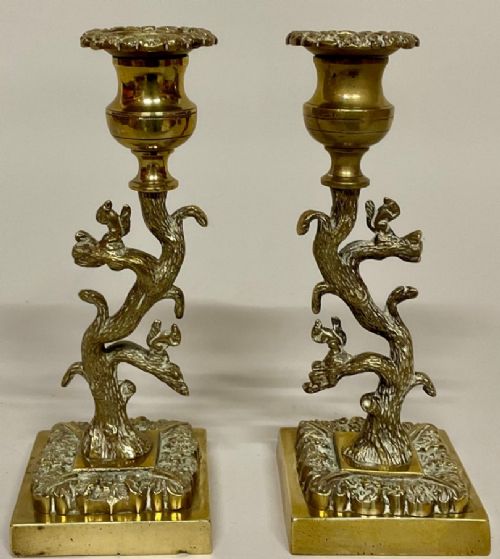
Squirrels nibble nuts amongst tree branch stems and stogs pose beside does, proving the Regency fondness for woodland whimsy.
Judging quality and execution
Composition and weight dictate overall merit, with finer pieces utilising heavier gauge bronze and substantial marble bases rather than lighter gilt metal alternatives. The integration of adjustable arms, multiple light tiers, and sculptural figures points to higher workshop ambition.
Ridgway·Barr, Flight & Barr·Mason's Ironstone·Thomas Hope
The Regency Gilt Candlesticks Glossary
- Ormolu
- Gilt bronze created by applying a mixture of gold and mercury to a bronze base and heating it. This historic technique produced a distinctive rich yellow colour.
- Patinated bronze
- Bronze treated with chemicals to darken the surface to a deep brown or black tone. This dark finish provided a strong visual contrast against bright ormolu mountings.
- Lustre
- A glass pendant or drop hung from the sconce or nozzle of a candlestick. They were designed to catch and multiply the candlelight.
- Campana
- A vase-shaped candle sconce resembling an upturned bell. It is a common feature on neoclassical candlesticks.
- Grand Tour
- The nineteenth-century practice where affluent travellers collected classical souvenirs in Europe. Many small bronzes and architectural items date from these travels.
Regency Gilt Candlesticks: Frequently Asked Questions
Were these pieces converted to electricity?
Many surviving examples have been adapted for modern electric bulbs over the decades. This conversion often involved drilling through the central stem to run wiring.
Collectors weigh the preservation of original components against the practical convenience of wiring when selecting lamps for a modern home.
How do I spot a later revival piece?
Revival items from the late nineteenth century often employ brighter electroplate gilding rather than traditional mercury or fire gilding. The bronze castings can also feel lighter or show different tool marks from machine finishing.
Examining the assembly pins, threading, and wear patterns helps distinguish an early nineteenth-century original from an eighteen-eighties copy.
What are cut glass lustres?
Lustres are faceted glass pendants suspended from the drip pan of a candlestick or candelabrum. They were engineered to vibrate and sparkle in the flickering light of wax candles.
Missing drops are common due to breakage over time, so checking for matched glass elements is a standard part of evaluation.