
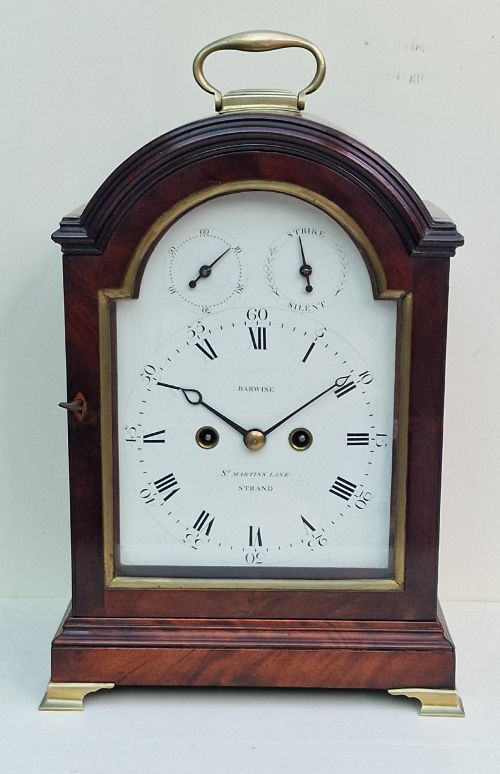
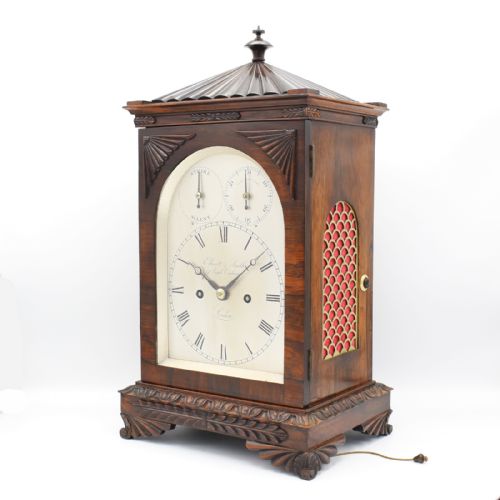
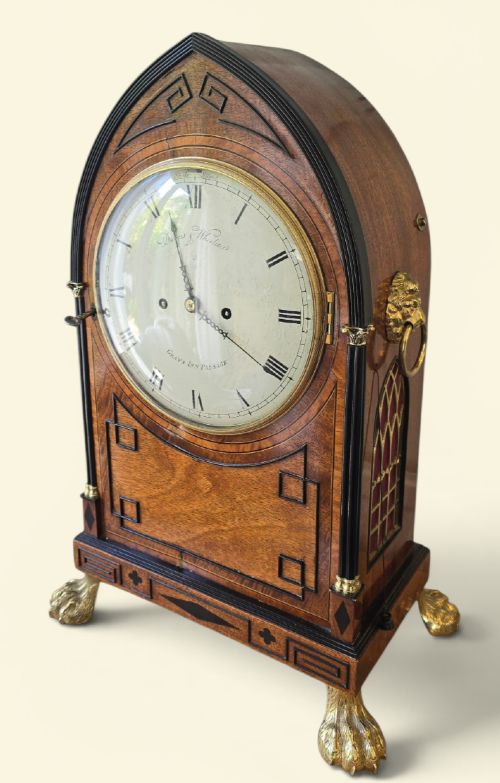
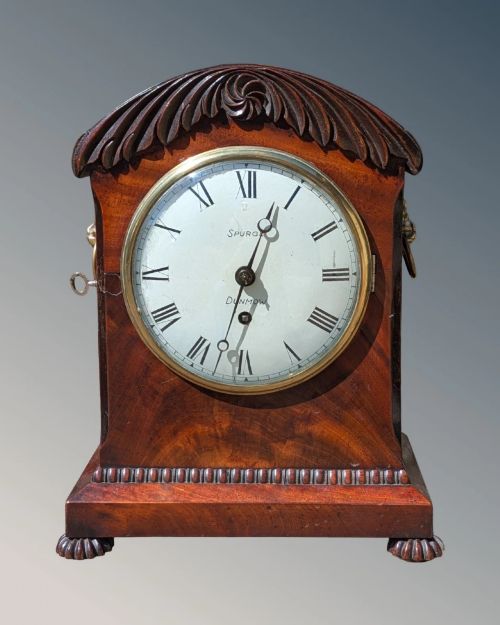


Regency Fusee Mantel Clock
A regency fusee mantel clock combines precise mechanical engineering with rich timber cases to anchor a room.
Regency Fusee Mantel Clock
A regency fusee mantel clock represents a pinnacle of horological design, typically housed in a robust timber case designed for a table or mantelpiece. Buyers searching for a regency fusee mantel clock encounter sturdy mechanical timekeepers originating predominantly from the Georgian, Regency, and Victorian periods.
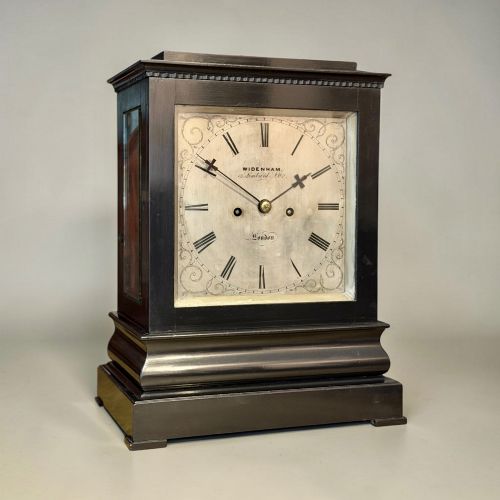
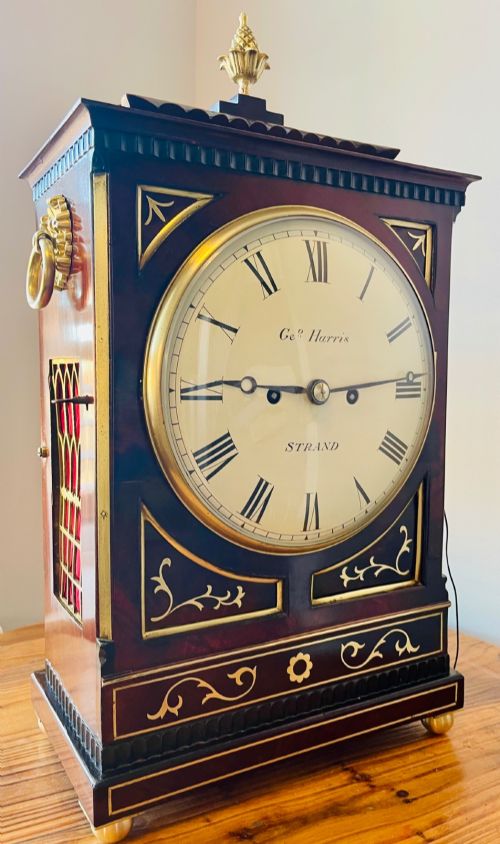
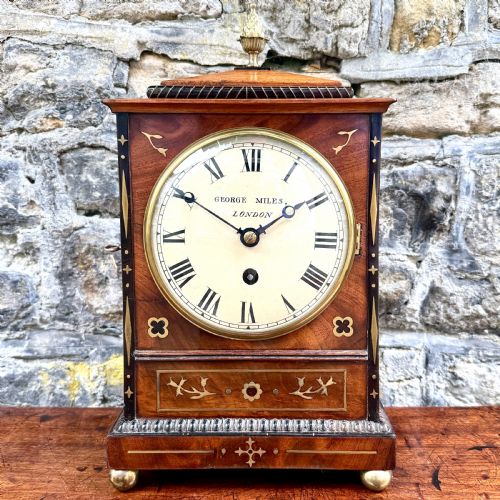
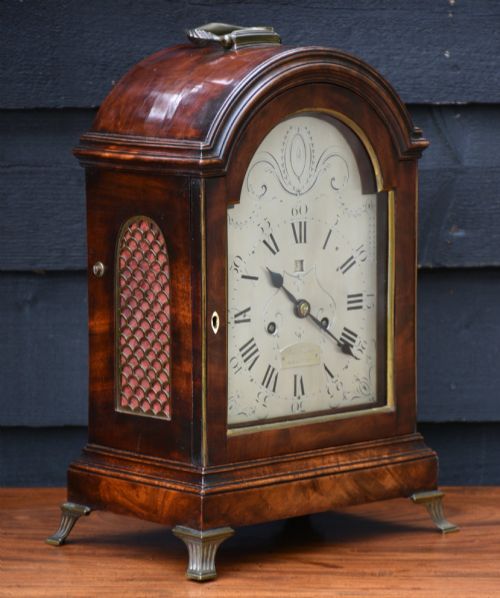
The objects appearing on this page span several distinct forms, including bracket clocks, library clocks, and balloon-cased timepieces. Mahogany forms the backbone of these offerings, supplemented by rosewood, ebonised wood, and occasionally marble or bronze cases.
Makers from London and provincial towns alike signed these works, producing variants ranging from simple single-fusee timepieces to complex twin-fusee striking models. The visual vocabulary draws heavily on neoclassical, grand Regency, and occasional revival styles.
Materials and Construction
Clockmakers built these cases using dense timbers like mahogany and pollard oak, frequently enhanced with brass inlay, gilt bronze mounts, or ormolu details. Dial construction relies on enamelled or silvered metal surfaces protected by glass bezels.
The mechanical heart relies on a fusee movement, a conical pulley system that equalises the declining power of the mainspring as it unwinds. This mechanical arrangement delivers even force to the gear train, ensuring accurate timekeeping across an eight-day or longer running period.
Listings feature mahogany, rosewood, and ebonised wood cases alongside marble and bronze examples from the nineteenth century.
Measures of Quality
Quality reveals itself in the crispness of the timber carving, the refinement of the brass mounts, and the complexity of the internal movement. Twin-fusee striking or repeating mechanisms demand higher skill than simple timepieces.
Signed movements by known makers command attention due to the precision of their engraved backplates and the durability of their escapements. The integration of materials, such as clean enamel dials paired with well-proportioned mahogany or marble cases, separates standard production from exceptional work.
Widenham of London·Barwise, London·Ellicott and Smith·Desbois and Wheeler·Cording of London·Thomas Connold·Taylor of London·Pennington of Camberwell·Budgen Croydon·Frodsham and Baker·William Hardy London·Berguer of the Strand·McCabe London·John Leroux·John McGregor·Vulliamy London·F Baetens London·Nicoll Great Portland St
The Regency Fusee Mantel Clock Glossary
- Fusee
- A conical pulley connected to the mainspring by a chain or cord. This mechanism maintains uniform tension on the clock train as the spring unwinds.
- Bracket clock
- A portable table clock originally designed to sit on a wall bracket. Many examples on this page are substantial wooden pieces meant for furniture tops.
- Twin fusee
- A movement utilising two separate fusee cones, one driving the going train and the other powering the striking or chiming mechanism.
- Silvered dial
- A metal clock face treated with a silver solution to create a matte metallic finish. These dials feature engraved numerals filled with dark wax.
- Pad top
- A raised, flat-topped timber architectural feature on a clock case. It provides a distinct profile typical of early nineteenth-century design.
Regency Fusee Mantel Clock: Frequently Asked Questions
What is a fusee movement?
A fusee is a conical pulley that moderates the pull of the mainspring. It ensures that power is delivered evenly to the gears as the spring runs down.
This clever mechanical device distinguishes better quality clocks from simpler spring-driven alternatives.
Where were these clocks placed?
These pieces were designed for prominent rooms in homes, sitting on mantelpieces, brackets, or library tables. Their portable nature allowed owners to move them between rooms as needed.
Despite the name mantel clock, many larger bracket clocks required sturdy table surfaces.
How do I wind the clock?
Winding involves inserting a key into the winding holes on the dial face to tension the mainspring. Care must be taken not to overwind the mechanism.
Most examples run for eight days before requiring another wind.
Are these clocks signed?
Many makers signed their work on the metal dial face or engraved the details onto the brass backplate behind the movement. Signatures often include the maker name and city of origin.
Unsigned dials still frequently display high craftsmanship in their construction.