


English Single Fusee Clock
An English single fusee clock brings steady, reliable mechanical timekeeping into a room through a traditional spring-driven movement.
English Single Fusee Clock
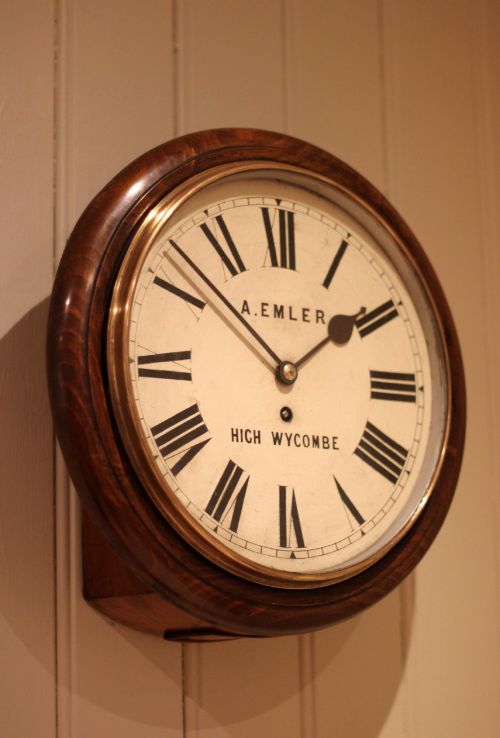
An English single fusee clock is a timekeeping device driven by a fusee cone that equals out the pull of the mainspring as it unwinds. When you search for an English single fusee clock, you encounter both wall-hung dial clocks and portable mantel or library pieces. These items originate across several eras, including the Georgian, Regency, Victorian, and Edwardian periods.
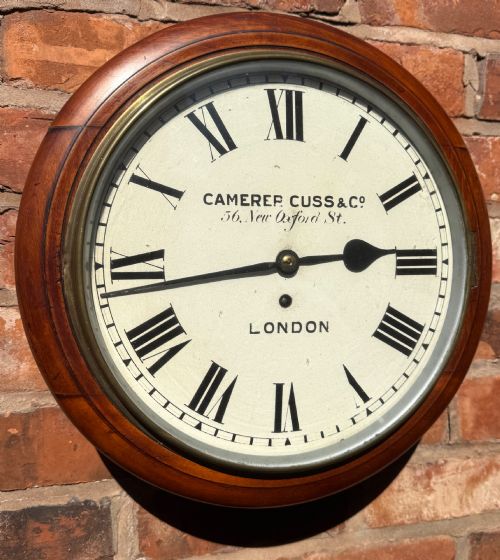
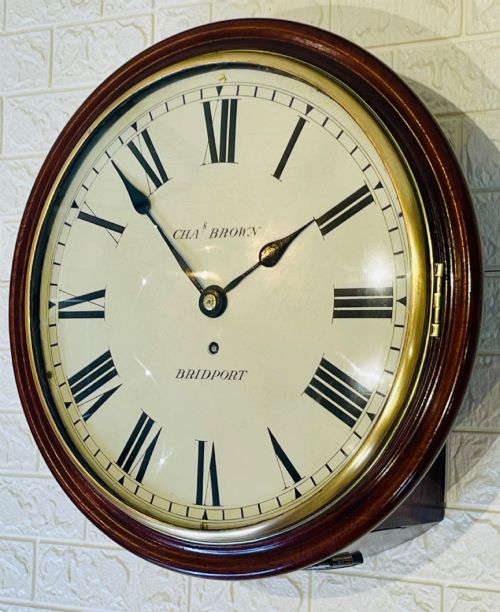
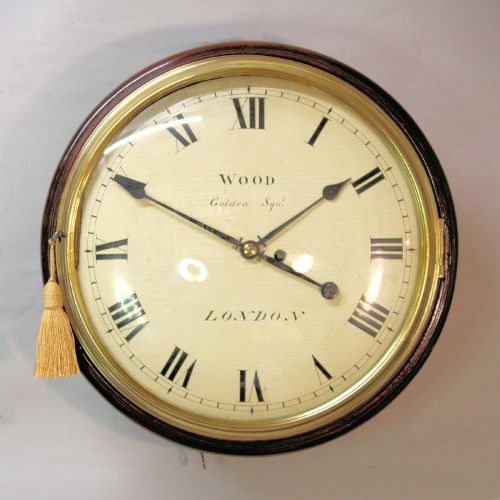
Dial clocks designed for walls appear frequently on this page, often cased in mahogany or oak. Smaller library and mantel timepieces also feature regularly, constructed from materials like brass, gilt bronze, and slate. Makers and retailers placed these clocks in public buildings, railway stations, and domestic rooms alike.
Materials and construction
Cases rely heavily on timbers such as mahogany, oak, and satinwood, frequently shaped into circular wall frames or rectangular architectural housings. Metal components incorporate brass, iron, and gilt bronze, often applied tobezels, side panels, and decorative figures. Dials emerge in painted wood, iron, or convex white enamel with Roman or Arabic numerals.
The mechanical heart uses a brass wheel train regulated by a pendulum or balance wheel, powered via a chain or cord wrapped around the conical fusee drum. Master clockmakers housed these movements inside sturdy wooden boxes or four-glass brass cases designed to protect the delicate gears from dust and air currents.
Materials appearing across the current selection include mahogany, oak, satinwood, brass, gilt bronze, iron, slate, and enamel.
Craftsmanship and condition
Quality rests in the crispness of the movement cutting, the precision of the fusee cone spiraling, and the integrity of the case joinery. Finer examples retain their original painted dials, signed backplates, and matching numbered components rather than replacement parts.
The distinction between standard utility items and exceptional pieces lies in the decorative ambition of the case. Elaborate gilt bronze mounts, carved wooden pagodas, or specialised architectural stonework elevate a functional timepiece into an ornamental centrepiece.
Camerer Cuss And Co·Barrett London·Thomas Cole·James Cole·John Walker·Barraud And Lund·John Massey·Fatton Eleve De Breguet
The English Single Fusee Clock Glossary
- Fusee
- A conical pulley used inside a clock movement to equalize the decreasing power of a mainspring as it unwinds. This clever cone ensures the driving force remains even throughout the running period.
- Dial clock
- A wall-mounted timepiece featuring a prominent circular face framed by a wooden surround. These round faces typically display bold numerals for clear reading from a distance.
- Library clock
- A compact mantel or table timekeeper built for domestic or study rooms. They often employ brass and glass construction to display the moving escapement.
- Bezel
- The ring of brass or wood that holds the glass protecting the clock face. It usually hinges open to allow hand-setting.
- Drop dial
- A wall clock configuration where the circular dial sits atop a short wooden trunk or box. This lower section accommodates a longer pendulum swing.
- Chain fusee
- A mechanism utilising a fine steel chain instead of a gut line to connect the mainspring barrel to the fusee cone. This variation provides superior durability and smooth power transfer.
English Single Fusee Clock: Frequently Asked Questions
How do I wind the clock?
Wind the movement using a fitting key inserted into the dial aperture, turning it slowly until resistance indicates a full spring.
Avoid over-winding the mechanism, as this places unnecessary stress on the chain and internal components.
Where should I place a wall clock?
Mount the piece securely on a solid internal wall away from dampness, direct sunlight, and extreme temperature shifts.
Ensure the hanging surface remains completely flat so the pendulum or escapement beats in an even rhythm.
How does a fusee work?
The conical pulley system compensates for the declining tension of the unwinding mainspring by altering the leverage radius.
As the spring loses power, the chain moves to a wider part of the cone, maintaining consistent torque.
How do I identify the period?
Examine the case timber, dial materials, and decorative motifs against known historical design eras like Regency or Victorian.
Signatures inscribed on the dial or movement backplate often point to a specific working decades or active maker.