
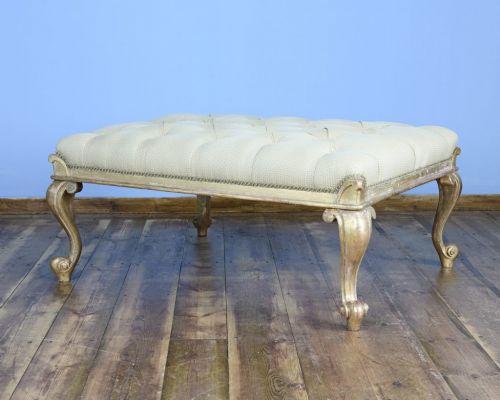
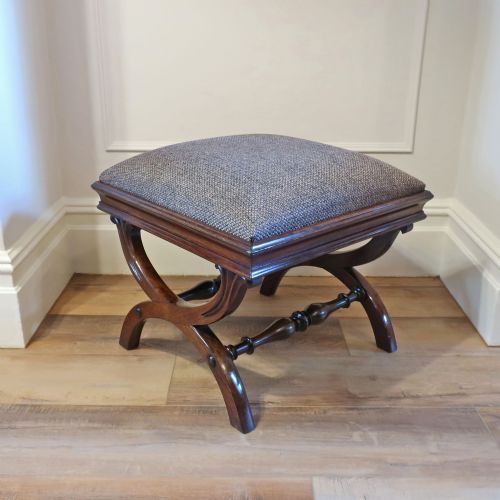
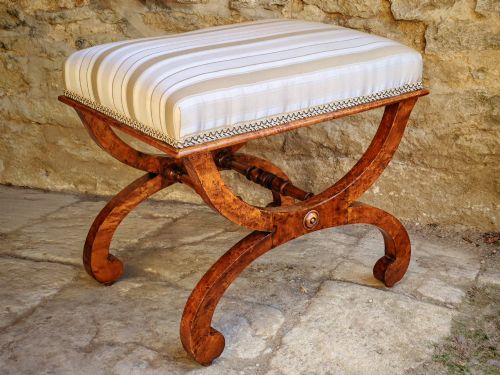


Regency Footstool
When you select a regency footstool, you introduce a remarkably versatile seating form that bridges formal entertaining and everyday domestic comfort.
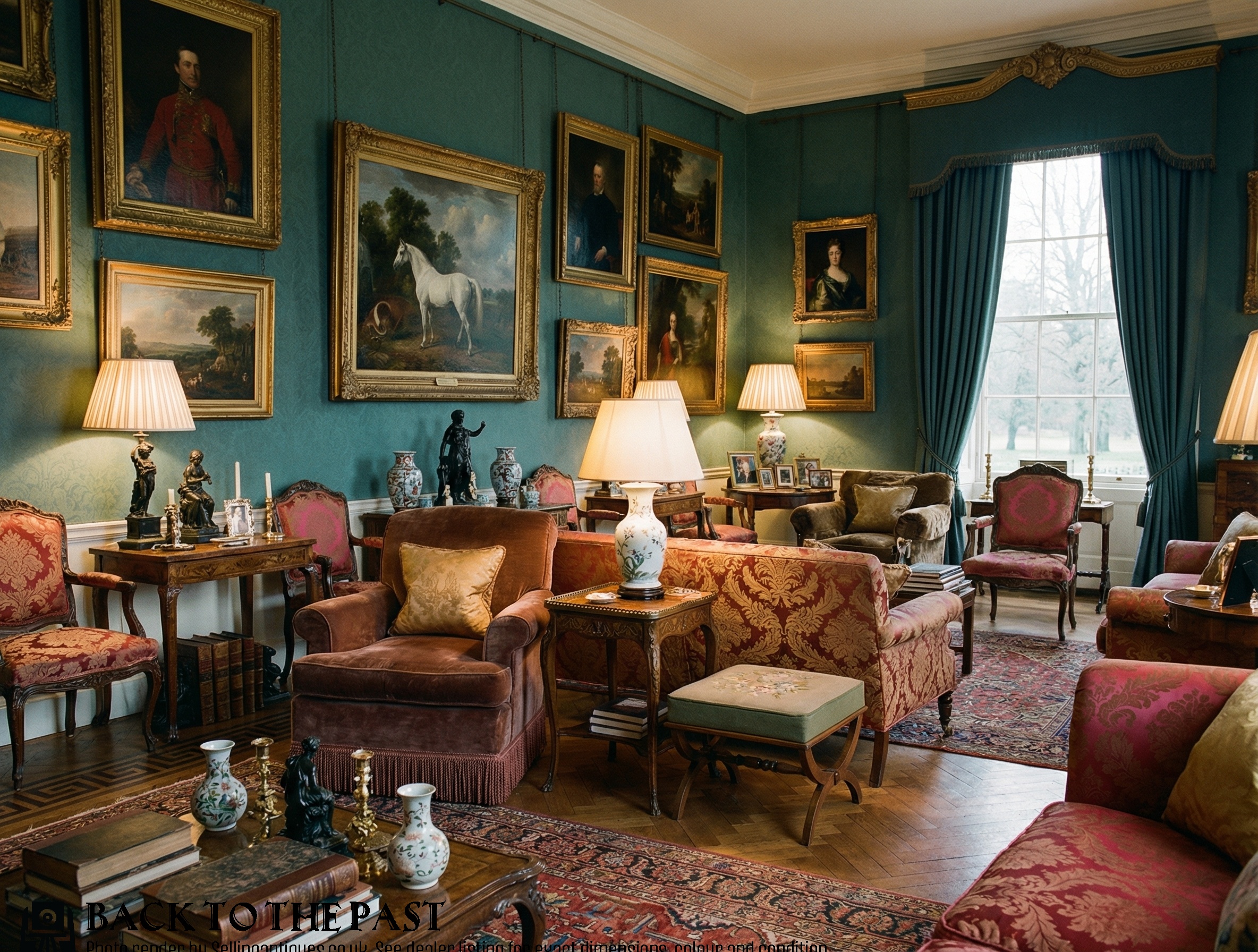
Regency Footstool
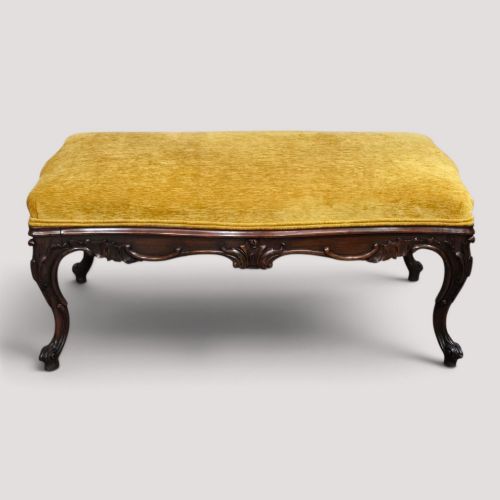
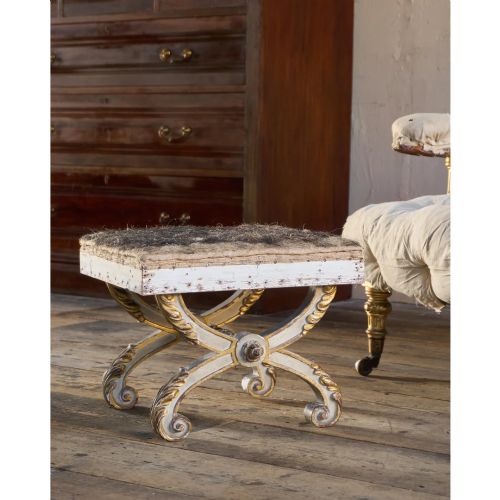
A regency footstool serves primarily as a low rest for the feet or as a compact seat near the fireplace, often sharing stylistic roots with larger window seats and ottomans. You will frequently encounter mahogany and rosewood frames alongside more elaborate giltwood or painted pine structures.
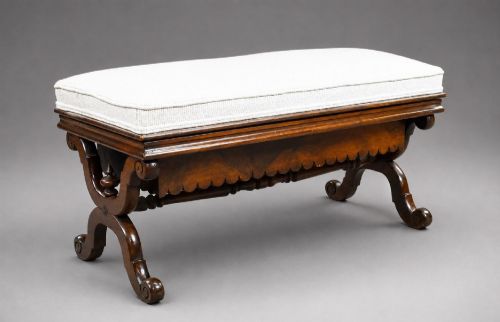
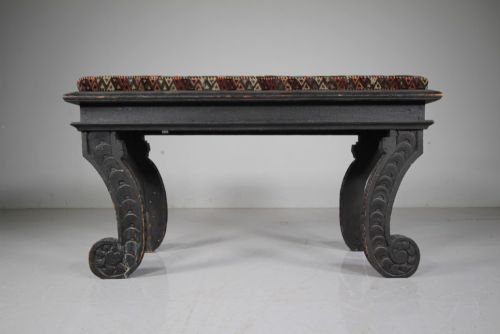
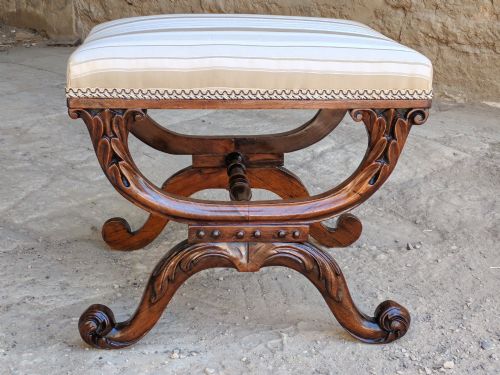
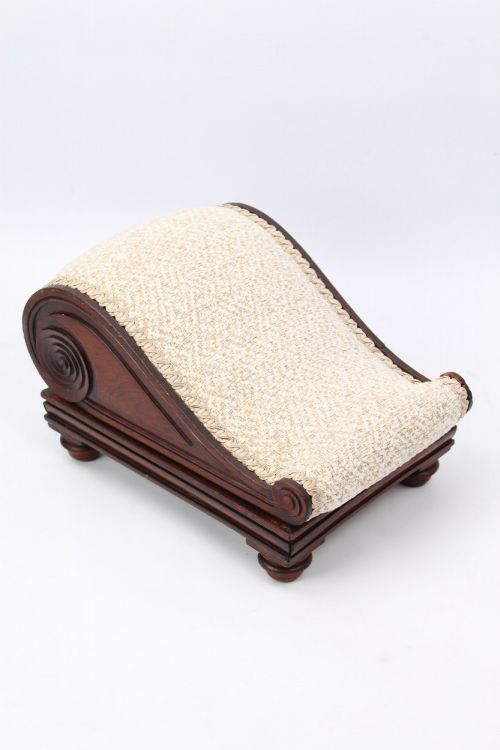
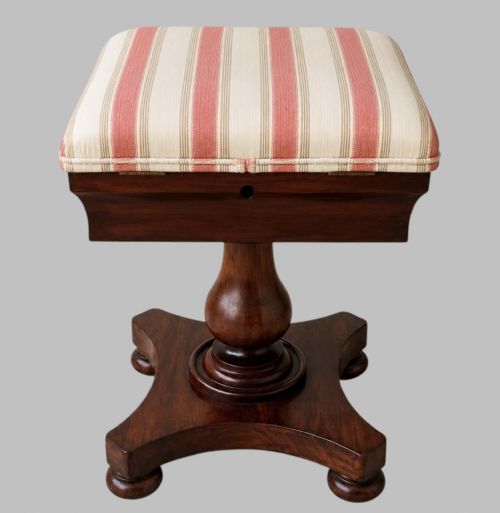
The silhouettes range widely from simple square designs on turned and tapered legs to dramatic X-framed curule models and scroll-top variants. Many examples incorporate clever dual purposes, functioning equally well as sewing boxes, work tables, or low ottomans with hinged lids.
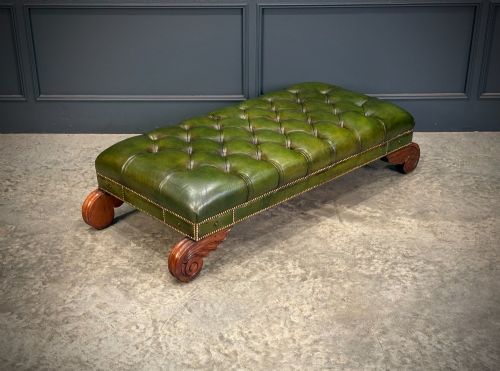
Originating largely from the early nineteenth century, these pieces reflect the neoclassical tastes of the Regency and William IV periods. Surviving examples demonstrate how robust timber framing was combined with buttoned leather, velvet, chenille, or traditional ticking upholstery.
Materials and Construction Methods
Cabinetmakers relied heavily on dense hardwoods like mahogany and rosewood, occasionally utilising exotic timbers such as yew wood, burr maple, or ebony for decorative impact. These woods were turned, carved, or parcel-gilded to achieve the clean lines and classical proportions characteristic of the era.
Upholstery techniques involved sturdy internal webbing and padding finished in contemporary textiles, leather, or needlepoint. Decorative elements like brass castors, lion's paw feet, and ormolu mounts were frequently added to elevate the status of the piece.
Regency Footstool Retail Price Guide 2026
Typical asking prices for regency footstool among the pieces listed under this phrase on Sellingantiques today, from the lower quarter to the upper quarter. They describe what is for sale here now, not the wider market.
Some diminutive Victorian models served as specialised gout stools designed to elevate tender feet with absolute dignity.
Markers of Distinction in Construction and Design
The distinction between standard domestic seating and exceptional examples lies in the crispness of the timber carving and the sophistication of the frame geometry. Superior pieces often feature complex structural forms such as the X-frame curule or include integrated storage compartments with functioning locks and fitted interiors.
Miles & Edwards·Mathew Gregson
The Regency Footstool Glossary
- Curule
- An ancient chair shape featuring two curved legs that cross in an X-form, popular in Regency revival and classical designs.
- Ottoman
- A low, upholstered seat or bench without a back or arms, frequently used for resting feet or storing textiles.
- Giltwood
- Timber treated with gold leaf or gold paint to simulate solid gold enrichment, seen on high-status Regency seating.
- Sabre leg
- A concave-tapered furniture leg sweeping outward in a graceful curve reminiscent of a cavalry sword.
- Caned
- Woven rattan or split cane panels utilised for lightweight and breathable seat tops on various nineteenth-century stools.
Regency Footstool: Frequently Asked Questions
How were regency footstools originally used?
These low seats functioned primarily for resting feet near parlour fireplaces or assisting with dressing routines in bedrooms. Many examples also served as impromptu seating for music recitals or housed sewing accessories inside hinged box ottomans.
Their compact proportions allowed them to be moved easily around the principal reception rooms as household needs dictated.
What defines a true regency period piece?
Authentic pieces date roughly from the early nineteenth century and display classical neoclassical proportions derived from Greek and Roman design. Look for characteristic timbers such as mahogany and rosewood combined with sabre legs or scrolled supports.
Makers of this era favoured clean structural lines punctuated by restrained carving rather than heavy ornamentation.
Are these footstools sturdy enough for daily seating?
Most surviving frames were built from dense hardwoods like mahogany or rosewood, providing robust structural integrity. Traditional joinery ensures they remain durable for contemporary domestic use.
Care should be taken with delicate X-frame models or lighter decorative woods to preserve their historical framework.
How do you distinguish between Regency and William IV styles?
Regency designs tend to be lighter, more refined, and heavily influenced by classical archaeology with delicate sabre legs and reeding. William IV examples generally appear heavier, bolder in scale, and feature more robust scrollwork or parcel gilding.
Both periods overlap considerably in the early nineteenth century, sharing similar timber palettes and upholstery methods.