
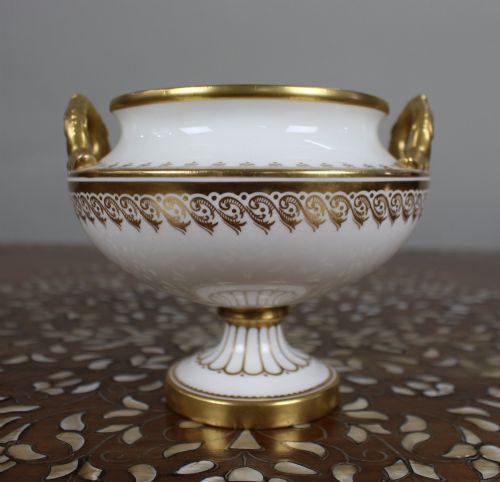

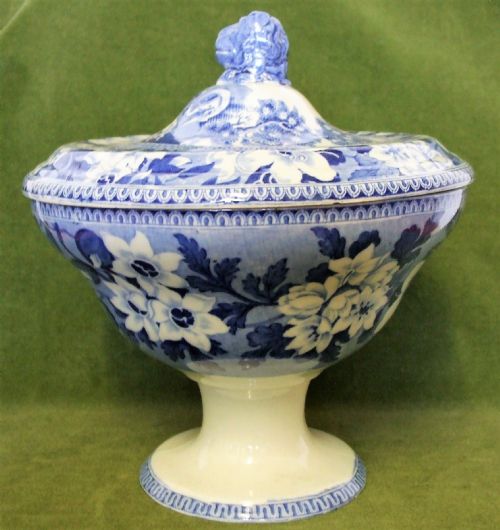


Regency Footed Bowl
These pieces known as a regency footed bowl offer raised vessels from the Georgian and Regency eras, bringing period elegance directly to a sideboard or table.
Regency Footed Bowl
A regency footed bowl brings together raised vessels from the Georgian and Regency periods, alongside later Victorian interpretations. Buyers searching for a regency footed bowl will encounter ceramic, glass, and brass examples designed to sit elevated upon pedestals, feet, or stands.
The selections available here span earthenware, transferware pottery, porcelain, and cut lead crystal. Forms range from fruit bowls and comports to jardinières and tureens.
Neoclassical influence appears frequently across the pieces, alongside classical proportions and transfer-printed patterns. Most examples originate from nineteenth-century English workshops and potteries.
How they were made
Makers shaped these vessels using hand-blown and cut lead crystal, alongside moulded earthenware and porcelain bodies. Brass pieces utilise repoussé techniques to hammer designs into relief from the reverse.
Pottery examples feature transfer printing in blue and white, hand-applied gilding, and colourful ceramic glazes. Glass versions rely on deep hobnail cutting and faceted pedestal stems to catch the light.
Animals make charming appearances, from transfer-printed elephants and bengal tigers to beaten brass animal heads guarding the planters.
What varies in quality
The distinction between standard domestic wares and superior examples rests upon the crispness of the cutting in crystal and the precision of the transfer print on pottery. Finer porcelain and earthenware pieces display controlled gilding and well-modelled forms rather than heavy or clumsy shaping.
Material thickness and weight differentiate utilitarian containers from display-grade centrepieces. Brass items demonstrate quality through the sharpness of the repoussé work and the integrity of the joins.
John Rogers & Son·Ridgway·Minton
The Regency Footed Bowl Glossary
- Comport
- A raised dish or bowl on a foot, traditionally used for serving fruit or sweetmeats at dessert.
- Jardiniere
- An ornamental pot or stand designed to hold a plant or floral arrangement indoors.
- Repoussé
- A metalworking technique where a design is hammered into relief from the reverse side.
- Transferware
- Pottery decorated by applying a printed design from an engraved copper plate using tissue paper.
- Hobnail
- A raised, faceted glass pattern resembling the hobnails used on stout boots.
- Tureen
- A deep covered bowl used originally for serving soup or vegetables at the dining table.
Regency Footed Bowl: Frequently Asked Questions
What is a regency footed bowl used for?
These elevated vessels served multiple domestic purposes in period homes, frequently holding fruit, flowers, or sweetmeats upon the dining or drawing-room table.
Today, they function as decorative centrepieces or planters, adding period character to sideboards and mantelpieces.
How do I date a regency footed bowl?
Dating relies upon examining the material composition, manufacturing marks, and stylistic clues such as neoclassical forms or transfer-printed patterns.
Comparing the base, glaze, and cutting style to documented examples from the Georgian and Regency eras provides the most reliable timeline.
How do I care for an antique bowl?
Gentle hand washing in lukewarm water with mild soap protects the delicate gilding, transfer prints, and aged surfaces of antique ceramics and glass.
Harsh detergents, dishwashers, and abrasive cloths must be avoided to preserve the original material integrity.