



Regency Embroidery Picture
A regency embroidery picture brings delicate silkwork and needlework into your home, offering a glimpse into early nineteenth-century domestic artistry.
Regency Embroidery Picture
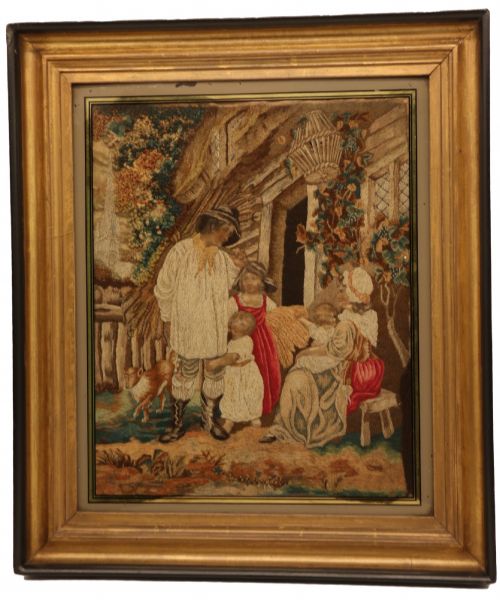
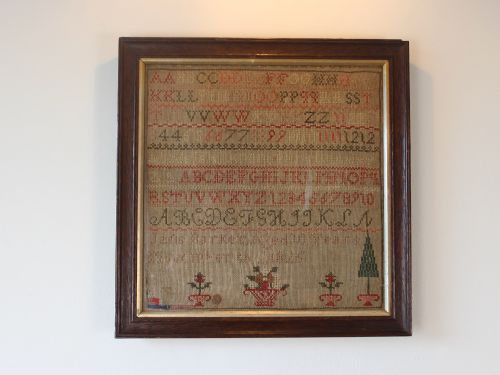
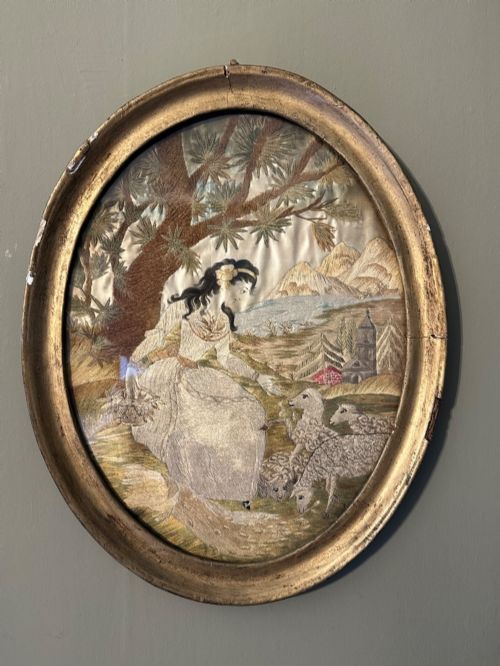
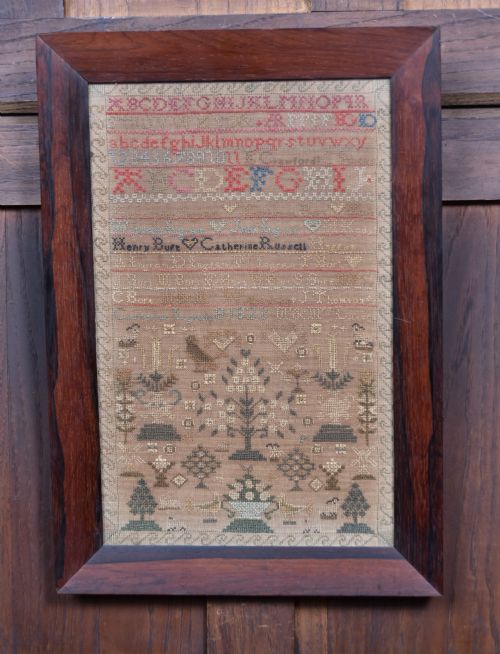
A regency embroidery picture typically takes the form of framed wall art, needlework samplers, or textile pictures created during the Georgian and Regency periods. You will regularly encounter silkwork pictures, woolwork scenes, and crewel work embroidery originating from the early nineteenth century.
The subjects range from alphabet samplers and garden portraits to narrative scenes like Jack and the Beanstalk, often worked on linen or silk grounds. Pairs of long stitch silk pictures and oval woolwork panels also feature frequently among these listings.
How they were made
Maker's work relied primarily on silk, wool, and felt stitched onto a linen backing, occasionally combined with hand-painted details. Threads of various weights allowed artisans to build texture and depth within the embroidered surface.
Framing often utilised glass, giltwood, gold leaf, and verre églomisé techniques, particularly mezzotint black glass borders that framed the textile art. Original gilt wood frames survive on several examples, preserving the integrity of the piece.
Regency Embroidery Picture Retail Price Guide 2026
Typical asking prices for regency embroidery picture among the pieces listed under this phrase on Sellingantiques today, from the lower quarter to the upper quarter. They describe what is for sale here now, not the wider market.
Jack and the Beanstalk occasionally makes an unexpected appearance in early nineteenth-century silkwork.
What varies in quality
Distinction lies in the precision of the needlework and the survival of the original materials, such as the silk ground and hand-painted elements. Finer examples display intricate stitchwork and well-preserved colour within the wool and silk threads.
The quality of the framing also dictates the overall standard, with original giltwood frames and verre églomisé glass panels elevating the piece above standard later remounts.
The Regency Embroidery Picture Glossary
- Silkwork
- Embroidery executed primarily using silk threads on a linen or silk ground. This technique often produced pictorial scenes with a smooth, reflective surface.
- Verre Églomisé
- A process of applying gold leaf or painting on the reverse side of glass. It appears frequently on the borders of Regency frames.
- Crewel work
- Embroidery using wool yarn on a plain-woven fabric. It creates a heavier, more textured finish than standard silk stitching.
- Mezzotint glass
- Darkened or black glass used in framing during the period. It provides a contrasting border that enhances the tones of the embroidery.
Regency Embroidery Picture: Frequently Asked Questions
How should I display my embroidery picture?
Keep textile art away from direct sunlight to prevent the silk and wool threads from fading over time. Stable indoor humidity helps preserve both the delicate fabric ground and the original wooden frame.
Mount the picture securely on an interior wall using appropriate fixings for the weight of the glass and wood. Avoid hanging pieces in damp spaces such as kitchens or unheated rooms.
Are these pictures handmade?
Every piece from this era represents entirely hand-stitched needlework executed by makers using traditional techniques. Artisans combined various thread weights and sometimes added hand-painted sections to achieve pictorial depth.
The backing fabrics and framing methods also reflect period craftsmanship, utilising materials like linen, silk, and giltwood. Machine assistance played no part in the creation of these historical textiles.
How can I tell the period?
Dating relies on stylistic markers, framing types, and materials characteristic of the Georgian and Regency eras. Alphabet samplers often bear specific dates, while pictorial silkworks show stylistic alignment with early nineteenth-century art.
The presence of original verre églomisé glass and giltwood frames further assists in confirming the period of origin. Material analysis of the linen backing and thread types provides additional clues to the exact era.
What is the difference between samplers and pictures?
Samplers primarily served as practical exercises in lettering, numbers, and stitch variations, often featuring alphabets and dates. They demonstrate the maker's technical proficiency across a range of traditional embroidery stitches.
Pictures focus entirely on narrative scenes, landscapes, or portraits designed specifically for display as wall art. While both utilise similar threads and grounds, their intended purpose and visual composition differ significantly.