




Nineteenth Century Needlework
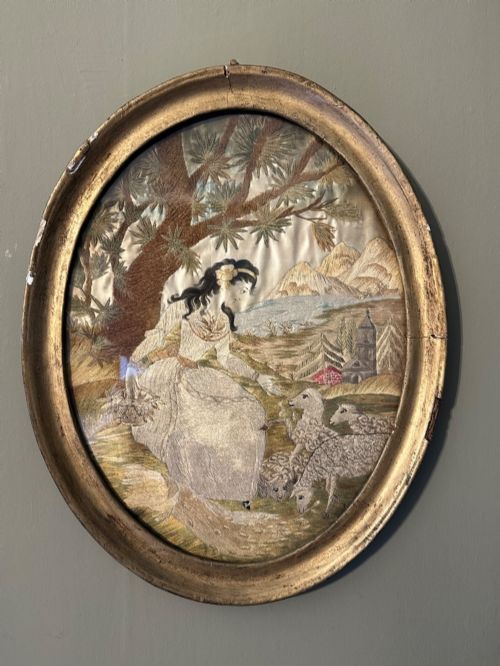
Nineteenth century needlework encompasses delicate silk pictures, framed woolwork tapestries, and intricate samplers executed across the Victorian and Regency periods.
Nineteenth Century Needlework
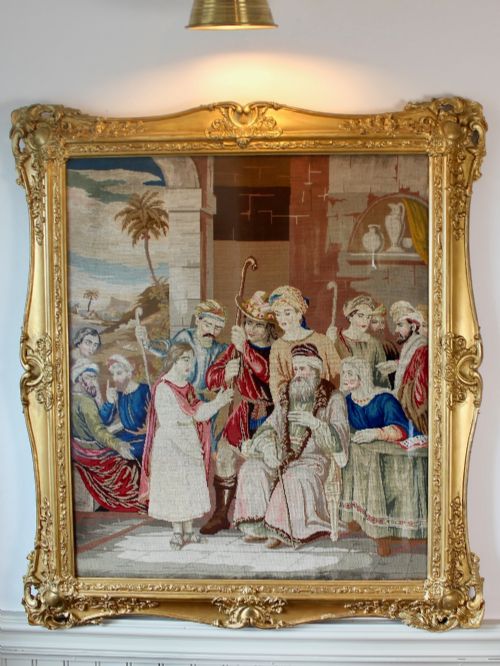
Nineteenth century needlework spans framed textile art, samplers, and functional furnishings designed for domestic display and practical handiwork. Collectors encounter framed Berlin woolwork pictures, pictorial tapestries, and embroidered samplers documenting dates and names from the period.
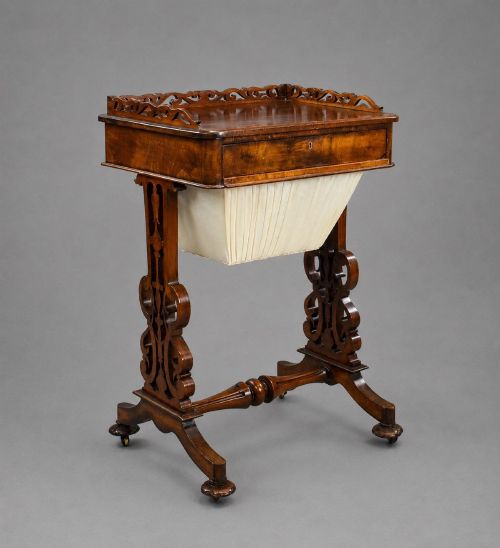
The material record includes silk, wool, and gros-point embroidery mounted in gilt frames or integrated directly into specialised furniture. Sewing tables and work boxes in rosewood, mahogany, and burr walnut frequently accompany these textiles as part of the broader category.
Materials and Technique
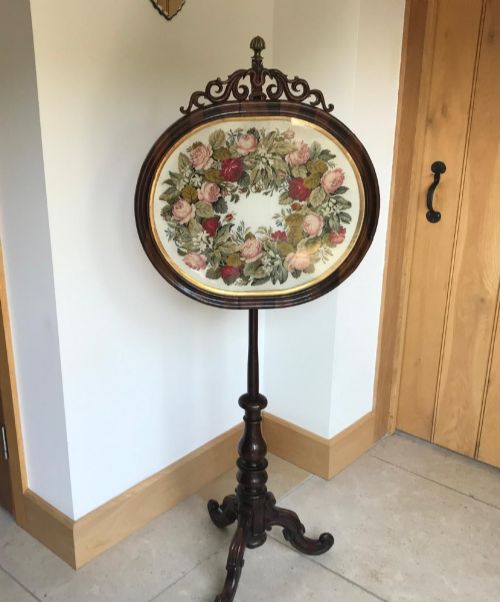
Executions rely upon natural fibres including silk thread and dyed wool worked across canvas or open-weave linen grounds. Berlin woolwork utilised gridded pattern charts, enabling makers to produce pictorial scenes with shaded colour gradations.
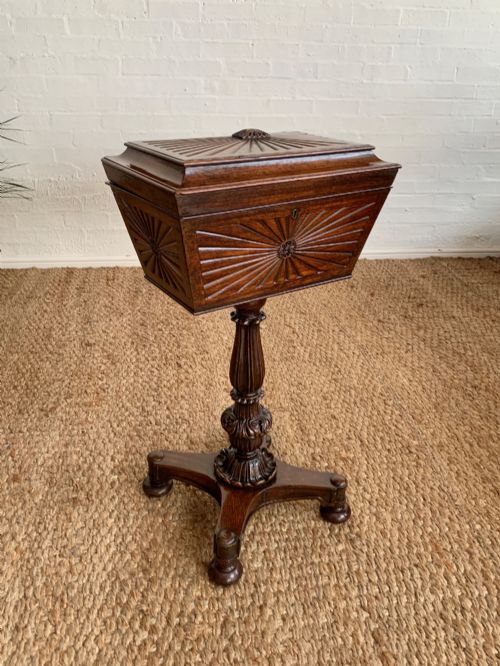
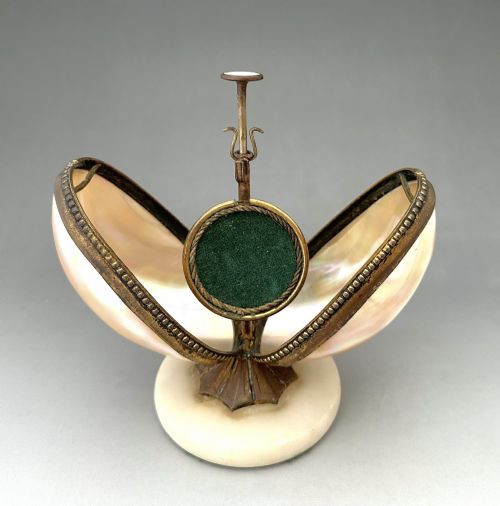
Wooden supports for textile panels and associated sewing furniture employ dense timbers such as rosewood, mahogany, and burr walnut. Inlays of mother-of-pearl, marquetry, and delicate brass fittings complete the construction of the housed boxes and tables.
Stitched tales of Little Red Riding Hood and Pharaoh's Dream stare out from wool canvases, proving Victorian stitchers liked a dramatic plot.
Assessing Quality
Quality rests in the precision of the stitch work, the complexity of the colour shading, and the integrity of the surviving textile ground. Tightly executed gros-point and finely graded silk threadwork distinguish superior pictorial pieces from simpler schoolroom samplers.
The physical housing dictates overall merit where textiles meet furniture or frames. Original gilt frames, sound timber carcases, and complete internal fittings in sewing tables elevate a piece above altered or heavily restored examples.
The Nineteenth Century Needlework Glossary
- Berlin woolwork
- A type of counted-thread embroidery using brightly dyed wools worked on a canvas mesh from printed pattern charts. This technique gained immense popularity during the mid-Victorian era for pictorial wall hangings and cushions.
- Sampler
- A piece of embroidery produced as a demonstration or test of skill in various stitches, frequently recording the maker's name, age, and date. They serve as primary records of domestic needle skills across the nineteenth century.
- Gros-point
- A form of needlepoint stitch worked coarsely over canvas to create durable, textured pictorial surfaces. It appears frequently in nineteenth century chair covers and framed wall panels.
- Work table
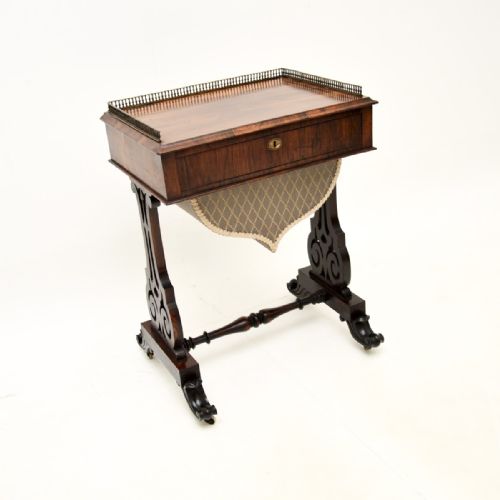
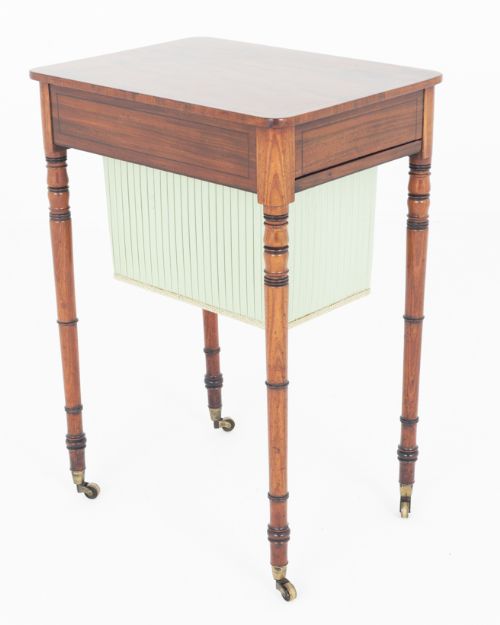
- A specialised piece of furniture featuring compartments, drawers, or suspended fabric bags designed to hold sewing implements and threads. These tables combine utilitarian storage with decorative cabinet woods like rosewood and burr walnut.
- Etui
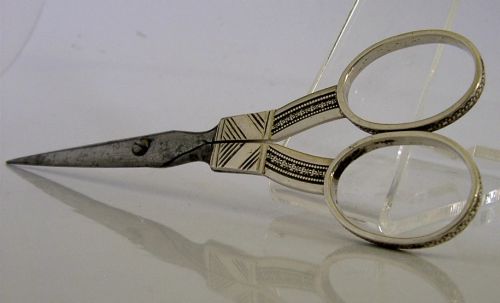
- A small ornamental box or case fitted for holding sewing needles, scissors, and other small toilet or crafting implements. Materials range from mother-of-pearl to precious metals.
Nineteenth Century Needlework: Frequently Asked Questions
What subjects appear in nineteenth century needlework?
Common subjects include biblical scenes, literary depictions, allegorical figures, and detailed floral arrangements. Pictorial works often translate contemporary paintings or popular prints into stitched form.
Samplers focus on alphabets, numerals, and genealogical records alongside commemorative dates and maker signatures.
How do I care for antique needlework?
Keep textile pieces away from direct sunlight to prevent fading of the dyed wools and silks. Display them in stable indoor environments away from excessive moisture and fluctuating temperatures.
Avoid hanging framed woolwork in humid spaces such as kitchens or unheated rooms. Dust glass-fronted frames gently with a dry microfiber cloth.
How can I date a needlework sampler?
Examine the piece for stitched dates, names, and locations which often appear directly on the canvas. Stylistic cues in the border designs, lettering fonts, and framing materials also help narrow the period.
Schoolgirl samplers from the early decades tend to feature simpler geometric layouts, whereas mid-century examples incorporate elaborate floral borders and architectural motifs.
Were sewing tables used exclusively for needlework?
These versatile pieces served multiple functions within the nineteenth century drawing room, acting as writing desks, games tables, and occasional stands. The fitted interiors accommodated writing supplies, cards, and small personal items alongside sewing tools.
Drop-leaf surfaces and compartmentalized drawers provided adaptable space for whatever domestic task was at hand.