


Historical Needlework Art
Historical needlework art comprises framed textile pictures, samplers and tapestries that preserve centuries of hand embroidery and stitchery.
Historical Needlework Art
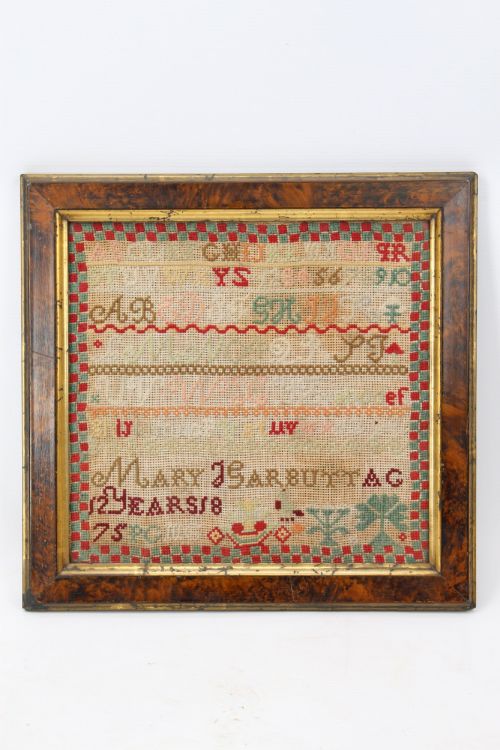
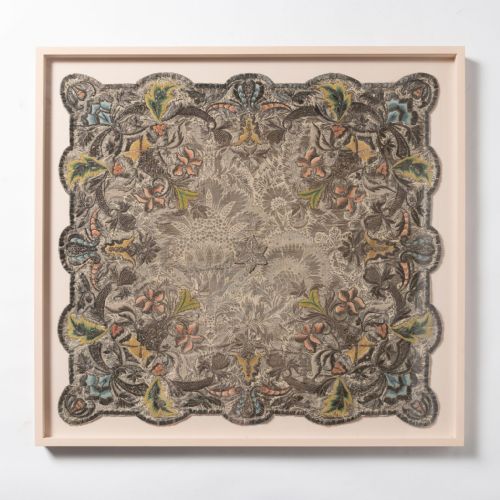
When you search for historical needlework art, you encounter framed textile pieces, samplers, and tapestries created across several centuries. The selections available encompass everything from early Tudor coifs to Victorian samplers and framed Dutch silk panels.
You are most likely to meet Victorian samplers and needlework pictures on this page, alongside earlier English and continental panels. These works take the form of wall art, textile art, and cushion covers, preserving the domestic handiwork of past generations.
The origins span England, Germany, and the Netherlands, with periods stretching from the late sixteenth century through the Georgian and Victorian eras. Each piece represents a specific tradition of needlecraft, often bearing the maker's name and date.
How they were made
Maker's work relied on foundational textiles such as linen and wool, stitched with threads of silk and metal. Artisans employed various needlework techniques to build detailed pictorial scenes, lettering, and decorative borders.
Framing often involves wood or gilded wood, which protects the fragile textiles while displaying them as wall art. Tapestries and cushion covers utilise heavier woollen yarns woven or worked on sturdy grounds to ensure longevity.
Listings feature works spanning from the 16th century through the Victorian era, utilising silk, linen, wool, and gilded wood.
What varies in quality
Quality rests in the precision of the stitchery and the complexity of the pictorial composition, such as the detailed depiction found in horse racing scenes or Dutch embroideries. The survival of delicate materials like silk and metal thread across centuries dictates the overall desirability.
Condition and preservation of the original ground fabric, whether linen or wool, separate ordinary examples from exceptional survivals. The integrity of the framing and the legibility of inscriptions, dates, and maker signatures also influence the standing of the piece.
The Historical Needlework Art Glossary
- Sampler
- A piece of needlework produced to demonstrate a maker's proficiency in various stitches and alphabets. These often include names, dates, and religious or moral verses.
- Coif
- A close-fitting cap worn in the sixteenth and seventeenth centuries, frequently decorated with intricate whitework or coloured silk and metal thread embroidery.
- Berlin wool work
- A type of counted-thread embroidery popular in the nineteenth century, worked in brightly coloured wools using charted patterns. It often produced large, vibrant tapestries and wall hangings.
- Tapestry
- A form of textile art woven on a loom or worked by hand on a canvas ground, depicting figural scenes or decorative foliage.
Historical Needlework Art: Frequently Asked Questions
How do I date an old sampler?
Look for stitched dates, maker names, and stylistic clues within the lettering and border designs. Comparing the materials, such as linen grounds and silk threads, against known period examples helps confirm the age.
Changes in alphabet styles and pictorial motifs across the seventeenth, eighteenth, and nineteenth centuries provide reliable markers for determining when the needlework was completed.
How were needlework pictures displayed?
Historically, finished embroideries and samplers were mounted on wooden stretchers and framed to protect the delicate textiles from dust and handling. Many were hung on domestic walls as decorative art.
Porter and cushion covers served functional roles in the home, combining durable wool work with practical domestic use while still showcasing decorative needlecraft.
What is metal thread embroidery?
Metal thread embroidery incorporates fine wires or flat strips of metal, often gilt or silver, stitched onto the textile ground to create shimmering details. It frequently appears in seventeenth-century English and Dutch panels.
This technique required great skill to handle the rigid threads without damaging the underlying silk or linen fabric, resulting in opulent visual effects.
How do I care for framed needlework?
Keep textile art away from direct sunlight and high humidity to prevent the silk, wool, and linen threads from fading or degrading. Stable indoor temperatures preserve the structural integrity of the fabric.
Ensure pieces remain securely framed behind glass to protect the surface from dust, and avoid placing them in damp environments where mould might affect the organic materials.