



Victorian Tapestry Hanging
These victorian tapestry hanging pieces bring rich textile artistry and historic character to a room.
Victorian Tapestry Hanging
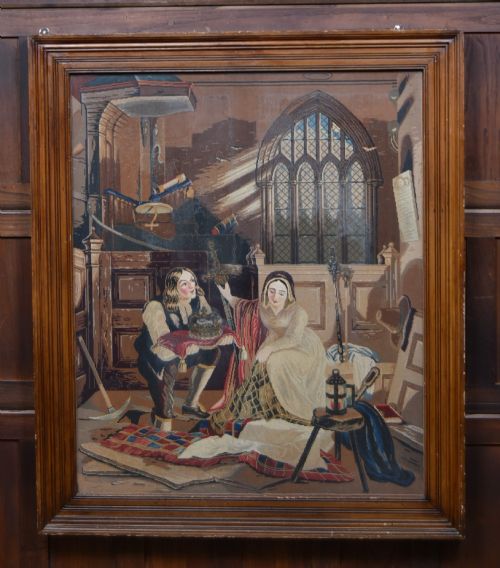
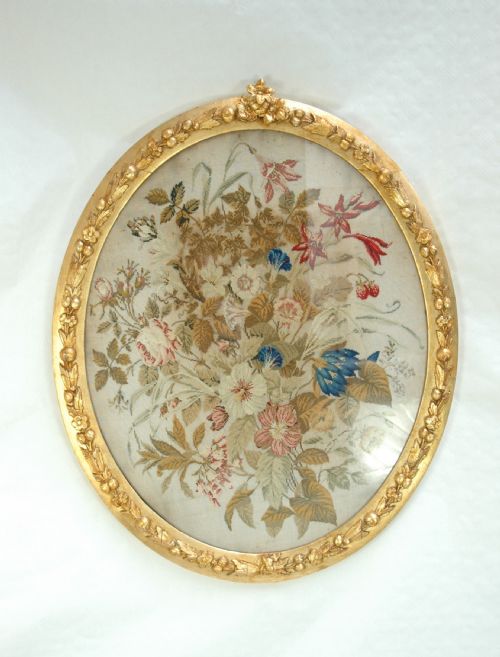
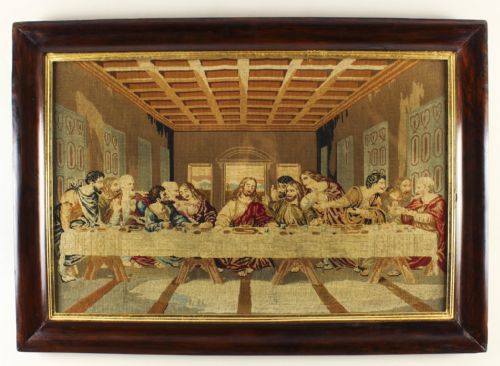
When you search for a victorian tapestry hanging, you encounter textile works designed to adorn interior walls with texture and pattern. The examples on this page span the Victorian era, bringing together needlework panels, medieval-style pieces, and framed works from the nineteenth century.
Most pieces you meet here take the form of wall hangings, framed needlepoint panels, or mounted textiles set within wooden and giltwood frames. You also find specialised forms such as bell pulls and wall mirrors framed with textile art.
The origins stretch across Britain and the Continent, encompassing German Berlin wool work, French-influenced chateau styles, and country house hand embroidery. Each object reflects the nineteenth-century domestic desire to cover walls with intricate stitched imagery.
Materials and construction
These textiles rely on wool and silk threads worked onto canvas grounds, utilising techniques like gros point needlework and plushwork to build dense, textured surfaces. Artisans frequently incorporated glass beads alongside silk embroidery to catch the light on detailed pictorial subjects.
Mounting and framing required skilled carpentry, utilising maple wood, oak, and elaborately carved giltwood frames to protect and display the fabric panels. Brass hardware, including gilt brass banner hangers, provided the structural means for suspending these heavy textiles from interior walls.
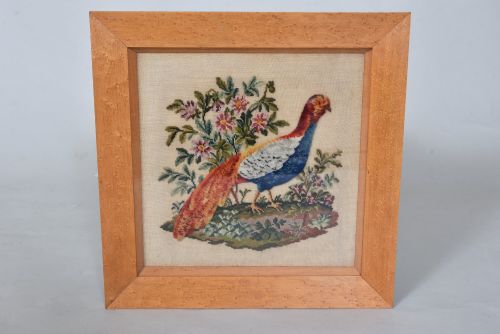
Keep an eye out for the plushwork pheasant, where someone spent hours ensuring a Victorian bird looked wonderfully fluffy.
Judging quality and execution
The quality of a piece rests in the density of the stitching and the control of the needlework, where finer gauge canvas and varied thread weights create greater depth in figures and foliage. Strong chromatic preservation in the wool and silk yarn elevates the visual impact of the composition.
The supporting frame plays a role in the overall integrity, with hand-carved giltwood or polished hardwood surrounds offering better proportion to the textile than plain or later replacements. Pieces retaining their original brass hanging mechanisms or glass protection demonstrate superior original provenance.
The Victorian Tapestry Hanging Glossary
- Berlin wool work
- A type of counted-thread embroidery popular in the nineteenth century, stitched in coloured wools from printed and hand-painted grid patterns. It allowed makers to create highly detailed pictorial scenes.
- Gros point
- A coarse needlepoint stitch worked on canvas, providing a durable and textured surface for large-scale wall hangings and upholstery. It often appears in nineteenth-century figural panels.
- Plushwork
- An embroidered technique that left loops of yarn cut to create a velvety, pile-like texture. This method adds tactile depth to animal and floral motifs.
- Giltwood
- Wood carved and coated with gold leaf or gesso, commonly used for nineteenth-century picture frames. It provides a reflective border for textile panels.
- Bell pull
- A long, narrow strip of decorative embroidery or tapestry attached to a mechanical cord for summoning servants. Surviving examples are often mounted with brass hardware.
Victorian Tapestry Hanging: Frequently Asked Questions
How do I hang a heavy tapestry?
Most pieces utilise integrated wooden battens, brass banner hangers, or secure frame fixings designed to distribute the weight evenly across a wall. Ensure your fixings match the wall type to support the textile safely.
Position the hanging away from direct sunlight to protect the wool and silk threads from fading over time.
Are these pieces hand stitched?
The listings consist primarily of hand-embroidered needlework, Berlin wool work, and canvas tapestry created during the nineteenth century. Skilled makers worked these pieces by hand using wool, silk, and bead embellishments.
Examining the reverse of an unmounted panel reveals the irregular knotting and tension characteristic of individual hand labour.
What frames are original to them?
Nineteenth-century pieces commonly appear in period giltwood frames, oak surrounds, or maple wood mouldings chosen to complement the textile. Some wool work panels were made specifically to fit decorative wall mirror frames or dedicated brass hanging rods.
Frames showing appropriate age, minor wear to the gilding, and historic fixings generally indicate a contemporary pairing with the textile.
How do I clean an antique tapestry?
Dusting gently with a soft brush or using low suction through a mesh screen helps remove surface particles without disturbing fragile fibres. Avoid using water or chemical cleaners on historic wool and silk textiles.
Professional textile conservators should handle any deep cleaning or structural repairs to prevent damage to the historic canvas and threads.
How do I date a nineteenth-century hanging?
Dating relies on stylistic clues, framing materials, needlework techniques, and specific Victorian design motifs such as Gothic Revival or Rococo Revival patterns. Canvas types and the composition of the wool and glass beadwork also provide chronological markers.
Comparing the stitching style to documented Berlin wool work patterns from the mid-nineteenth century helps narrow the date of manufacture.