




Victorian Wool Tapestry
When you search for victorian wool tapestry, you encounter textured woolwork pictures, firescreens, and furnishings worked in coloured threads on canvas.
Victorian Wool Tapestry
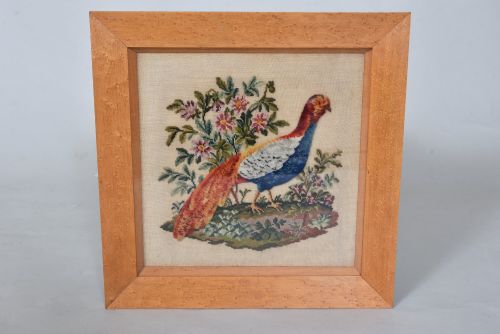
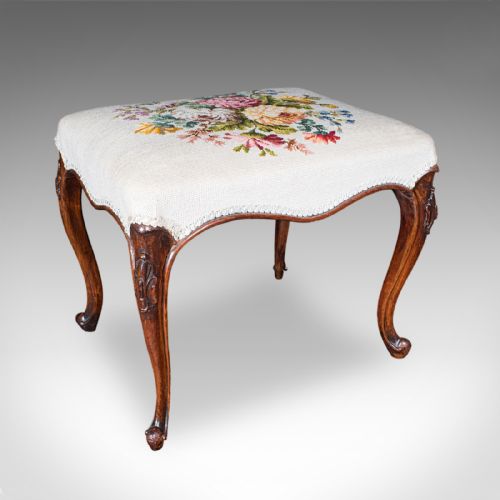
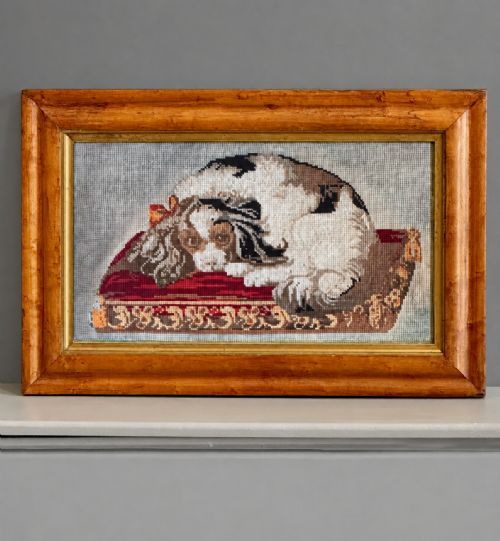
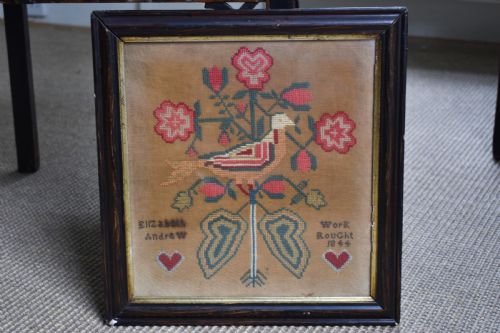
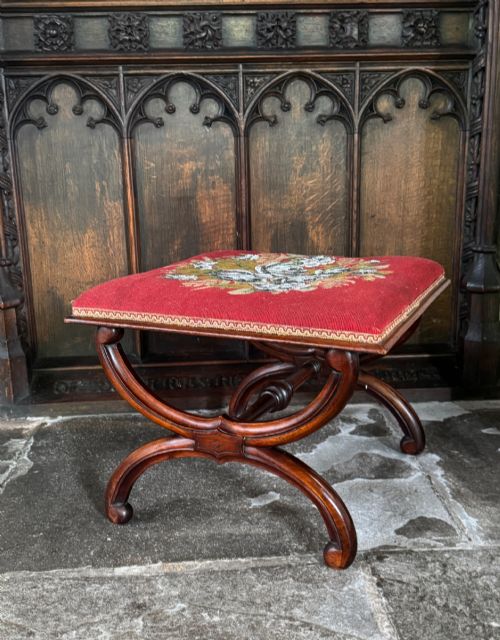
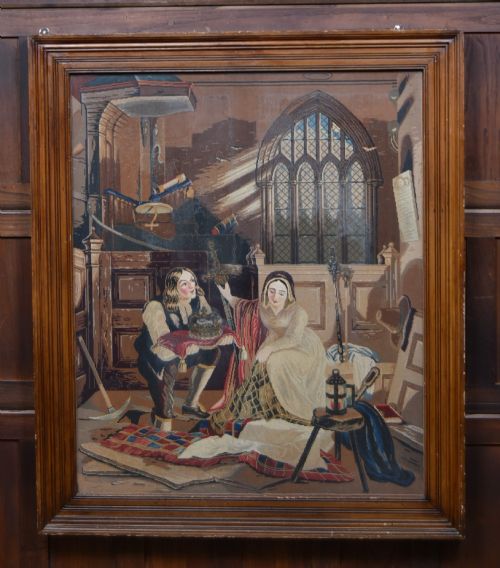
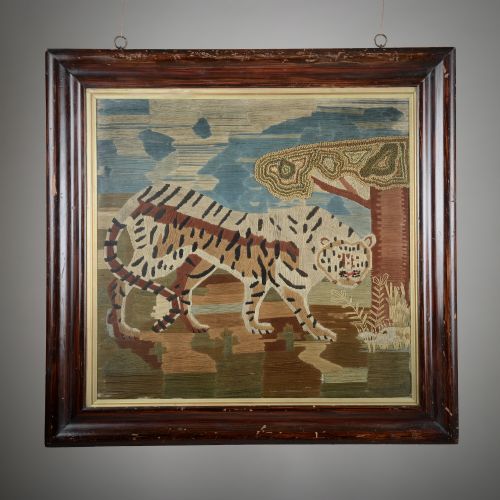
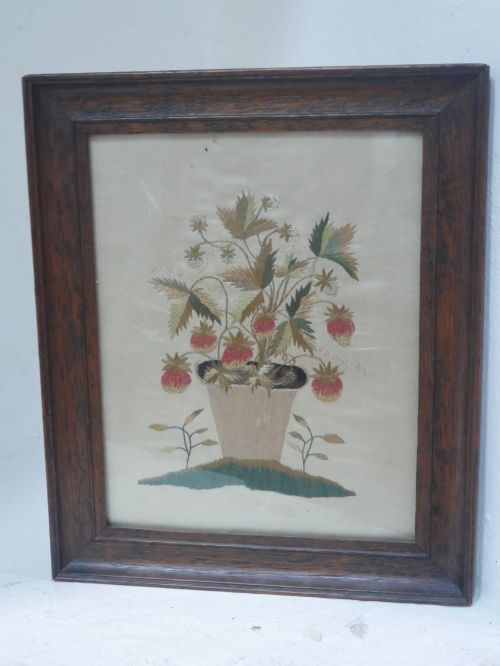
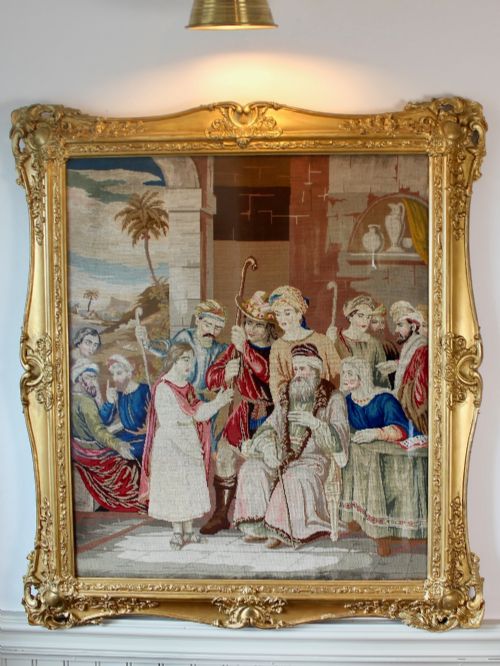
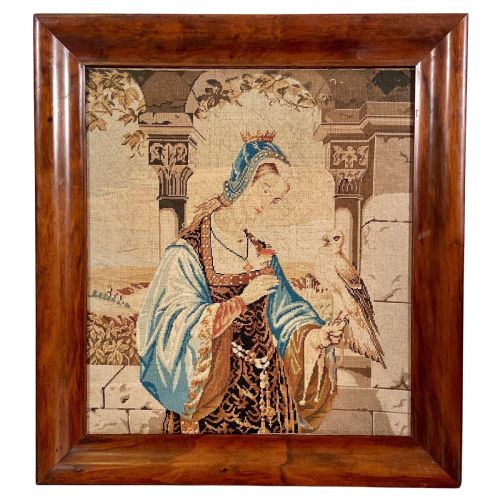
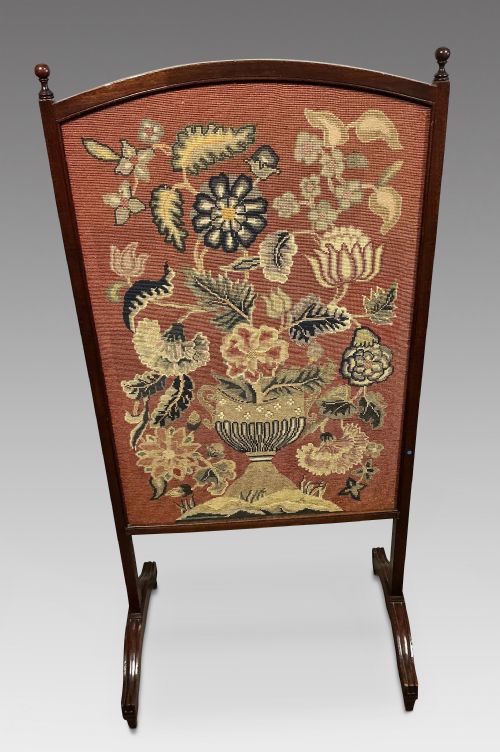
A victorian wool tapestry on this page typically takes the form of a framed wall art picture, a textile panel, a firescreen, or a footstool. These pieces encompass subjects ranging from portraits and animals to religious scenes and botanical depictions.
The materials span wool, canvas, glass, wood, silk, giltwood, walnut, and linen, reflecting the diverse domestic applications of nineteenth-century needlework. Many survive in their original frames of rosewood, burr maple, or carved oak.
Originating across Britain and continental Europe, these textiles include specialised forms such as Berlin work, gros-point, petit-point, and plushwork. They served both decorative and functional roles in period interiors, from wall hangings to upholstery.
Materials and Techniques
Makers stitched wool yarns onto woven canvas backings, frequently incorporating silk threads, glass beads, and plushwork to create varied surface textures and dimensional highlights. Stitches like gros-point and petit-point provided the structural foundation for intricate pictorial designs.
Carpets and larger wall hangings utilised robust wool and linen foundations, while smaller framed works relied on stretched canvas housed behind glass within wood or giltwood frames. Timber frames in walnut, mahogany, rosewood, and carved oak protected the textiles from dust and handling.
Listings feature wool, canvas, glass, wood, silk, giltwood, walnut, and linen across pieces dated from eighteen-fifty to nineteen-hundred.
Evaluating Quality
The distinction between standard and superior pieces rests on the precision of the needlework and the complexity of the colour palette. Finer stitch density allows for subtle tonal gradations and sharper facial expressions in portraiture.
The survival of original framing, whether giltwood, burr maple, or rosewood, contributes to the integrity of the piece. Upholstered furniture items depend on the retention of their original needlepoint seats and sturdy timber frames.
Howard & Sons·Richard Ansdell·John Crossley
The Victorian Wool Tapestry Glossary
- Berlin work
- A popular mid-nineteenth-century style of needlepoint worked from printed and hand-coloured squared paper grids. It allowed embroiderers to create highly detailed pictorial scenes using dyed wool yarns.
- Gros-point
- A coarse-gauge needlepoint stitch executed on canvas that forms sturdy surfaces suited for carpets, footstools, and firescreens. It typically provides the bold background structure of nineteenth-century textile panels.
- Plushwork
- A variant technique utilising looped wool stitches that were subsequently cut to create a velvety, pile-like texture. Makers applied this method to render animal coats and tactile details.
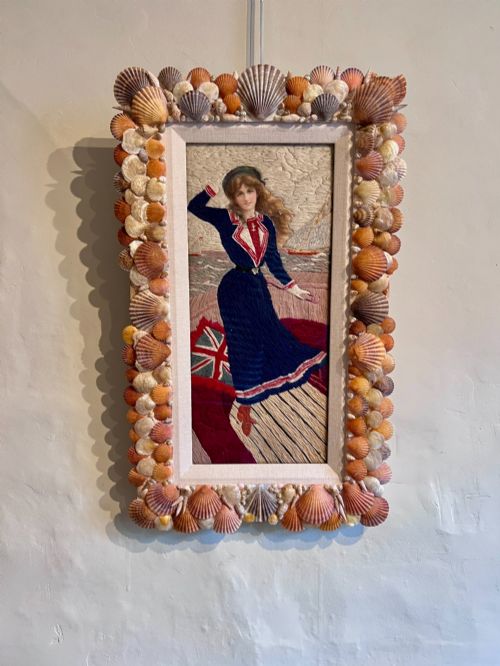
- Woolie
- A colloquial term for sailor-work embroidery executed in wool yarn, typically depicting naval vessels or figures. These commemorative pieces were produced by sailors during long voyages.
Victorian Wool Tapestry: Frequently Asked Questions
What is Berlin work?
Berlin work refers to a needlepoint method using printed checkered charts that guided embroiderers through complex patterns.
This technique dominated nineteenth-century parlour crafting and produced vibrant pictures of animals, figures, and biblical stories.
How were firescreens used?
Firescreens protected the faces of people seated near coal or wood hearths from the intense radiant heat.
The mounted tapestry panels doubled as decorative wall art when the fires were unlit.
What is a woolie?
A woolie is a sailor-made embroidery executed in wool thread on canvas, often depicting ships or figures.
These works reflect maritime folk art traditions of the nineteenth century.
How do I care for wool tapestries?
Keep textile pieces away from direct sunlight to prevent the dyed wool yarns from fading over time.
Displaying them behind glass in stable indoor environments protects the delicate fibres from dust and moisture.