





Antique Needlework Picture Pair
An antique needlework picture pair brings unmatched texture and domestic narrative to a room, offering matched textile artistry designed to hang together.
Antique Needlework Picture Pair
An antique needlework picture pair consists of textile artworks created to hang as matching compositions, predominantly originating from the Georgian, Regency, and Victorian periods. These pieces frequently take the form of silkwork pictures, long stitch panels, and carpet mosaic pictures framed behind glass for wall display.
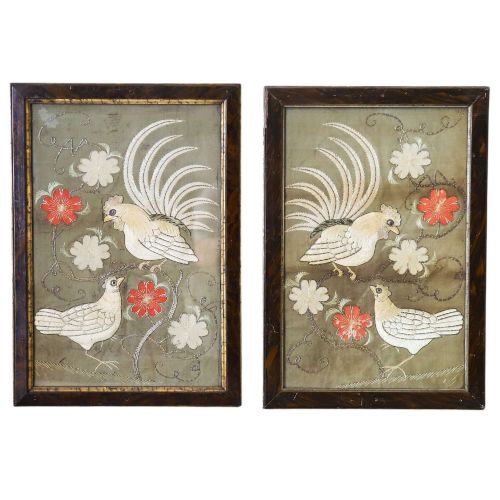
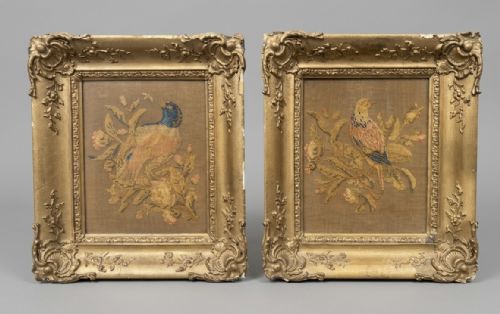
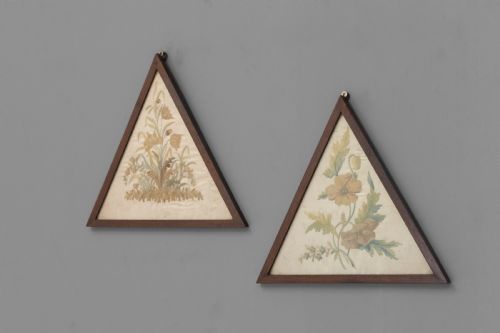
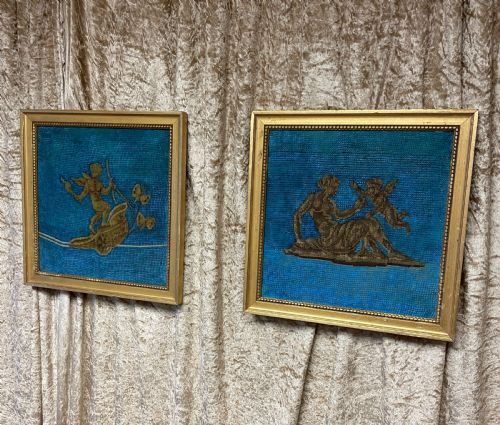
The subjects seen on this page range from garden birds and mandarin ducks to theatrical scenes, cockerels, hens, and circular floral compositions. Makers worked across English Country House, French Napoleon III, Victorian Rococo Revival, Neoclassical, and Chinese styles to satisfy domestic taste.
Buyers are most likely to encounter 19th-century and Regency examples housed in original gilt wood, water gilded oval, or faux tortoiseshell frames. These matched pairs demonstrate the enduring appeal of framed embroidery and textile art within historic interiors.
Materials and construction
These works rely on silk and wool threads meticulously stitched onto a fabric ground, frequently incorporating paper elements or painted details to define faces and architectural backgrounds. The resulting embroidered panels display varied stitch techniques, including long stitch and carpet mosaic work.
Protection and presentation relied on specialist framing, utilising giltwood, gold leaf, and water gilded wood alongside black glass or mezzotint glass. These frames preserve the delicate textiles from atmospheric damage while enhancing the visual depth of each picture.
Antique Needlework Picture Pair Retail Price Guide 2026
Typical asking prices for needlework picture pair among the pieces listed under this phrase on Sellingantiques today, from the lower quarter to the upper quarter. They describe what is for sale here now, not the wider market.
Even startled cockerels found immortality in silk, proving that 19th-century poultry had just as much dramatic flair as any theatrical heroine.
Factors of quality
The integrity of the housing elevates a piece, particularly when paired with original gilt wood or water gilded frames and contemporary glass. Matching frames that retain their original gilding indicate a higher degree of preservation and original intent.
Richard Ansdell·John Crossley
The Antique Needlework Picture Pair Glossary
- Silkwork picture
- An embroidered textile artwork created predominantly using silk threads on a linen or silk ground. These pictures often depicted pastoral, theatrical, or avian subjects popular in the Georgian and Regency eras.
- Long stitch
- A needlework technique where stitches are worked across several threads of the canvas to create smooth, painterly gradations of colour. It is frequently encountered on Regency silk pictures.
- Carpet mosaic
- A dense needlework method resembling the pile or pattern of a carpet, utilised in Victorian pictorial works to achieve rich texture and depth. Richard Ansdell and John Crossley are associated with this technique.
- Mezzotint glass
- Dark or black glass used in framing to enhance contrast and provide a reflective border around historic prints and embroideries. It was particularly favoured during the Regency period.
- Giltwood
- Wood carved and coated with gold leaf or metallic powder to create a lustrous golden finish. Surviving original giltwood frames protect and define many 19th-century textile artworks.
Antique Needlework Picture Pair: Frequently Asked Questions
How were these pairs displayed?
These framed textile pictures were traditionally hung symmetrically on either side of a fireplace, doorway, or window within formal drawing rooms and parlours. Their matched composition created a sense of visual balance favoured in historic domestic interiors.
Today, they function well in similar symmetrical arrangements or grouped alongside other framed wall art within traditional and eclectic settings.
What subjects are most common?
Avian subjects such as garden birds, mandarin ducks, cockerels, and hens appear frequently alongside floral arrangements and theatrical scenes. These themes reflect prevailing artistic tastes across the Georgian, Regency, and Victorian periods.
Makers also drew upon Neoclassical and Chinese design influences, adapting foreign motifs to suit British and European domestic interiors.
How do I date a pair?
Dating relies on a combination of framing styles, textile materials, and stitching techniques characteristic of specific periods. Regency and Georgian examples often feature delicate silkwork and specific glass types, whereas Victorian pieces introduce denser textures like carpet mosaic.
Frame construction, such as water gilded oval frames or faux tortoiseshell surrounds, provides additional physical evidence to narrow down the decade of production.
How should I care for them?
Preservation requires hanging the framed pictures away from direct sunlight and damp environments to protect the delicate silk threads and paper components. Ultraviolet light causes historical dyes to fade, while moisture encourages textile degradation behind the glass.
Professional framing sealed against dust ensures the needlework remains undisturbed and protected for the future.