


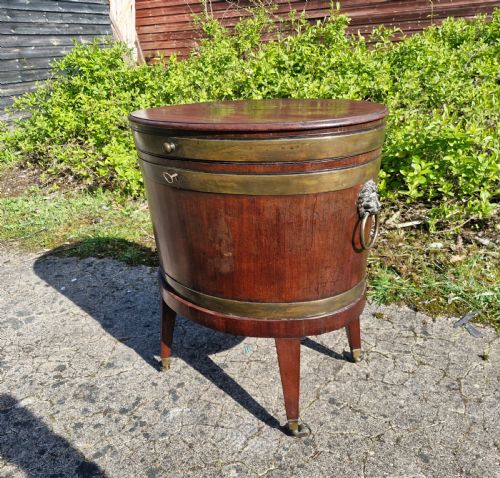


Regency Drinks Cabinet
A regency drinks cabinet gathers bottles and glassware inside timber frames shaped by nineteenth-century hands.
Regency Drinks Cabinet
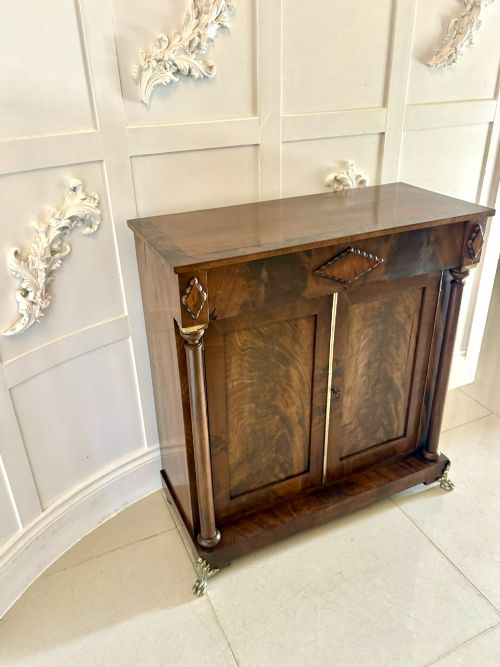
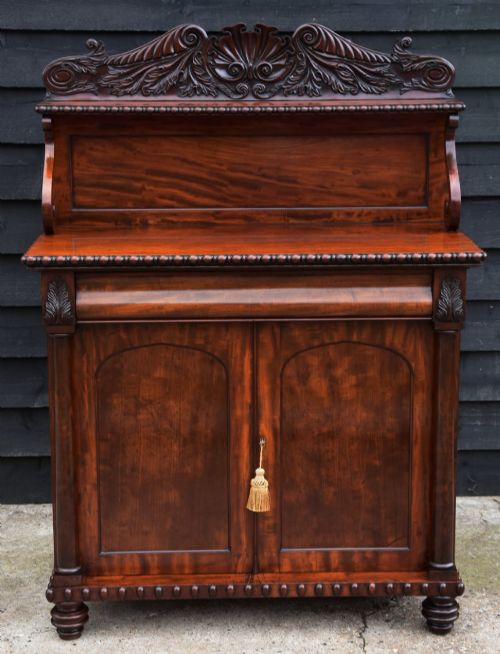
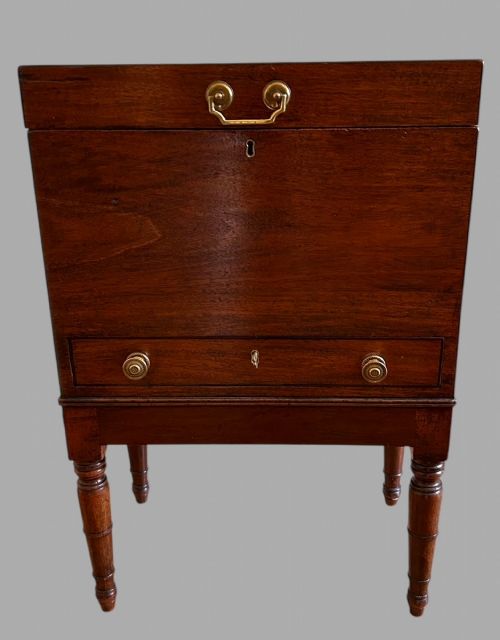
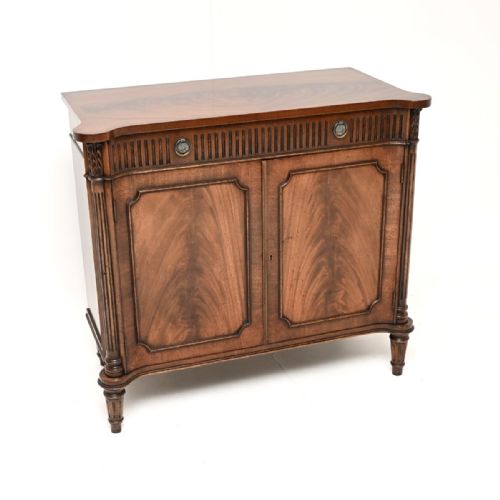
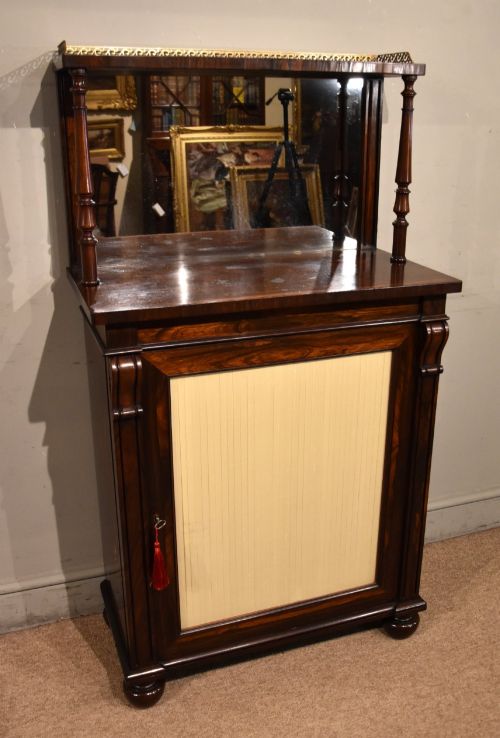
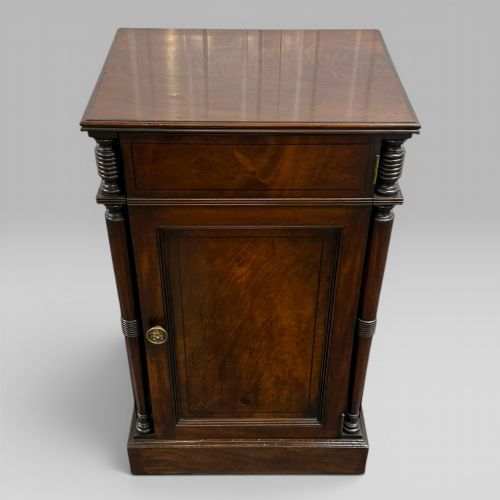
When you search for a regency drinks cabinet, you are looking at nineteenth-century storage forms originally built to hold wine, spirits, and plate. The examples meeting you on this page are typically found under related historical names such as cellarettes, wine coolers, chiffoniers, and side cabinets.
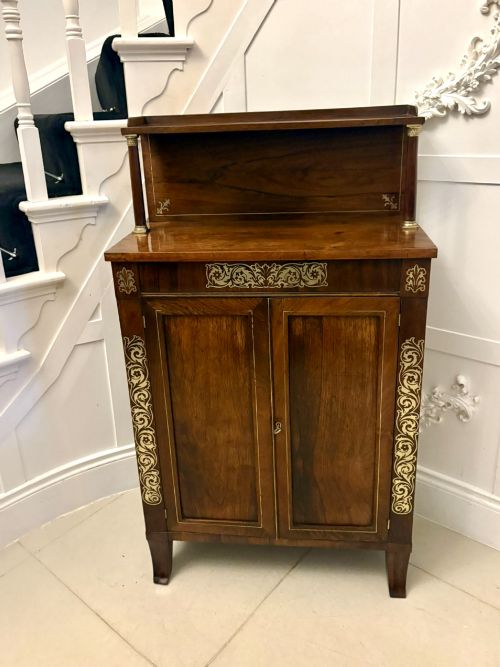
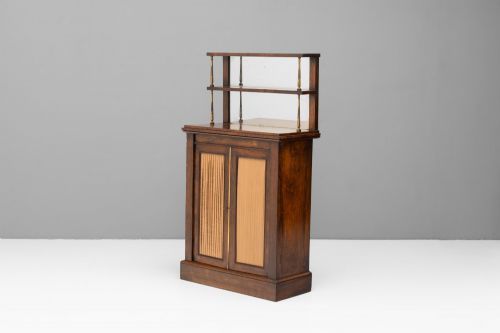
Makers of the period constructed these low side pieces and sturdy storage chests to sit in dining rooms and parlours. They arrive in forms ranging from octagonal boxes and sarcophagus cellarettes to two-door chiffoniers with shelf backs.
The prevailing origins stretch across the Regency, George IV, and William IV periods, alongside Georgian influences and later nineteenth-century interpretations. Buyers encounter compact proportions, bow fronts, and specialised interior compartments designed for bottles.
Assessing quality in period pieces
The distinction between ordinary storage and top-tier pieces rests on timber selection and grain movement. Figured mahogany and flame veneers with deep natural chatoyancy separate superior cabinets from plain utilitarian boxes.
Refinement in secondary details elevates a piece, from finely cast ormolu mounts and brass inlay to the crispness of turned supports and the tight joinery of internal bottle dividers.
Listings feature mahogany, rosewood, and brass across nineteenth-century forms including chiffoniers and sarcophagus cellarettes.
Gillows·Maples and Co
The Regency Drinks Cabinet Glossary
- Cellarette
- A lockable container or cabinet designed specifically for holding bottles of wine and spirits. These vessels sat on the floor or on stands within reach of the dining table.
- Chiffonier
- A compact low sideboard or cabinet equipped with shelving above or enclosed cupboards below. The form evolved during the nineteenth century to serve multiple domestic storage needs.
- Sarcophagus
- A monumental coffin-shaped design style adopted for large wine coolers and cellarettes. The tapered body rested on feet or a plinth base.
- Flame mahogany
- A veneer cut from the fork of the mahogany tree where branches join the trunk. This produces a distinctive flickering flame-like grain pattern across the wood surface.
- Ormolu
- Gilded bronze ornamentation applied to furniture surfaces for decorative contrast. The technique involves treating metal with a mercury and gold amalgam.
Regency Drinks Cabinet: Frequently Asked Questions
What is a regency drinks cabinet?
A regency drinks cabinet is a nineteenth-century storage piece such as a cellarette, wine cooler, or chiffonier. These items were originally made to store bottles, decanters, and dining accessories.
They appear in various forms, including low side cabinets with doors, octagonal boxes, and sarcophagus-shaped coolers. The design emphasises polished timber and practical internal compartments.
How were cellarettes used?
Cellarettes were kept in dining rooms to hold bottles of wine close to the table during meals. Their sturdy construction and lined interiors kept beverages cool and secure.
Many featured internal divisions sized specifically for standard wine bottles. Some included lead linings to hold ice around the bottles.
Where should I place a chiffonier?
A chiffonier suits a dining room, living space, or hallway as a low sideboard with surface display space. The enclosed cupboards below store glassware and modern bottles.
Pieces with shelf backs offer extra space for books or small decorative objects. Their compact proportions allow them to fit into narrower wall spaces.
How do I identify the Regency period?
The Regency period spans the early nineteenth century and is characterised by classical restraint and rich timber veneers. Flame mahogany and rosewood dominate the surfaces.
Details like brass inlay, ormolu mounts, and saber legs point directly to this aesthetic. Proportions tend to be neat and architectural.