
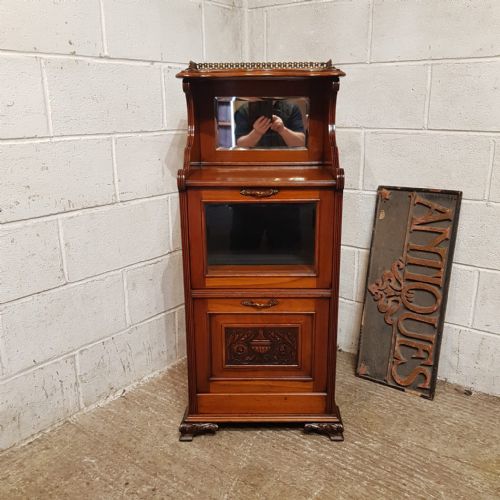


Brass Gallery Mahogany Chiffonier
A brass gallery mahogany chiffonier brings architectural proportion and useful display surface to a room, offering the enclosed storage that collectors value.
Brass Gallery Mahogany Chiffonier
A brass gallery mahogany chiffonier combines enclosed lower storage with open upper display shelving, functioning as a sideboard or narrow side cabinet. These pieces serve as practical storage furniture for the dining room or drawing room while providing a distinctive upper tier.
The versions met on this page date from the Regency period through to late Victorian times, including William IV examples and pieces from around eighteen ninety. Alongside traditional mahogany, variations appear in flame mahogany veneer, faux rosewood, and goncalo alves.
Forming part of the broader category of cabinets and sideboards, these items frequently incorporate specific functional elements like writing drawers or two tier shelf backs. The defining brass gallery tops off the superstructure, securing small items on the upper shelf.
Materials and Construction
Makers utilised solid timbers alongside flame mahogany veneer to achieve rich surface figures, occasionally employing secondary woods such as oak within the internal construction. Faux rosewood finishes and exotic timbers like goncalo alvez also feature among the cabinetwork.
Fine brass fixtures define the upper portion, forming the characteristic gallery rails that edge the open display shelves. Glass panels and fabric inserts appear within door frames on selected side cabinet configurations, adding texture and variation to the storage compartments.
Regency cabinetmakers thoughtfully added brass galleries so precious porcelain wouldn't slide off during an enthusiastic dinner party.
Assessing Quality and Distinction
Finer examples distinguish themselves through the selection of timber veneers, where symmetrical flame figures and rich grain patterns elevate the visual impact of the chiffonier. The crispness of the turning on shelf supports and the robustness of the brass gallery indicate superior craftsmanship.
Integration of secondary functions, such as a fitted writing drawer or tiered back structures, separates standard side cabinets from more ambitious designs. Proportions also govern quality, with narrow footprints and balanced heights commanding greater visual presence in a modern interior.
The Brass Gallery Mahogany Chiffonier Glossary
- Brass gallery
- A low decorative metal rail fitted to the top edge of a shelf or cabinet top to prevent items from sliding off. It provides a bright metallic contrast to dark timber surfaces.
- Flame mahogany veneer
- A thin slice of timber cut from where a branch joins the main trunk, displaying a distinctive flamed or swirling grain pattern. Cabinetmakers applied this to primary surfaces for decorative effect.
- Goncalo alves
- A dense exotic hardwood valued for its striking contrasting grain and rich colouring. It appears in high status nineteenth century cabinetwork.
- Faux rosewood
- A painted or stained finish applied to a secondary timber to imitate the dark grain and warm tones of genuine rosewood. This technique was common in Regency workshop practice.
Brass Gallery Mahogany Chiffonier: Frequently Asked Questions
How do you date a chiffonier?
Dating relies on stylistic markers, timber selection, and construction methods characteristic of specific periods like Regency or Victorian. Regency pieces often display clean classical lines and refined proportions, while later nineteenth century examples introduce heavier moulding and different veneer cuts.
Comparing hardware, such as the brass gallery and drawer pulls, alongside secondary woods like oak, helps narrow down the decade of manufacture.
Where does a brass gallery go?
The brass gallery sits along the upper edge of the topmost shelf or the main cabinet surface. It creates a decorative border that secures small decorative items or books displayed on the shelf.
This metalwork element adds a polished accent that complements the dark tones of mahogany and rosewood finishes.
Are these pieces suitable for modern rooms?
The compact proportions of narrow side cabinets make them practical for contemporary hallways, living rooms, and dining spaces. They offer enclosed storage without dominating floor area.
Placing items with flame mahogany veneer or exotic woods against neutral walls highlights their grain and period character in a modern interior.