
Regency Display Shelves
Regency display shelves are versatile timber tiers designed to hold books and ornaments, bringing classical proportion and refined open storage to any room.

Regency Display Shelves
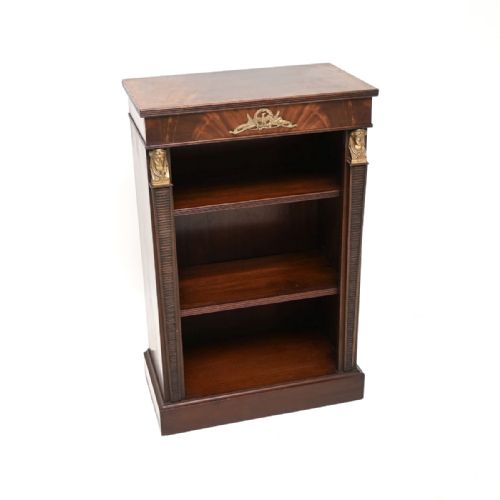
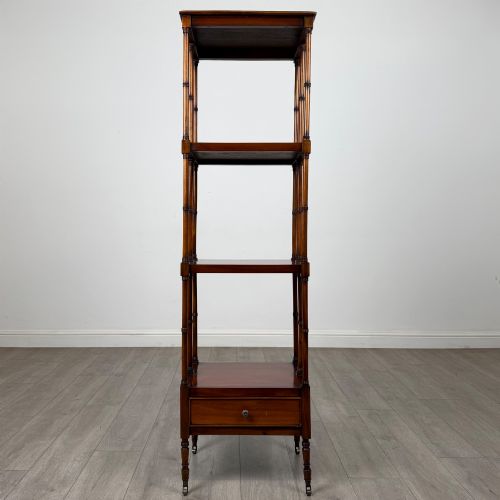
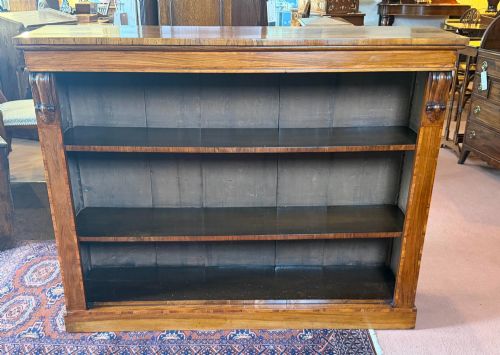
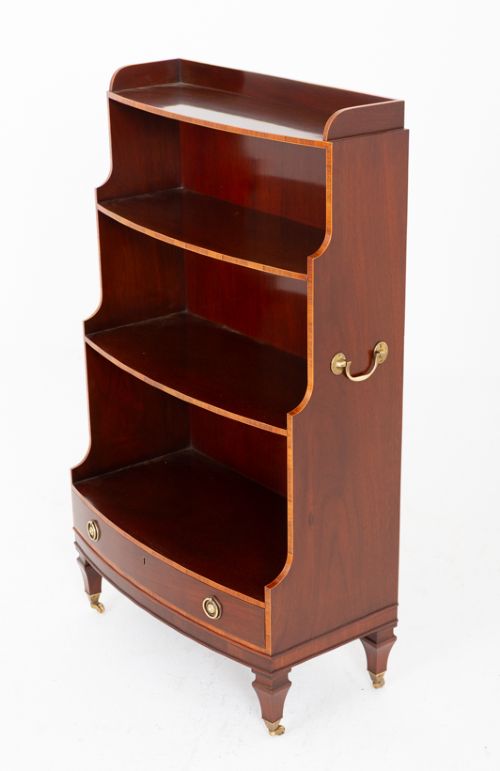
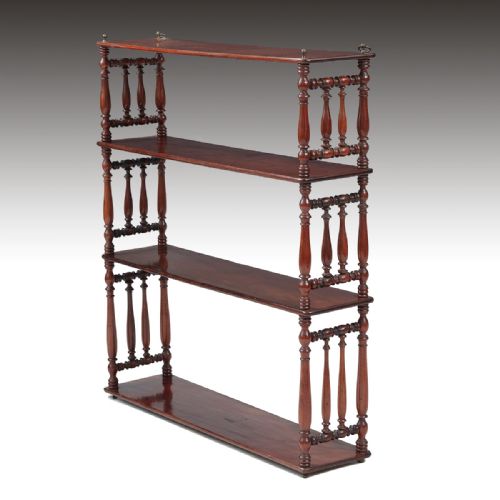
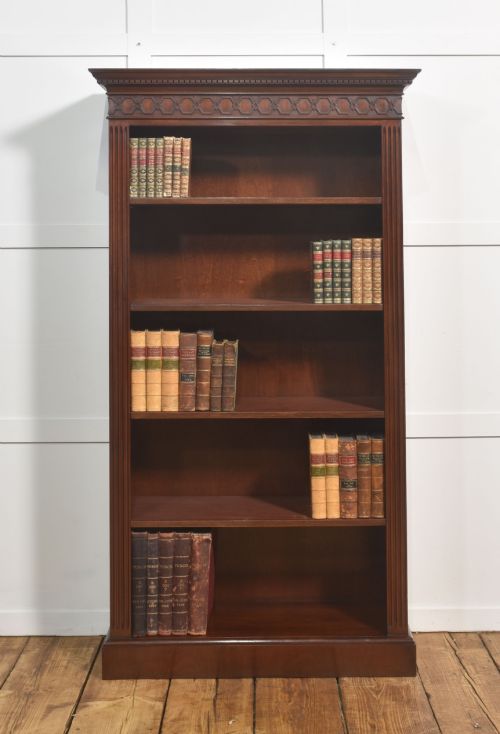
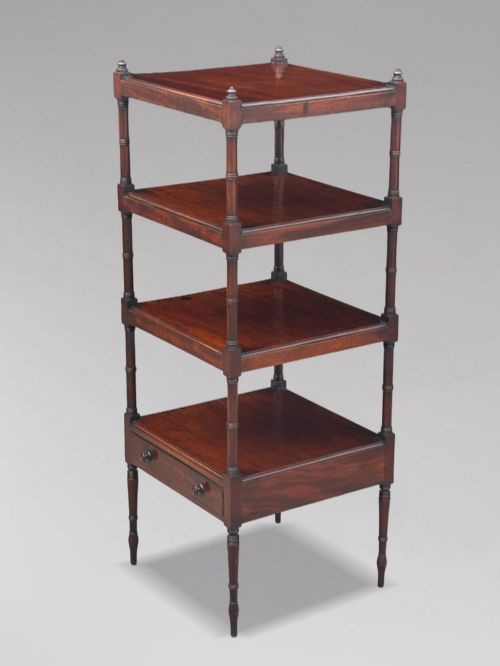
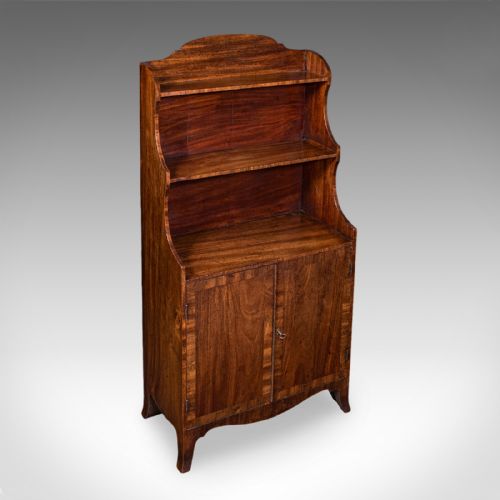
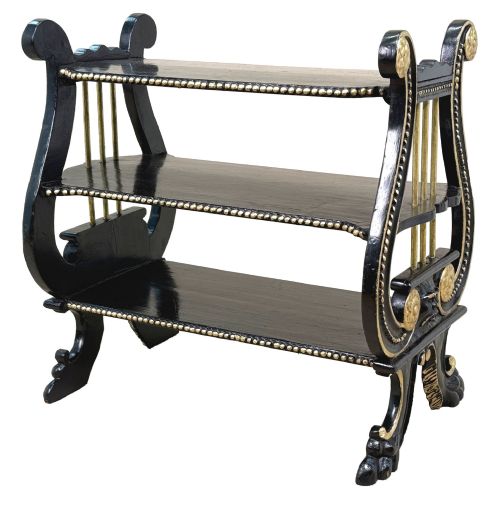
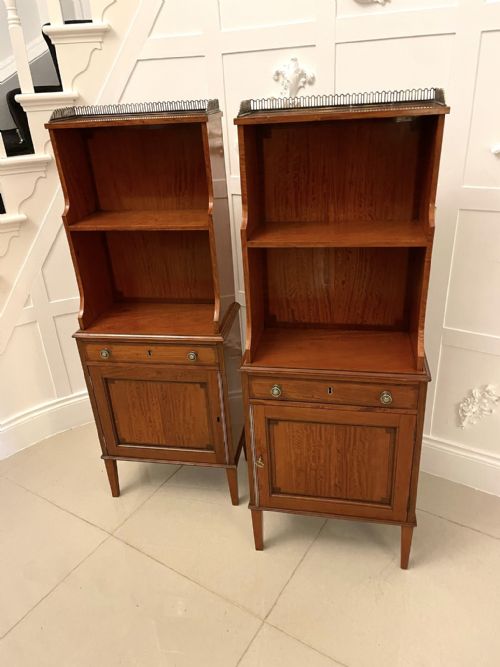
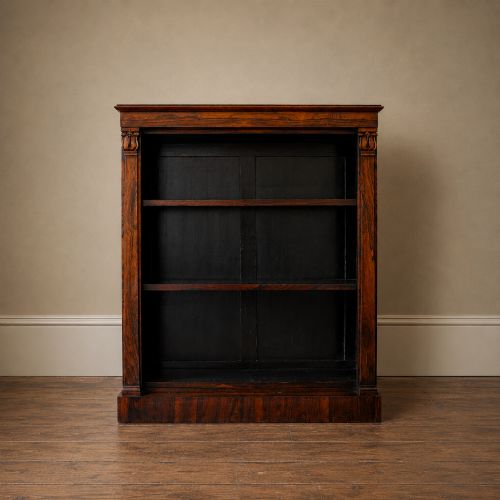
When you search for regency display shelves, you encounter several distinct forms including multi-tiered whatnots, waterfall bookcases, open bookcases, and wall-hanging shelves. These pieces date principally from the nineteenth century, encompassing the Regency period alongside later Victorian, Edwardian, and Georgian revivals.
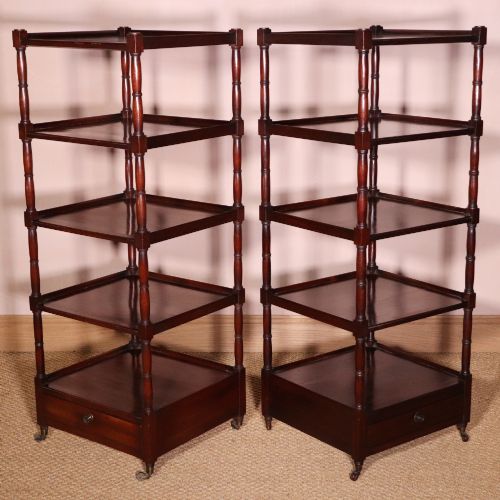
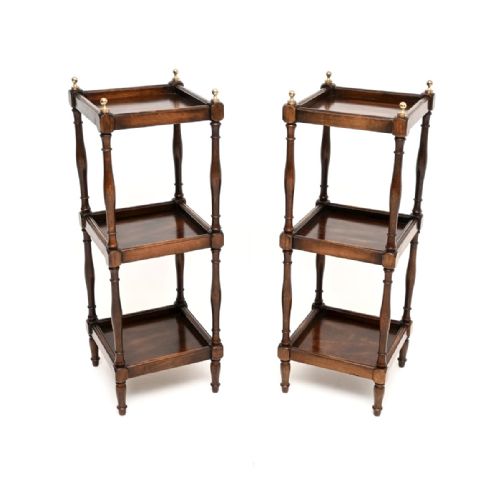
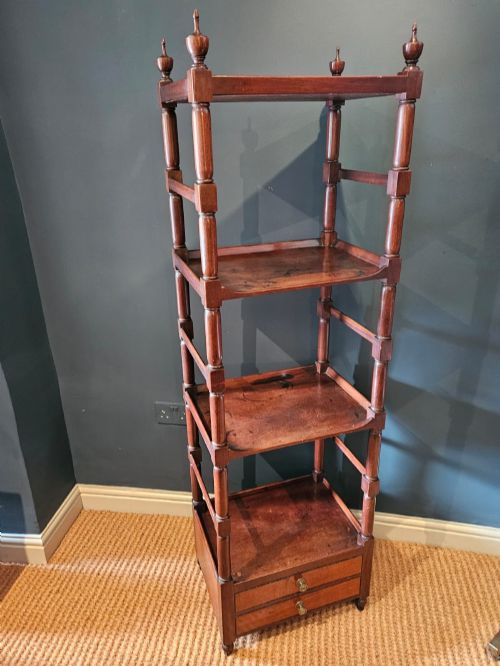
The most common form on this page is the freestanding mahogany whatnot or open bookcase, often constructed with multiple ascending tiers supported by turned columns or uprights. Rosewood also appears frequently, sometimes accented with brass inlay or mounted on small castors for ease of movement.
Makers and cabinet-makers of the period also produced specialised variants like music stands, corner stands, and chiffoniers with integrated shelving. These formats offer varying capacities for storage and display, suiting both compact spaces and larger reception rooms.
Materials and construction
Cabinet-makers relied heavily on dense timbers such as mahogany, flame mahogany veneer, and rosewood, frequently selecting boards with rich grain patterns. Secondary woods like pine and oak appear in internal framing and drawer construction, while satinwood and amboyna figure in select decorative pieces.
Construction techniques combine traditional joinery with decorative metalwork, utilising brass for inlaid stringing, galleries, and adjustable shelf supports. Ebonised finishes and parcel gilding also feature on later pieces, alongside turned wooden spindles and supports that define the tiered silhouette.
Periods represented range from the Georgian era through the Regency, William IV, and Victorian periods into Edwardian revivals.
Judging quality
The distinction between ordinary and exceptional pieces rests upon timber selection and the crispness of the turning on the upright supports. Superior examples utilise highly figured veneers and solid hardwoods with tight, consistent grain, whereas lesser pieces employ plain timber or heavier, coarser mouldings.
Gillows
The Regency Display Shelves Glossary
- Whatnot
- A moveable set of open shelves, typically with three or more tiers, used for displaying ornaments or books. They originated in the late eighteenth century and remained popular through the Victorian era.
- Waterfall bookcase
- A set of open shelves where each successive tier is deeper than the one above, creating a stepped profile resembling a cascading waterfall. This form gained favour during the Regency period.
- Chiffonier
- A low cabinet featuring a cupboard base surmounted by one or more open shelves. These pieces combined enclosed storage with display space in smaller rooms.
- Étagère
- A French term for a piece of furniture consisting of a set of open shelves for displaying small objects. They are often lighter in construction than standard bookcases.
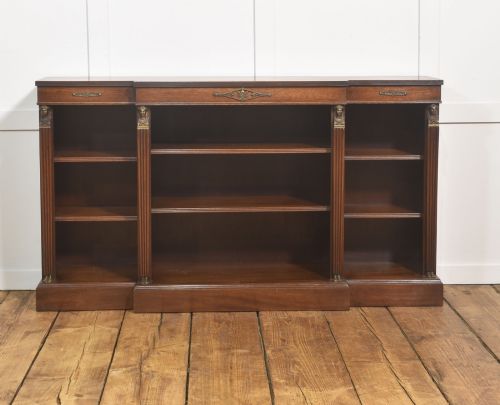
- Breakfront
- A cabinet or bookcase design where the central section projects forward from the flanking wings. This architectural arrangement adds depth and formal presence to larger pieces.
Regency Display Shelves: Frequently Asked Questions
How do I identify a genuine Regency piece?
Genuine Regency pieces date from the early nineteenth century and typically exhibit restrained neoclassical proportions, fine mahogany or rosewood timbers, and minimal, elegant brass ornamentation. Construction details like hand-cut dovetails and secondary woods such as oak or pine also help confirm the period.
Be aware that many pieces on the market are later revivals from the Edwardian or Victorian eras, which imitate the classical Regency style using slightly different manufacturing techniques.
Are the shelves usually adjustable?
Many open bookcases and shelving units from this era feature adjustable shelves supported by wooden ratchets or brass pins. This adaptability allowed owners to alter shelf heights for varying book sizes.
Smaller whatnots and tiered stands, however, generally feature fixed shelves permanently secured into the upright supports during initial construction.
Where should I place hanging shelves?
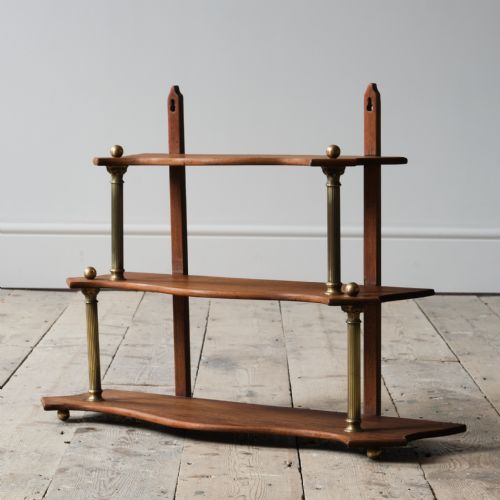
Wall-hanging shelves are compact timber units designed to mount securely onto solid walls, making them ideal for utilising vertical space in smaller rooms or alcoves. They are well-suited for displaying small books, plates, or decorative ornaments without occupying floor space.
Because antique hanging shelves carry considerable weight from their timber construction, they require proper wall fixings and mounting brackets suited to the age of the piece.