
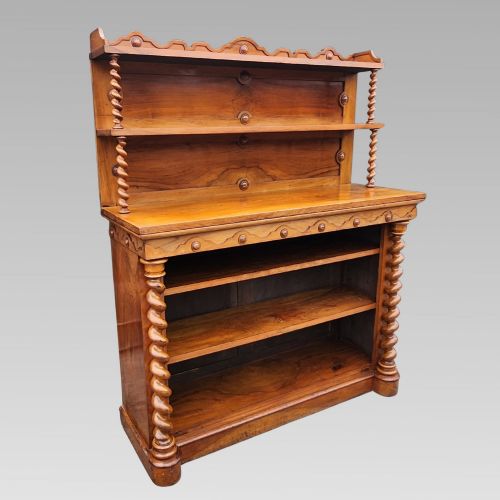


Barley Twist Display Unit
These barley twist display unit pieces bring tiered timber shelving and upright turned supports into rooms that need characterful surface space.

Barley Twist Display Unit
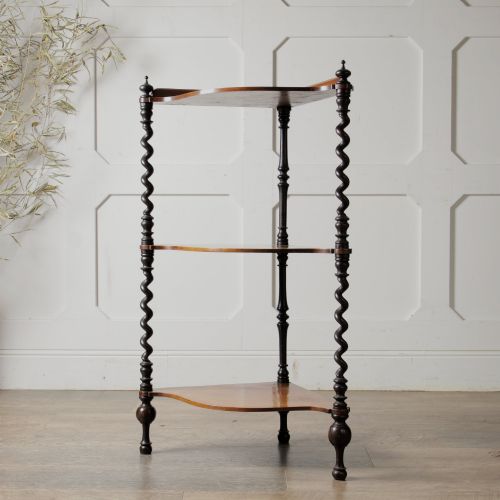
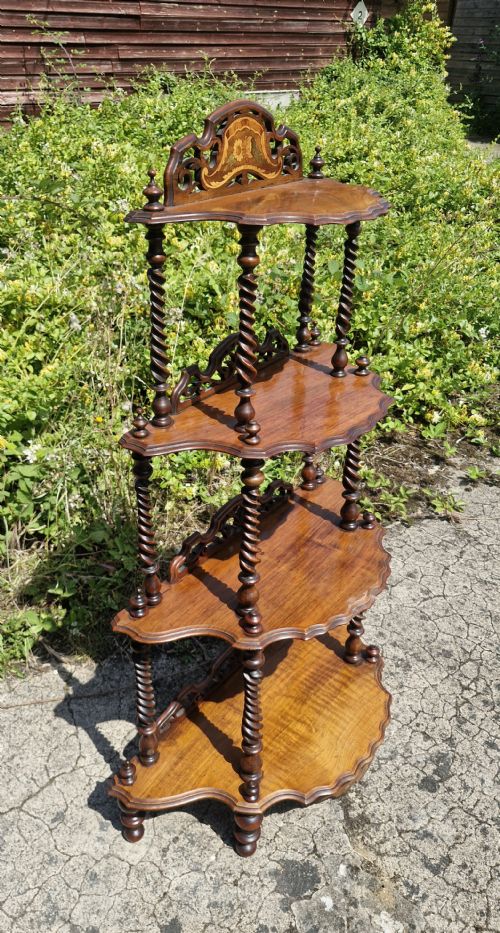
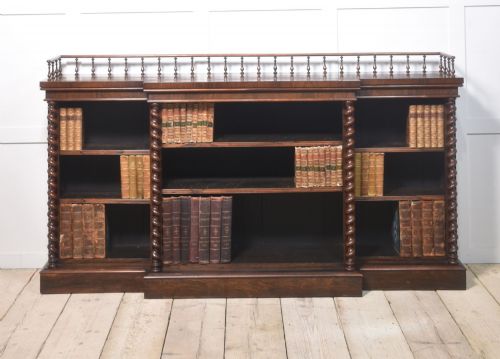
A barley twist display unit typically takes the form of a whatnot, etagere, or open bookcase designed for books and ornaments. The examples met on this page span the Victorian and Regency periods, stretching from eighteen-thirty into the early twentieth century.
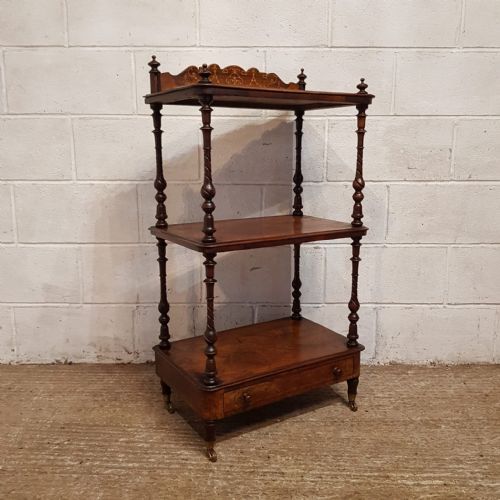
Makers produced these stands in formats ranging from corner units and demi-lune tables to multi-tiered shelving stands with single drawers. Forms include four-tier, five-tier, and six-tier variants, alongside sideboard dressers and open display stands.
Origins across the selection include English country house pieces alongside French and Burmese examples. Woods span walnut, burr walnut, mahogany, and rosewood, often paired with glass, brass, mirror panels, and wood inlay.
How they were made
Joiners built these units using solid hardwoods such as mahogany, rosewood, and walnut, frequently applying burr walnut veneers to display surfaces. Turning lathes shaped the characteristic helical supports that define the upright columns.
Workshops incorporated brass fixtures, glass panels, and mirror backs into the tiered shelving structures. Inlaid wood details and painted finishes appear on selected regional and Continental items.
Listings feature walnut, burr walnut, mahogany, and rosewood timbers across Victorian, Regency, and early twentieth-century periods.
What varies in quality
The distinction between tiers and the crispness of the timber turning determine the visual weight of the stand. Timber selection plays a primary role, particularly where figured burr walnut or dense rosewood replaces plain mahogany.
The integration of secondary functions, such as single drawers or corner configurations, separates standard shelving from more ambitious display furniture.
The Barley Twist Display Unit Glossary
- Barley twist
- A carved wooden column shaped in a helical screw pattern resembling a twist of barley. This turning style forms the structural uprights on many Victorian display units.
- Whatnot
- An open shelving piece with multiple tiers designed for displaying ornaments or holding books. These stands became popular in the nineteenth century.
- Etagere
- A French term for a set of tiered shelves used for display. These pieces function similarly to English whatnots.
- Demi-lune
- A half-moon shape used for console tables and corner-fitting display units. This profile allows pieces to sit flush against a wall.
- Burr walnut
- A wood grain obtained from walnut tree growths, producing swirling patterns. Cabinetmakers valued this material for decorative veneering.
Barley Twist Display Unit: Frequently Asked Questions
Where should I place a barley twist display unit?
These tiered stands suit corners, alcoves, or flat wall spaces where vertical display is useful without blocking light. Corner formats fit snugly into empty angles of a room.
Larger multi-tier bookcases and etageres anchor larger wall spaces, holding books and decorative objects within easy reach.
How do I date a Victorian display unit?
Dating relies on timber choices, construction methods, and stylistic cues recorded across the nineteenth century. Mid-nineteenth-century examples often feature solid mahogany or rosewood.
Later Victorian pieces from around eighteen-eighty frequently employ burr walnut veneers and more elaborate turning profiles.
What is the difference between a whatnot and an etagere?
Both terms describe tiered shelving units, though etagere often denotes a French origin or a lighter decorative construction. Whatnot serves as the traditional English term for the same multi-layered furniture form.
Both types utilise turned supports, with barley twist columns appearing frequently across both designations.
Can these stands support heavy books?
Open bookcases and lower tiers handle substantial weight when constructed from dense hardwoods like mahogany or rosewood. Lighter etageres suit decorative ornaments and smaller volumes.
Checking the stability of the upright columns and shelf joints ensures safe loading for everyday use.