
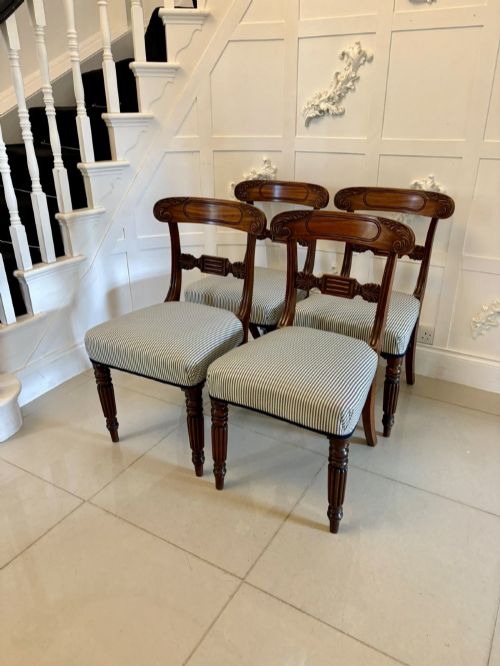
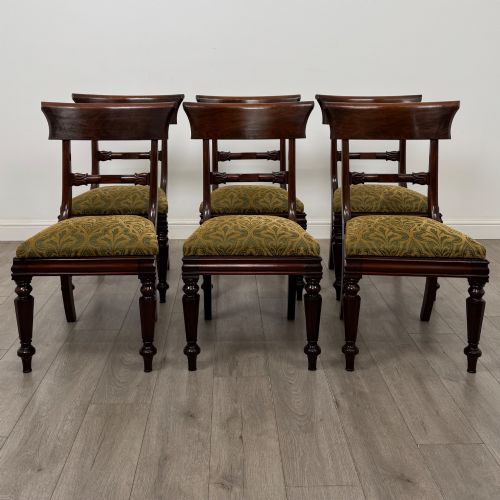
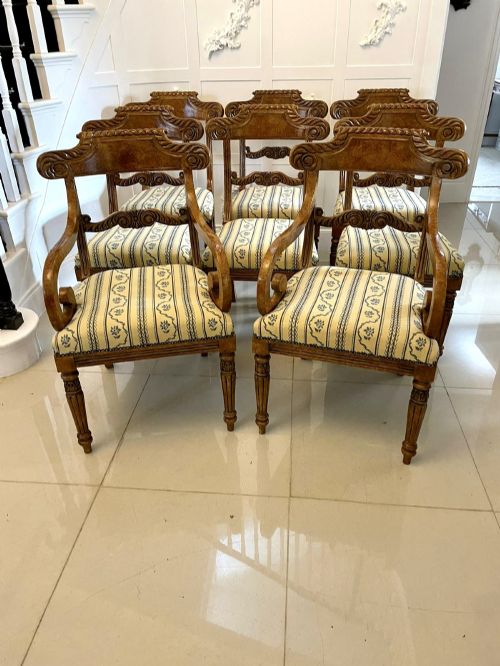
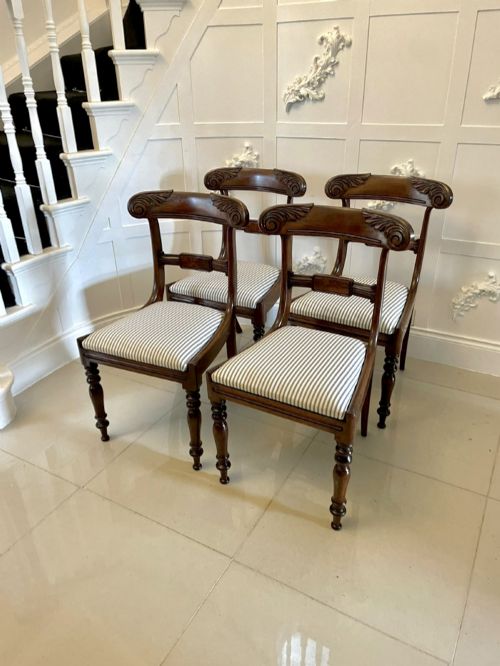


Regency Dining Set
When you invest in a regency dining set, you secure a matched gathering of chairs and tables defined by classic restraint and proportion.
Regency Dining Set
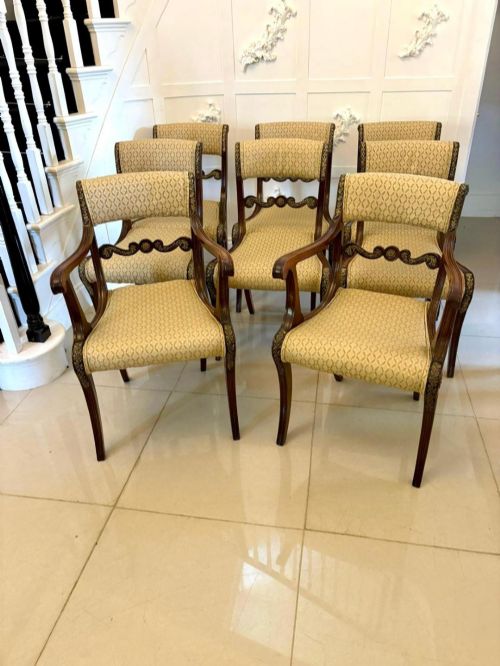
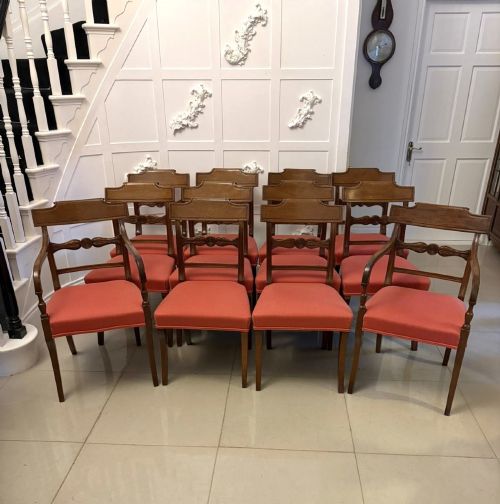
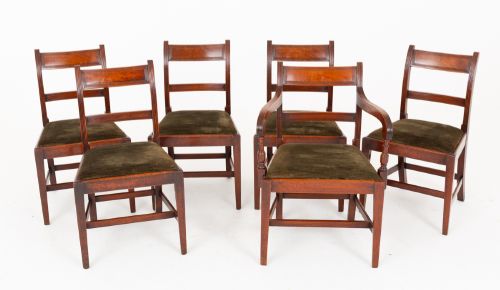
A regency dining set comprises matching groups of chairs, often including armchairs and extendable tables, stemming predominantly from the nineteenth century. The most common configurations on this page range from sets of four up to twelve matching seats designed for formal dining rooms.
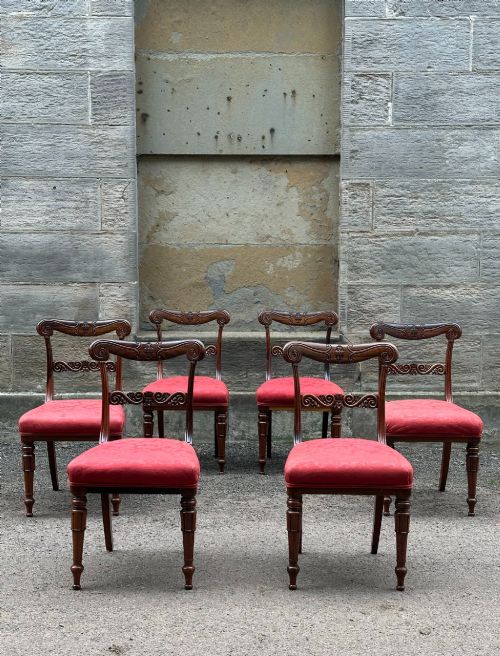
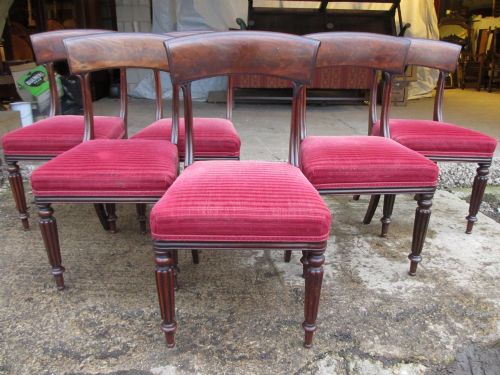
While genuine pieces cluster around the Regency, Georgian, and William IV eras, later nineteenth-century and twentieth-century revivals also appear frequently. These groups typically pair sturdy mahogany or rosewood frames with drop-in or upholstered seats.
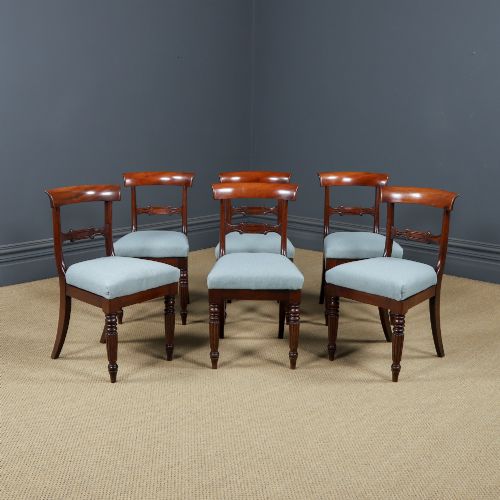
The aesthetic draws heavily on classical antiquity, translating Greek and Roman motifs into functional domestic furniture. Buyers encounter variations ranging from plain bar-back forms to intricately carved showpieces.
Craftsmanship and Proportion
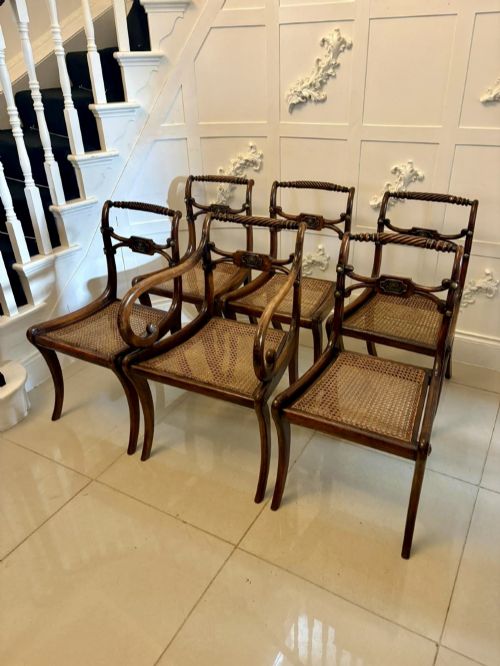
Superior sets display crisp, hand-carved detail in elements like rope-twists or scroll arms, whereas lesser pieces rely on shallow machine shaping or moulded applied ornament. The integrity of the frame joints and the matching of timber grain across all chairs separate standard dining groups from exhibition pieces.
Proportion and scale dictate the visual success of the grouping, with finer sets maintaining consistent rake angles on the sabre legs and uniform splat heights across every single and carver chair.
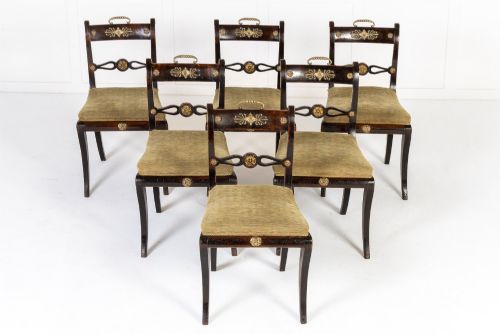
Some sets feature simulated rosewood paintwork, proving that clever decorators have fooled dinner guests with clever graining since the Regency.
Gillows
The Regency Dining Set Glossary
- Carver
- An armchair designed to match a set of single dining chairs, typically placed at the head of the table. These often feature scroll arms or more elaborate crest rails.
- Sabre leg
- A concave sweeping leg that curves outward toward the floor, frequently seen on chairs from the Regency period. This form mimics ancient Greek klismos furniture.
- Bar back
- A horizontal cross-rail set across the upper back of a chair, often curved to fit the spine. This design provides structural rigidity while offering a clean, architectural silhouette.
- Rosewood
- A heavy, dark-grained timber prized for its rich colour and decorative figure, used extensively in high-status furniture of the nineteenth century. It takes a high polish and contrasts sharply with brass inlay.
Regency Dining Set: Frequently Asked Questions
How many chairs come in a typical set?
Sets usually range from four to twelve chairs, frequently including a pair of matching armchairs for the heads of the table. Larger configurations often combine single chairs with two carvers to accommodate traditional dining room layouts.
Buyers purchasing larger groupings should verify that all chairs share identical timber grain patterns and turning details to ensure the set was made together originally.
What is the difference between Regency and William IV?
Regency furniture generally favors slender proportions, classical restraint, and refined details like brass inlay or delicate reeding. William IV pieces, emerging slightly later, tend toward heavier proportions, bolder scrolling, and more substantial carved elements.
Both styles utilise dark hardwoods like mahogany and rosewood, but the later period introduces a noticeably sturdier visual weight to the frame construction.
Can I use these chairs for everyday dining?
These dining chairs serve everyday domestic use provided the frame joints remain sound and the upholstery is periodically maintained. Nineteenth-century joinery relies on solid timber construction that stands up well to regular sitting when properly cared for.
Placing felt pads under the sabre legs prevents undue wear on wooden floors and protects the delicate feet during movement.
How do I spot a later revival set?
Revival sets from the Edwardian era or the 1920s often feature lighter secondary woods, standardised machine-cut turnings, and modern internal glues or screws. The timber finish may lack the deep patina accumulated through generations of hand-polishing.
Examining the underside of the seats and the joinery reveals tool marks and construction methods distinct from early nineteenth-century workshop practices.