



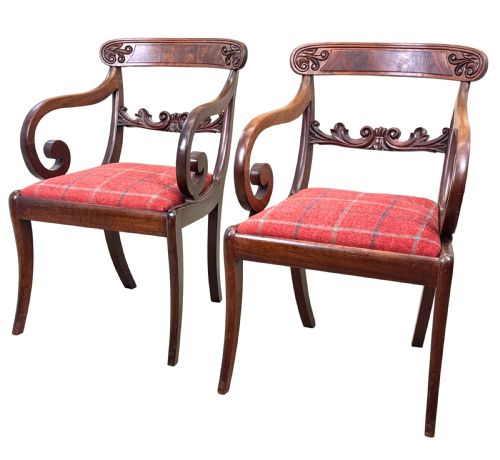


Scroll Arm Carver Chairs
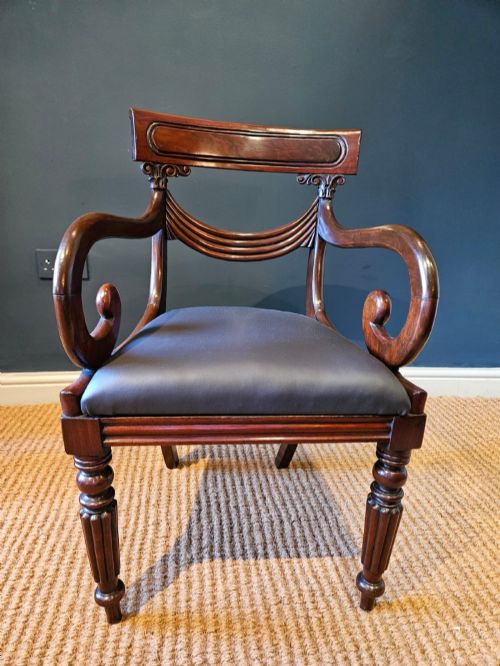
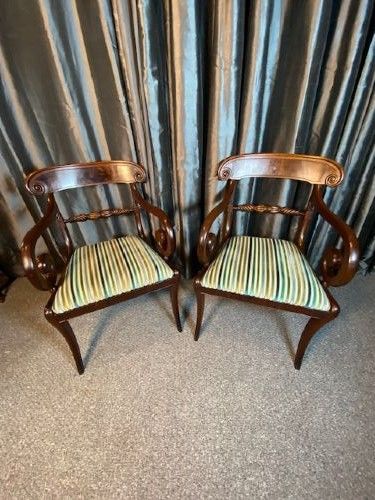
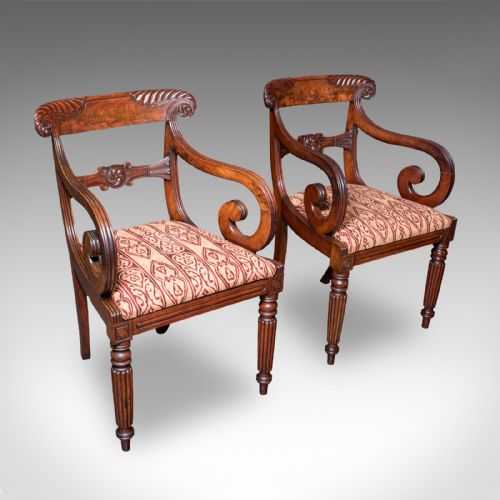
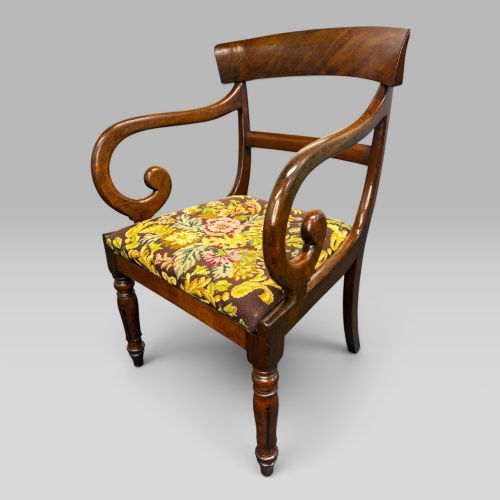
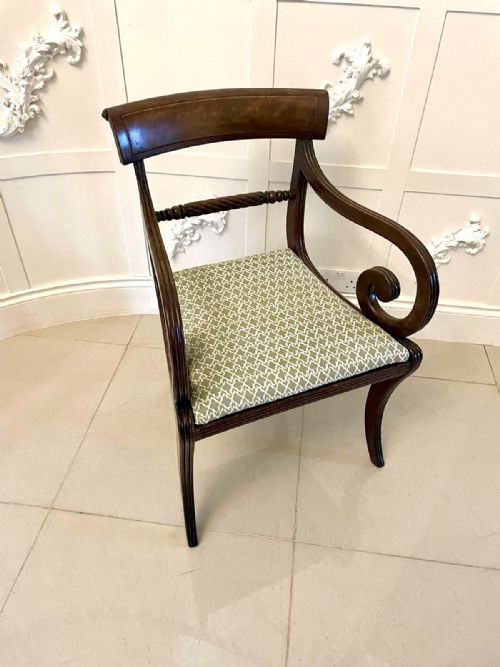
Scroll arm carver chairs are substantial seating pieces defined by distinctive swept armrests, prized by collectors for their architectural presence in dining and library settings.
Scroll Arm Carver Chairs
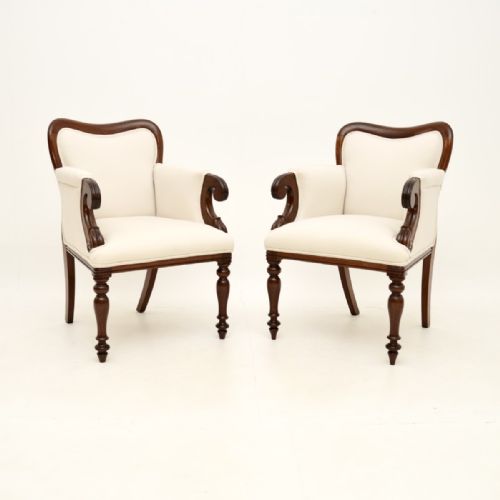
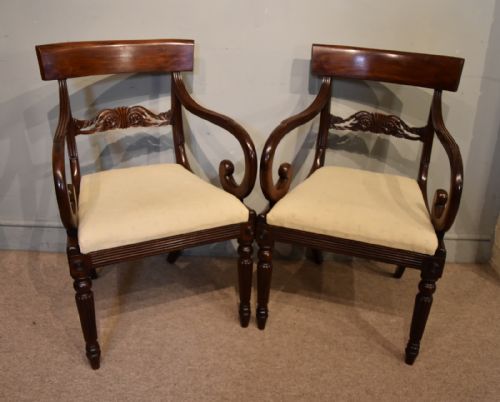
Scroll arm carver chairs appear predominantly in mahogany across the Regency and William IV periods, alongside Victorian and Georgian examples. These elbow chairs serve multiple roles in domestic spaces, functioning as desk chairs, reception seats, and the matching carvers within larger dining sets.
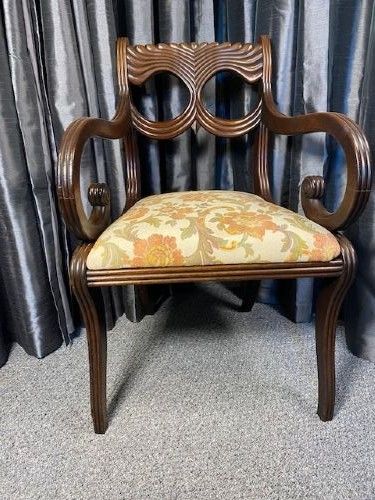
The form relies on a sturdy wooden frame where the arms curve outward and downward in a distinctive scroll shape. Buyers frequently encounter pairs or single armchairs rather than complete suites, reflecting how these pieces survived alongside standard dining chairs.
Materials and Construction
Cabinetmakers construct these chairs primarily from solid mahogany, occasionally utilising alternative timbers such as rosewood, ash, oak, and faux birds eye maple. Selected woods receive careful turning and joinery to support the structural demands placed on the arms and legs.
Upholstery forms a vital component of the construction, utilising materials like leather, velvet, needlepoint, and patterned fabric secured over drop-in or fixed seats. Brass inlay and ebonised details occasionally accent the primary wood framework to elevate the visual impact.
Listings feature mahogany predominantly, alongside rosewood, oak, ash, and faux birds eye maple across Georgian, Regency, and Victorian eras.
Judging Quality
Quality reveals itself in the crispness of the timber carving, particularly around the volutes of the scroll arms and the execution of sabre or turned legs. Heavier framing timbers and tight, stable joinery distinguish superior examples from simpler utilitarian seating.
The selection of figured wood grain and the integration of secondary materials like brass inlay or original needlepoint upholstery elevate a piece. Finer examples maintain proportional harmony between the expansive elbow rests and the supporting underframe.
The Scroll Arm Carver Chairs Glossary
- Carver
- An armchair designed with open sides to accommodate wider clothing, typically made as the principal seat at the head of a dining table.
- Elbow Chair
- A traditional term for an armchair featuring supportive armrests, frequently used in studies, libraries, and morning rooms.
- Sabre Leg
- A concave-tapering chair leg that curves outward toward the floor in the manner of a cavalry sword, characteristic of the Regency style.
- Drop-In Seat
- A removable upholstered frame that drops into a rebated opening in the chair rails, allowing for straightforward reupholstery.
- Volute
- A spiral scroll ornament forming the terminal feature of the armrests on better quality chairs.
Scroll Arm Carver Chairs: Frequently Asked Questions
What is a carver chair?
A carver chair is an armchair traditionally built with open sides to allow a person to sit comfortably while wearing elaborate historical attire. These seats usually accompanied standard dining chairs to designate the head of the table.
In modern rooms, they function equally well as standalone desk chairs or occasional seating in a hallway.
How do I date a Regency armchair?
Regency armchairs typically date from the early nineteenth century and feature classical architectural influences, including reeded members and swept sabre legs. Dark mahogany remains the dominant timber from this design phase.
Later Victorian interpretations often retain similar scroll arm motifs but incorporate heavier proportions and different turning styles on the front legs.
Were these chairs used at desks?
Many scroll arm carver chairs serve as desk or library chairs due to their supportive armrests and comfortable upholstered seats. Lower seat heights and sturdy wooden frames made them practical for working environments.
Surviving examples often show evidence of use in studies alongside writing tables and breakfront bookcases.
What timber was used most often?
Mahogany stands out as the primary timber utilised by makers of these armchairs throughout the Georgian, Regency, and Victorian eras. Its dense grain permitted fine carving on the scroll arms without compromising structural integrity.
Alternative woods like rosewood, oak, and ash appear occasionally, alongside decorative treatments such as ebonising and brass inlay.