



Regency Desk on Castors
A regency desk on castors brings purposeful writing surfaces and flexible placement to a room through wheeled mobility.
Regency Desk on Castors
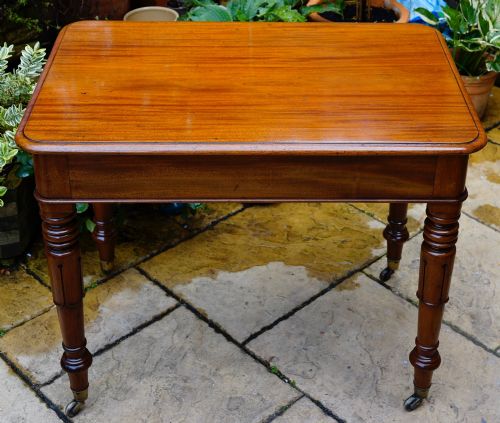
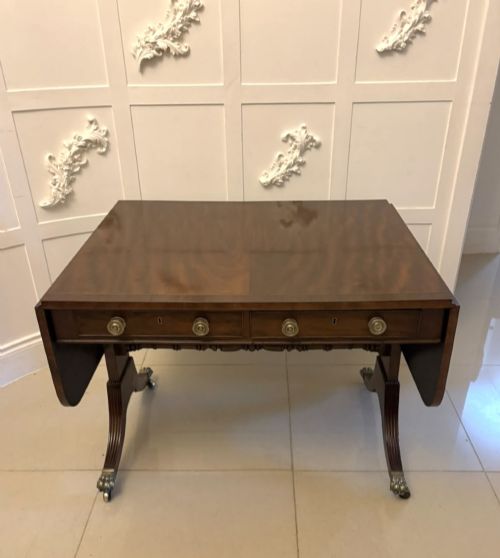
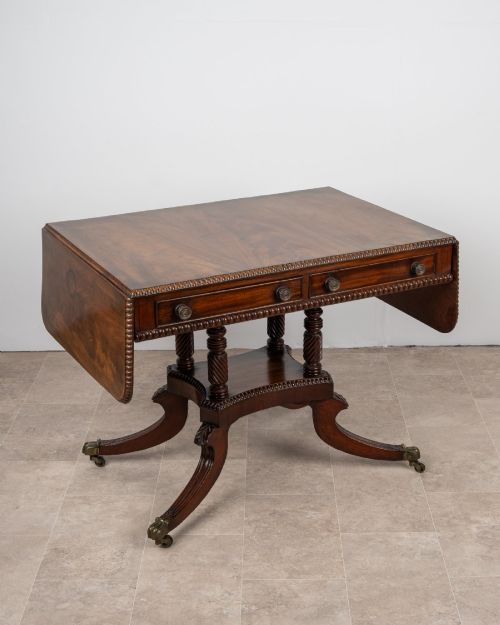
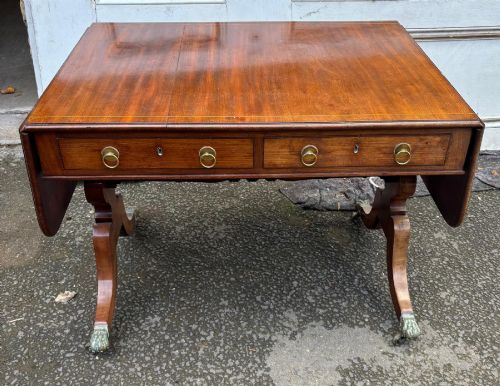
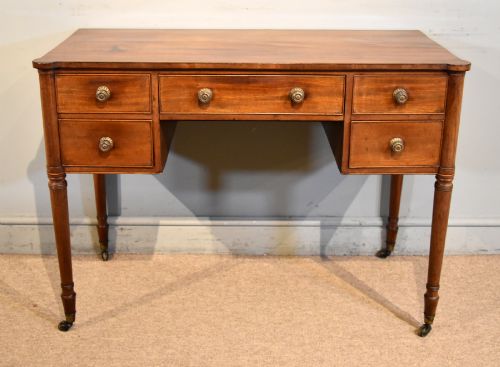
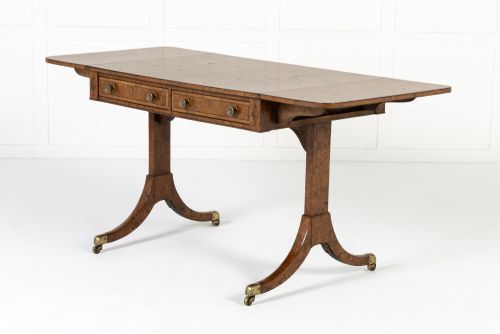
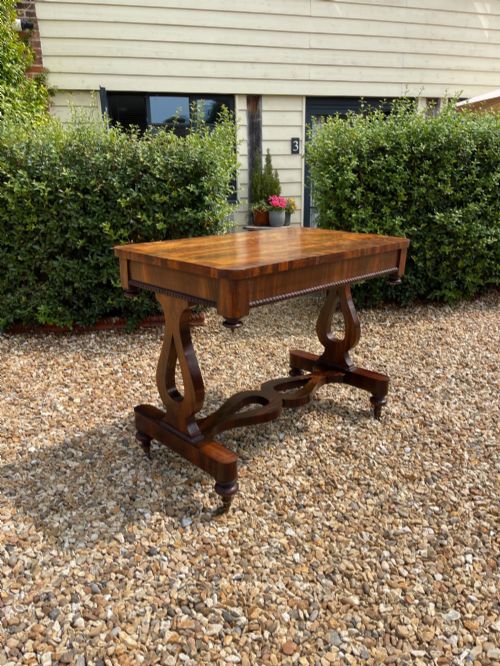
When you search for a regency desk on castors, you encounter compact writing tables, drum tables, and sofa tables originating from Georgian, Regency, George IV, and Victorian periods. Mahogany and rosewood form the dominant structures, frequently supplemented by satinwood and yew wood.
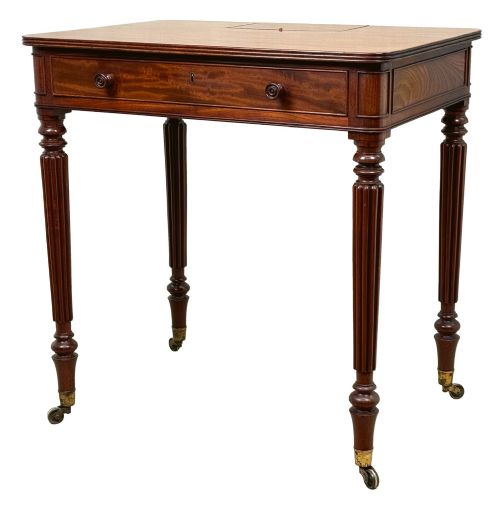
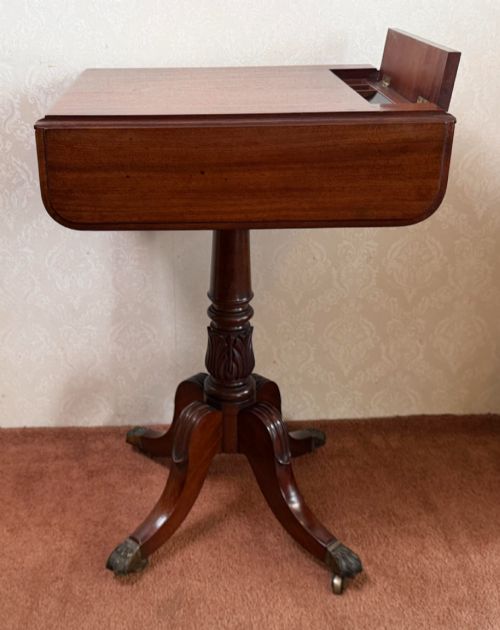
The pieces listed here lean heavily toward freestanding library tables and writing desks designed to move easily across floor surfaces. Many incorporate drop flaps, tambour shutters, or leather inserts intended for daily correspondence and study.
Materials and construction
Cabinet makers built these pieces using solid timbers and veneers of mahogany and rosewood, supported by brass hardware on the mobility points. Inlaid details in satinwood and yew wood provide contrast along drawer fronts and table edges.
Internal elements combine secondary woods with leather writing surfaces, while turned legs or pedestals terminate in metal castors. Drop-flap mechanisms and sliding components rely on exact carpentry to function smoothly.
Regency Desk on Castors Retail Price Guide 2026
Typical asking prices for regency desk on castors among the pieces listed under this phrase on Sellingantiques today, from the lower quarter to the upper quarter. They describe what is for sale here now, not the wider market.
Listings feature mahogany, rosewood, satinwood, and yew wood across Georgian, Regency, and Victorian periods.
Distinctions in craftsmanship
The grade of timber selection and complexity of inlay distinguish finer examples from standard workshop production. Grain alignment across drawer fronts and the precision of reeded or turned supports indicate the original maker's skill.
Gillows of Lancaster
The Regency Desk on Castors Glossary
- Drum table
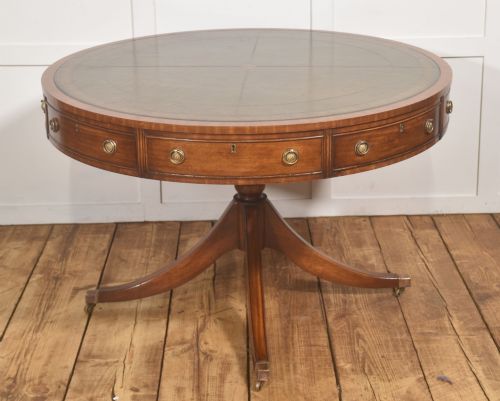
- A circular library table containing drawers around its perimeter, typically mounted on a central pillar and tripod base with castors.
- Sofa table
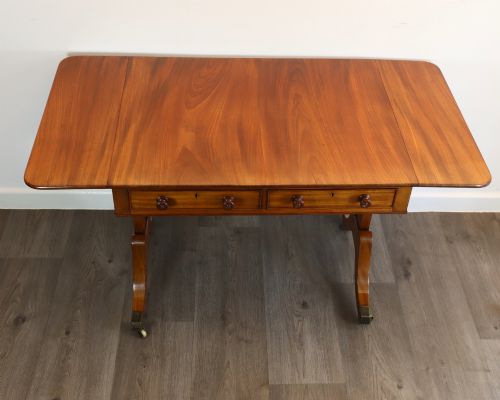
- An oblong occasional table designed to stand in front of a sofa, featuring drop leaves at either end and small drawers beneath the top.
- Tambour
- A sliding shutter formed of narrow strips of wood glued to a canvas backing, used to enclose desk pigeonholes and compartments.
- Bergère
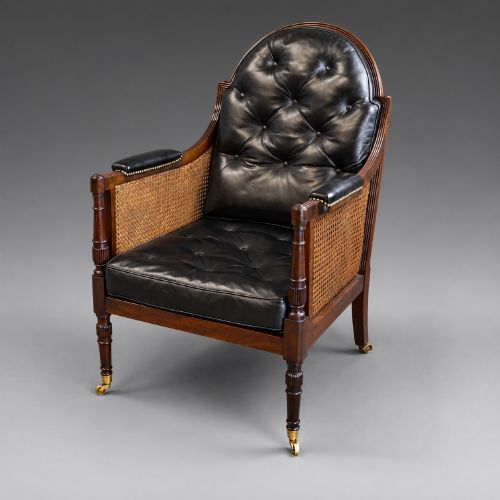
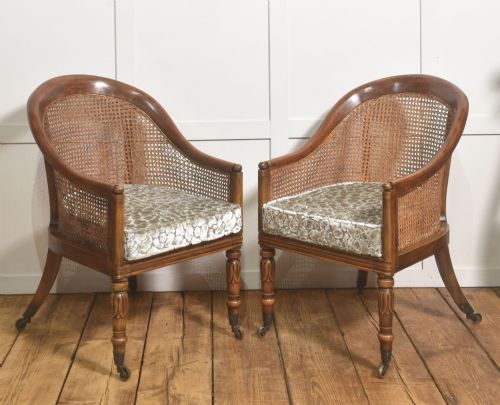
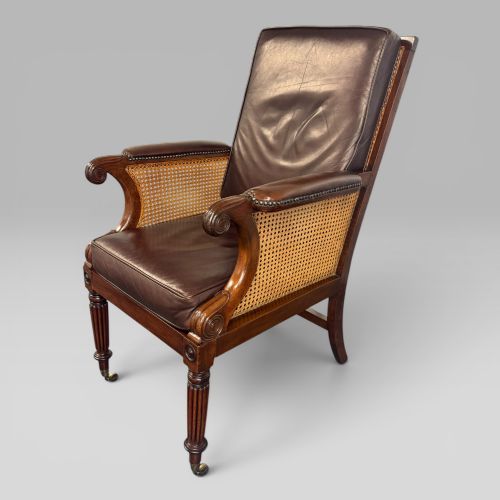
- An enclosed upholstered armchair with exposed wooden framing, frequently incorporating cane panels on the sides and back.
- Reeding
- Parallel convex mouldings carved into wooden legs or uprights, characteristic of the period style.
Regency Desk on Castors: Frequently Asked Questions
What is a regency desk on castors used for?
These pieces served primarily for correspondence, reading, and administrative tasks in libraries and private studies.
Their mobile nature allowed owners to reposition writing surfaces near hearths or light sources as daylight shifted.
How do I identify the period?
Period attribution relies on timber choices such as rich Cuban mahogany or rosewood, combined with characteristic hardware and leg turning.
Architectural motifs like reeding and brass paw castors point directly to early nineteenth-century design vocabulary.
Where should I place a drum table?
A circular drum table works effectively as a freestanding centrepiece in a room or library.
Because the drawers extend around the entire circumference, the table requires adequate clearance on all sides.
How do I care for the leather top?
Leather writing surfaces benefit from occasional gentle dusting and sparing application of neutral leather balms.
Avoiding direct sunlight prevents the tinted hide from drying and fading over time.