



Regency Cut Paper Silhouettes
Regency cut paper silhouettes are delicate profiles snipped from dark paper, capturing the sharp likeness of sitters before the arrival of photography.
Regency Cut Paper Silhouettes
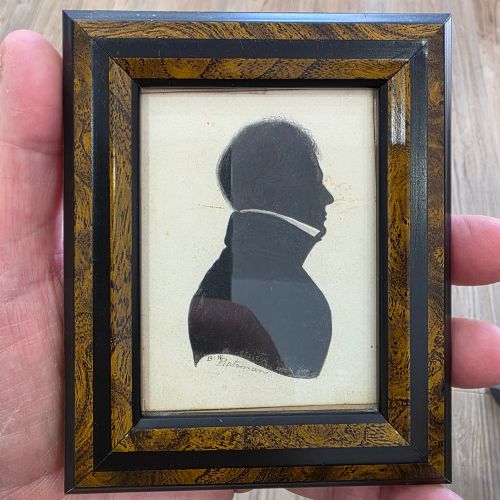
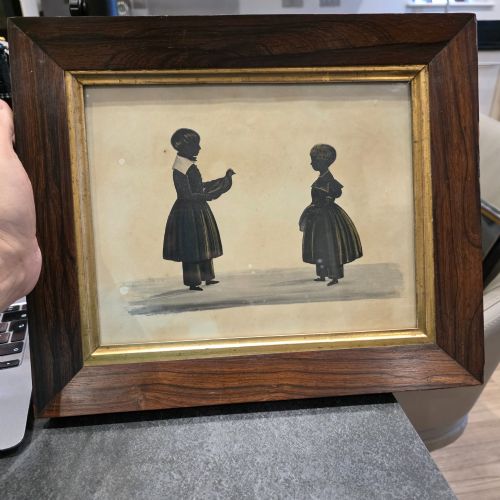
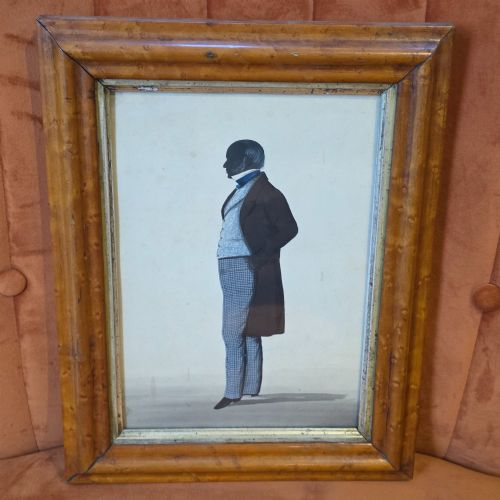
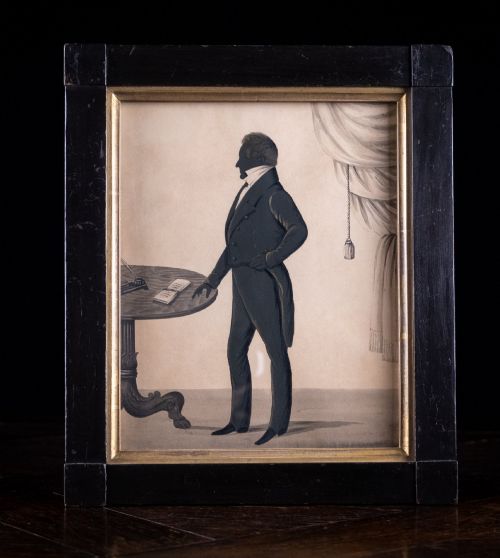
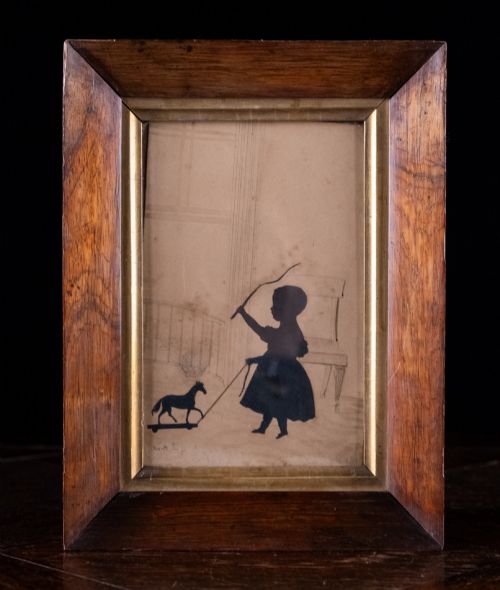
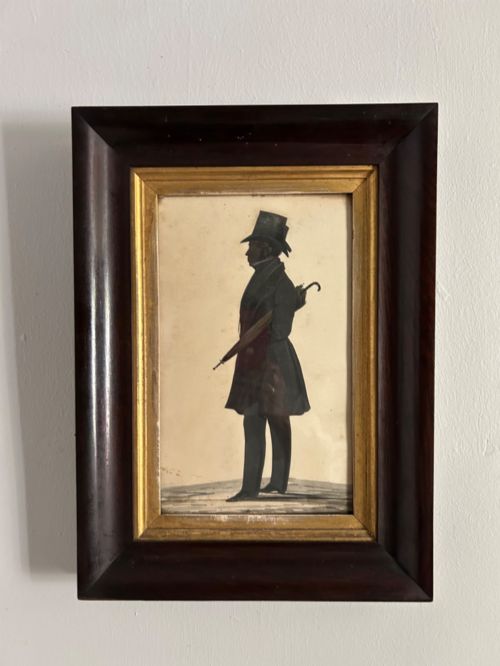
When you search for regency cut paper silhouettes, you encounter intimate likenesses produced across the nineteenth century, including the Regency and Victorian eras. These framed works depict gentlemen, ladies, children, and animals such as dogs, often rendered in full length or profile bust format.
The objects take the form of wall art and framed artwork, ranging from single portraits to pairs and larger compositions involving multiple figures. Examples frequently incorporate delicate additions like painted highlights or gilt details upon the dark paper cutouts.
Originating predominantly from the early nineteenth century and around eighteen hundred, these pieces appear mounted within traditional surrounds like maple, ebony, or gilt frames under glass. The subjects span elegant gentlemen in turban caps or top hats and children engaged with pets or objects.
How they were made
Makers housed these fragile paper works within custom wooden frames, utilising materials such as maple and ebony, often fitted with brass hardware and protected by glass. Some pieces incorporate gilded elements directly onto the paper or framing to add depth.
Several profiles immortalise beloved family pets, capturing dogs alongside children and adults in delicate cut paper.
What varies in quality
The preservation of the original framing, including period maple or ebony surrounds and protective glass, contributes significantly to the integrity of the piece. Attribution to known profileists or galleries also distinguishes certain works from anonymous studio output.
Bateman·William James Hubard·Augustin Edouart·Frederick Frith
The Regency Cut Paper Silhouettes Glossary
- Silhouette
- A solid profile portrait, usually cut from black paper or painted in dark pigments against a pale ground. This form gained immense popularity during the Georgian and Regency periods before photography became widespread.
- Gilt
- A thin application of gold leaf or gold paint used to highlight details on the paper cutout or frame. This technique adds luminous contrast to the dark monochrome profile.
- Maple
- A pale hardwood frequently used for framing nineteenth-century wall art. Its distinctive grain complements the dark tones of cut paper portraits.
- Miniature
- A small-scale portrait format designed for intimate display. These works capture likenesses within confined dimensions, often in pairs or small groupings.
Regency Cut Paper Silhouettes: Frequently Asked Questions
How do I date a silhouette?
Dating relies on the costume of the sitter, the hairstyle, and the framing materials characteristic of the nineteenth century. Details like Regency turban caps or gentlemanly attire offer clear chronological markers.
Evidence from signatures, galleries, and inscriptions on the backing paper also helps narrow down the period of execution.
Are silhouettes always black paper?
While most regency cut paper silhouettes utilise dark or black paper, many examples incorporate additional media. Artists frequently applied watercolour, ink, and gold leaf highlights to describe clothing and accessories.
Some pieces also feature gilded paper cutouts mounted against dark backgrounds rather than the reverse.
How were these portraits displayed?
These works were framed as wall art to be hung in domestic interiors, often utilising materials like maple, ebony, or gilt wood. They were preserved under glass to protect the fragile cut paper from dust and moisture.
Pairs depicting a lady and gentleman were commonly hung together in domestic parlours.
Who made these silhouettes?
Profiles were produced by travelling profileists, dedicated galleries like the Hubard Gallery, and skilled independent artists working during the Regency and Victorian eras. Some practitioners signed their work directly on the paper or frame.
Notable figures of the period included professional silhouette cutters who recorded the likenesses of society members.