
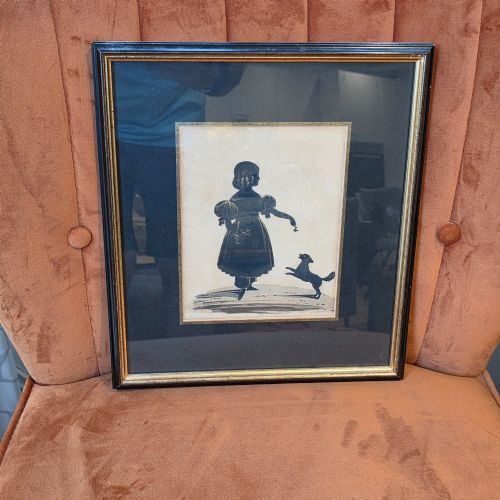
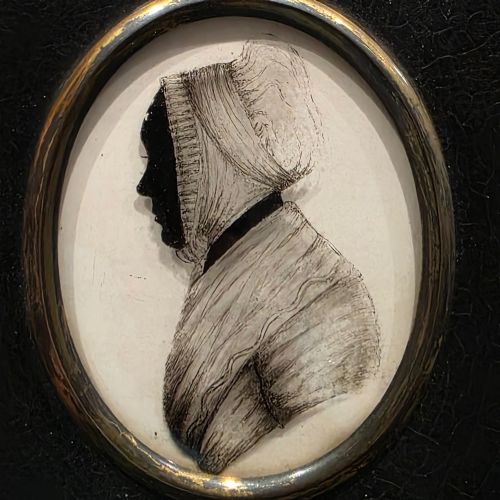
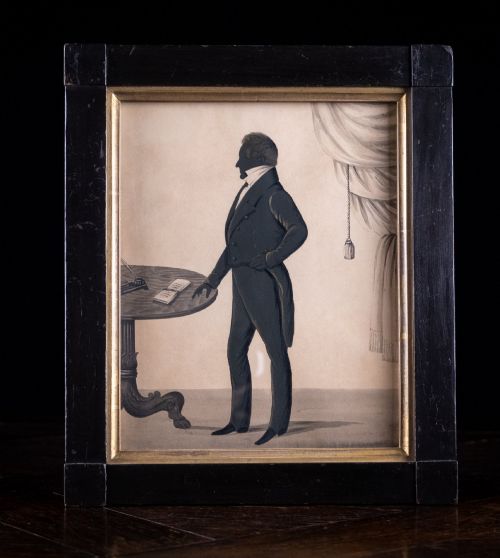
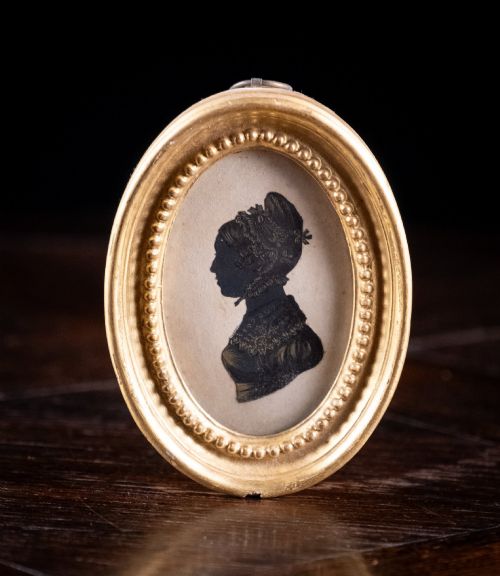


Gilt Framed Silhouette
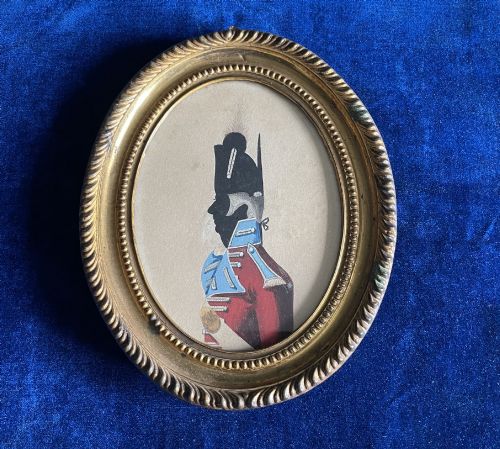
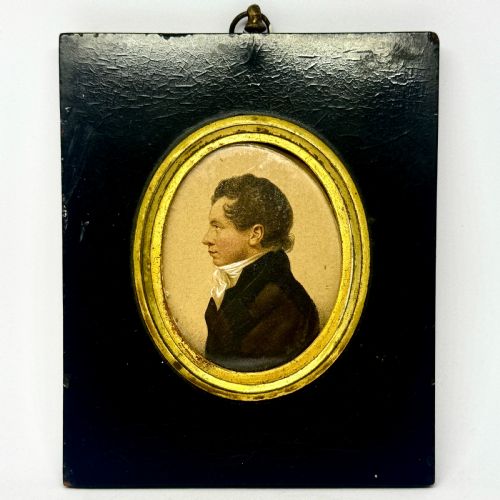
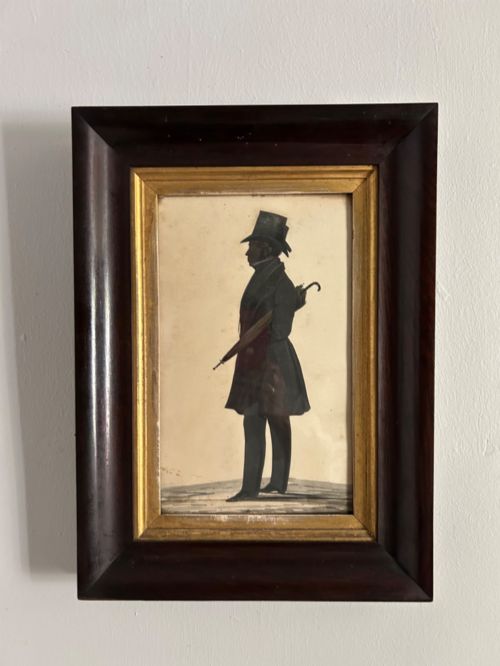
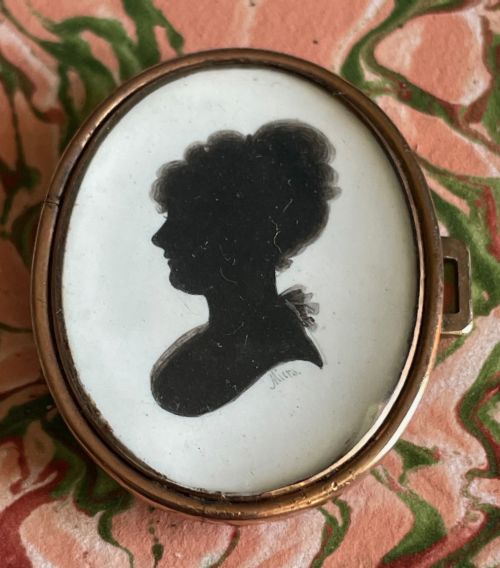
These gilt framed silhouette pieces capture a profile likeness with striking contrast, offering collectors a classic piece of portrait history.
Defining the Gilt Framed Silhouette
A gilt framed silhouette presents a portrait profile in miniature, usually depicting a gentleman or lady against a pale background. These works emerge from the eighteenth and nineteenth centuries, reflecting the popular demand for affordable personal likenesses before photography took hold.
The pieces on this page span the Georgian, Regency, and Victorian eras, taking the form of wall art or framed artwork. Subjects range from standing gentlemen to elegant ladies, often enclosed within polished wood and gilt timber frames.
Materials and Construction
Creators worked with paper, ink, and glass to produce the profile image, applying pigment by hand or cutting paper to shape. The resulting portrait sits protected beneath glass, preserving the delicate monochrome details.
Surrounding enclosures utilise wood treated with gold leaf or gilt finish, creating the characteristic bright border around the dark profile. This gilt wood catches the light, elevating a simple painted or cut-out likeness into a formal framed piece.
Retail Price Guide 2026
Typical UK retail prices for gilt framed silhouette, calculated from the Sellingantiques database of over a million retail prices indexed since 2003. This retail price guide relies exclusively on Sellingantiques data; no external sources or auction records are used, so the figures do not describe the wider market.
Every silhouette preserves the exact expression of someone who sat quietly while an artist captured their profile for posterity.
Judging Quality and Finish
The quality of the surrounding frame also dictates the piece, where deep gilding and intact original glass indicate a higher grade of manufacture. Pieces associated with documented studios or galleries display superior craftsmanship throughout the entire assembly.
John Smith of Edinburgh·Hubard Gallery
The Gilt Framed Silhouette Glossary
- Silhouette
- A portrait profile filled in with a solid dark colour, typically black, against a lighter background. This traditional art form gained immense popularity in the eighteenth and nineteenth centuries.
- Giltwood
- Timber that has been treated with gold leaf or a gilt finish to give the appearance of solid gold. It provides the decorative border for many period frames.
- Regency
- An architectural and design period dating from the early nineteenth century in Britain. Pieces from this era often feature clean lines and classical restraint.
- Georgian
- The period spanning the eighteenth and early nineteenth centuries across the reigns of the Georges. Antiques from this time show distinct classical proportions and craftsmanship.
- Victorian
- The era spanning the nineteenth century during the reign of Queen Victoria. Items from this period reflect a wide variety of historic revival styles.
Frequently Asked Questions
How old are these pieces?
The pieces seen here date primarily from the eighteenth and nineteenth centuries, encompassing the Georgian, Regency, and Victorian periods. Each era brought subtle shifts in framing styles and portrait presentation.
Examinations of the backing paper, framing technique, and glass help determine the exact period of manufacture for an individual artwork.
How do I hang a silhouette?
These framed artworks suit small wall spaces where their detailed profiles can be viewed closely at eye level. Grouping several pieces together creates a traditional gallery display reminiscent of historic home interiors.
Keep them away from direct sunlight to protect the paper and ink from fading over time.
Are all silhouettes painted?
While many examples feature ink applied directly to paper by hand, others were created using cut paper mounted on a contrasting background. Some artists also added subtle touches of gold highlights to enhance collars or hair.
Close inspection under good light reveals whether the profile is pigment on paper or a physical cut-out.