


Victorian Paper Silhouette
These Victorian paper silhouette works are hand-cut profiles framed in wood and glass, prized for capturing the exact likeness of sitters before photography.
Victorian Paper Silhouette
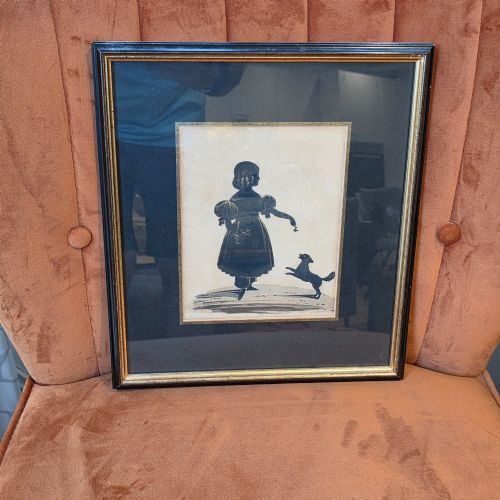
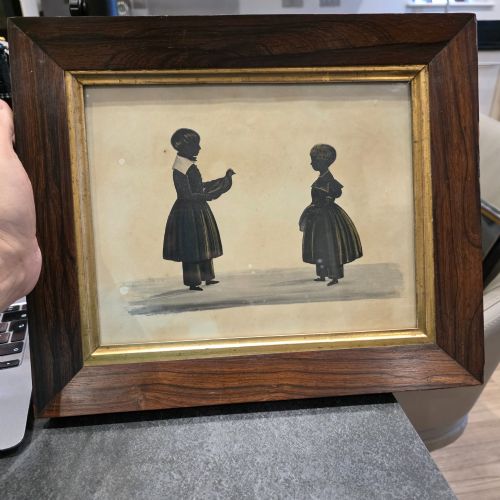
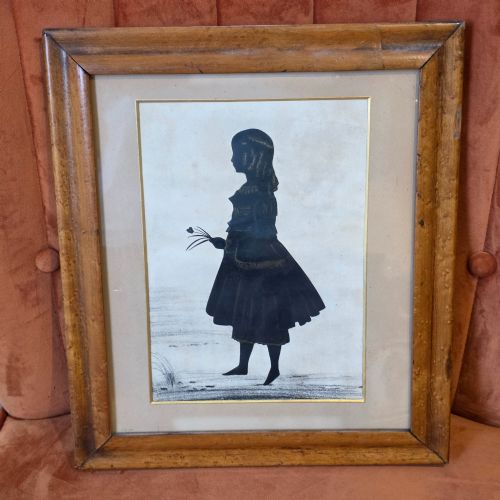
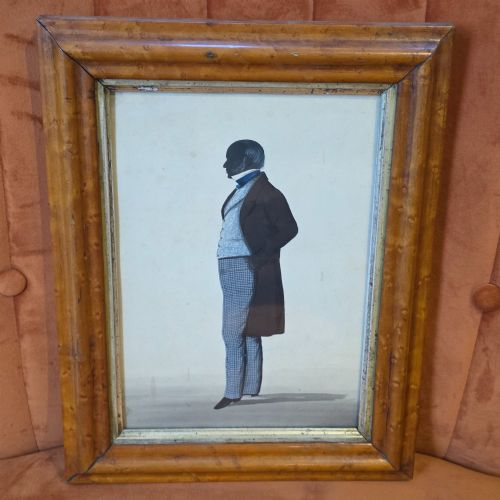
A victorian paper silhouette is a framed wall art piece showing a dark profile portrait cut from paper, often enhanced with ink or watercolour highlights. The pieces seen here span the 19th century, including Regency and early Victorian periods, presenting full-length figures, children, gentlemen, and ladies.
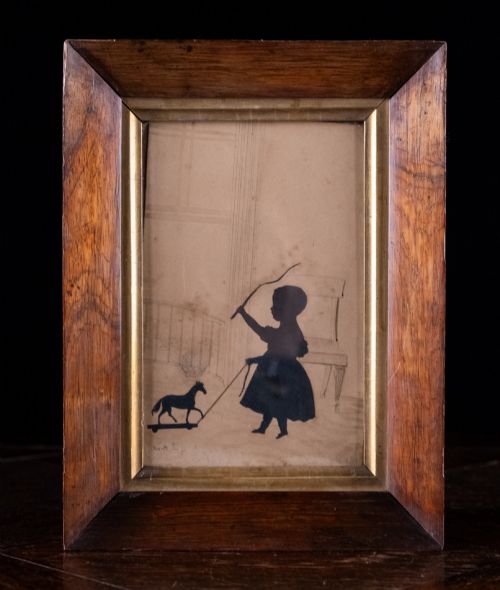
Most examples take the form of framed silhouette art or silhouette portraits featuring single sitters, pairs, or conversation pieces with animals. These works capture subjects through scissor work alone or combined with painted backgrounds on paper under glass.
Origins range from named British studios to school works, preserved in period timber frames with brass or gold leaf accents. Buyers encounter both bust-length miniatures and large full-length compositions depicting complex domestic scenes.
Materials and technique
Makers housed the finished paper cutouts behind protective glass, securing them within wooden frames made of materials such as rosewood and gilt moulding. Brass fittings and hanging loops completed the assembly of these wall art pieces.
Listings feature paper, glass, wood, ink, gold leaf, brass, gilt, and rosewood across 19th-century formats.
Variations in quality
Quality rests on the precision of the paper cutting and the fidelity of the sitter's profile. Superior examples display crisp edges and delicate internal scissor work that defines hair, attire, and expression without excessive reliance on ink highlights.
The sophistication of the composition also elevates a piece, distinguishing simple bust portraits from complex conversation pieces involving multiple figures, animals, and detailed watercolour backgrounds. Original period framing in rosewood or gilt wood adds further distinction to the work.
Hubard Gallery London·William James Hubard·Augustin Edouart·Frederick Frith·Alfred Darbyshire·Royal Victoria Gallery·Skeolan
The Victorian Paper Silhouette Glossary
- Silhouette portrait
- A profile likeness cut from black paper or painted onto a pale ground, named after Etienne de Silhouette. These portraits serve as the primary visual record of sitters prior to the widespread use of photography.
- Conversation piece
- An informal group portrait depicting family members or groups engaged in daily activities. In silhouette work, these complex compositions often include multiple figures, children, and animals within a single framed scene.
- Gilt
- A thin layer of gold applied to wood or metal frames to provide a reflective surface. This finish enhances the presentation of the dark paper cutouts.
- Rosewood
- A dense, dark timber frequently utilised for framing 19th-century artwork. Its rich grain complements the stark contrast of black paper silhouettes.
Victorian Paper Silhouette: Frequently Asked Questions
How do I hang a framed silhouette?
These framed works require secure wall fixings suited to their original wooden frames and glass panels. Hang them away from direct sunlight to prevent the paper and watercolour details from fading.
Ensure the hanging wire or loop on the back is stable before mounting the piece at eye level.
Were these always cut by hand?
Makers produced these 19th-century works using scissors and specialised blades to snip black paper freehand. Artists working in galleries and travelling studios relied entirely on visual skill rather than mechanical aids.
Signed pieces and attribution marks often confirm the hand of a professional silhouette artist.
What subjects appear in these works?
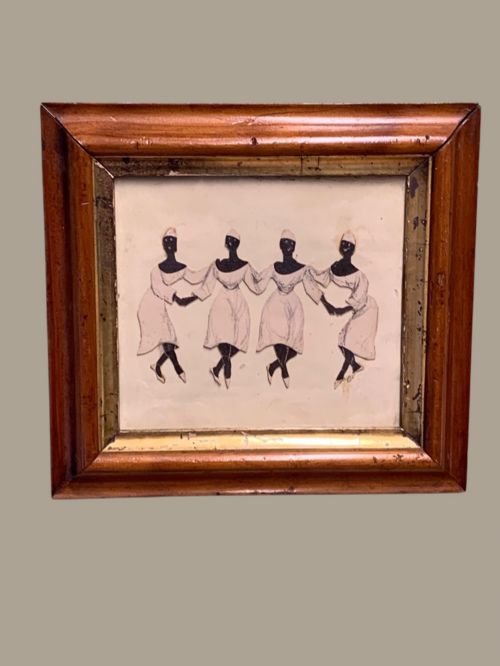
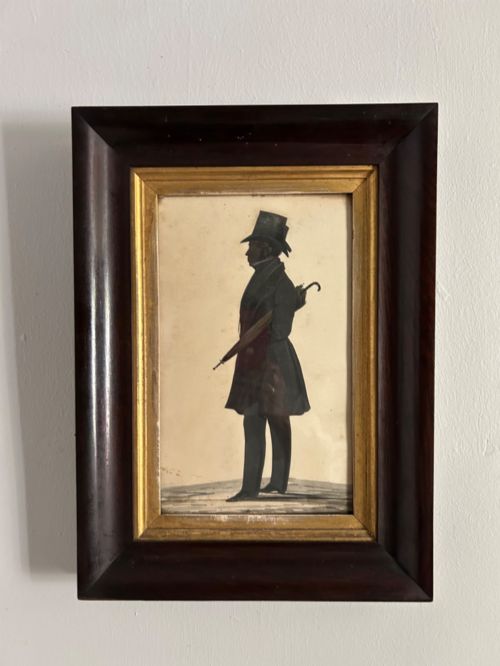
Portraits depict single gentlemen, ladies, and children, frequently accompanied by pets such as dogs and horses. Group scenes capture family gatherings and dancing figures.
Full-length figures dominate the larger framed examples, showing complete outfits and posture.
How are periods identified?
Dating relies on the style of clothing, hair, and framing materials visible in each piece. Regency examples display distinct high-waisted fashions, while Victorian pieces show mid-century crinolines and tailored coats.
Signatures, gallery stamps, and written inscriptions on the reverse provide further chronological context.