

Regency Circular Centre Table
A regency circular centre table commands a room with architectural confidence, offering a freestanding hub for dining, books or conversation.
Regency Circular Centre Table
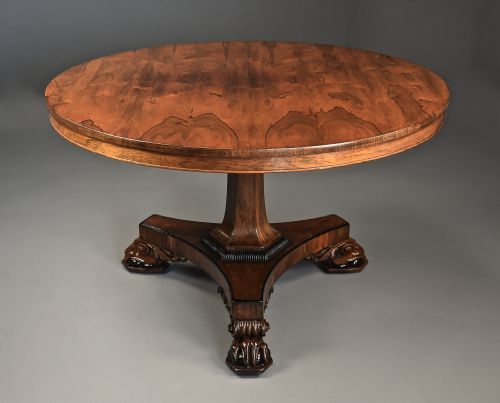
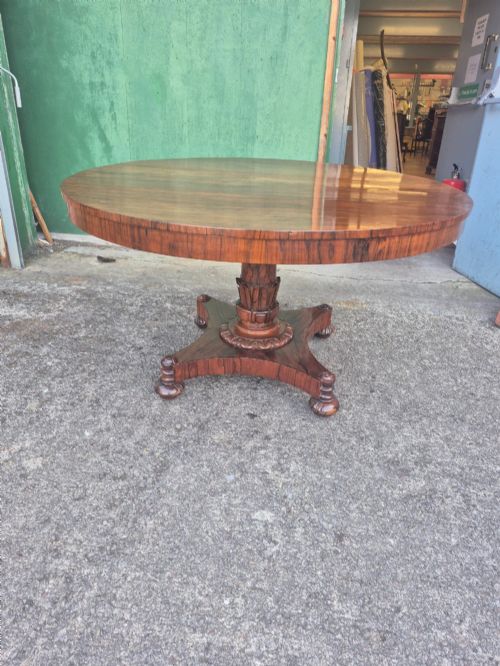
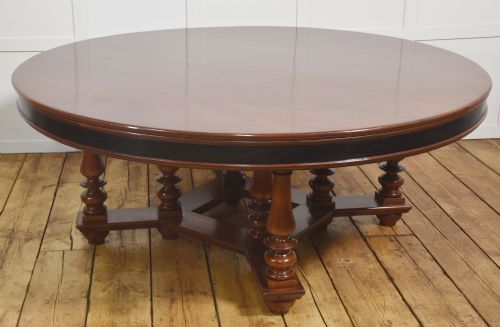
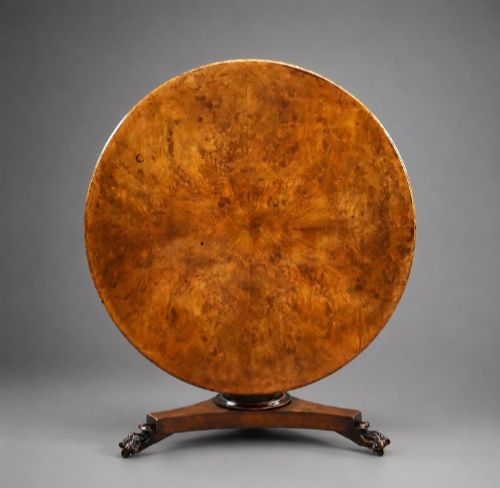
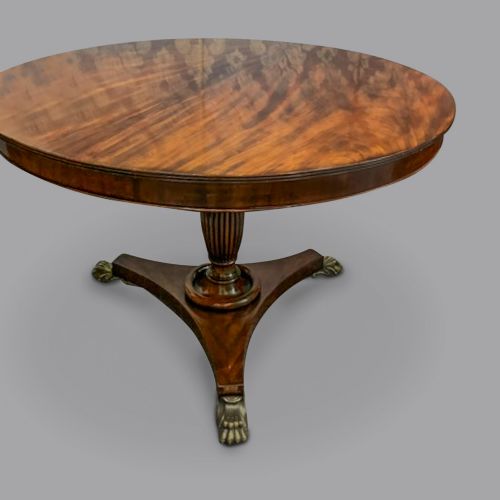
A regency circular centre table typically stands on a central pillar or pedestal base, fulfilling varied roles as dining, breakfast, library or occasional pieces from the Georgian and Victorian eras.
The versions most frequently met on this page span the 19th century, drawing heavily on Regency, George III, William IV and French Empire design idioms.
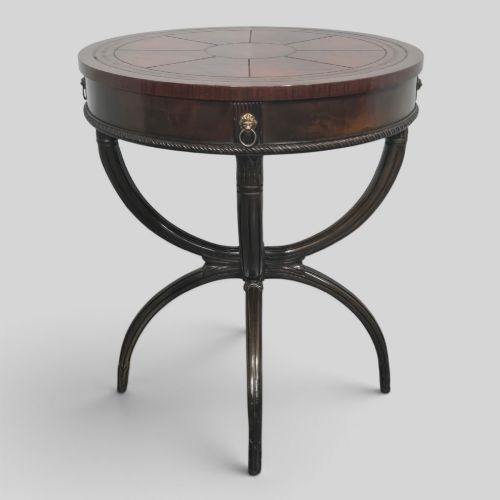
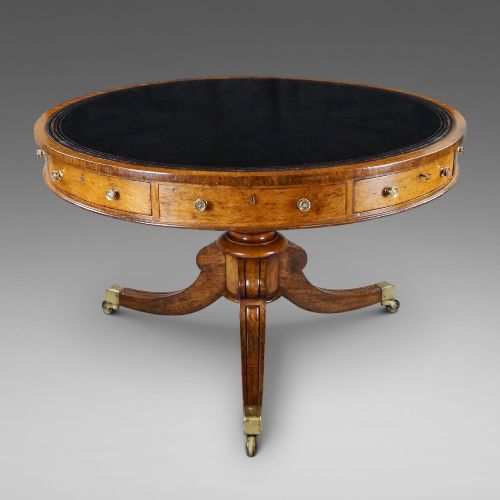
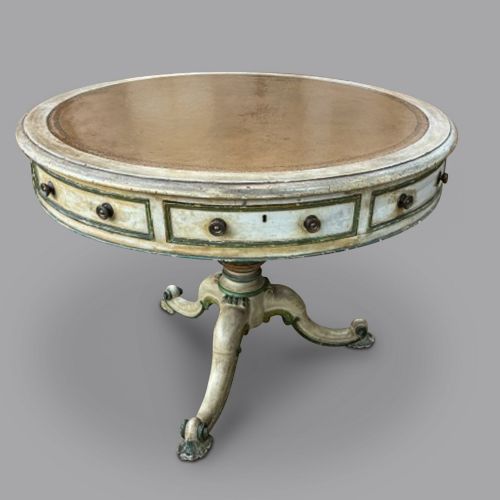
Surviving examples range from compact occasional stands to large six-seater dining formats, often featuring tilt-top mechanisms or drum configurations with drawers.
Materials and Construction
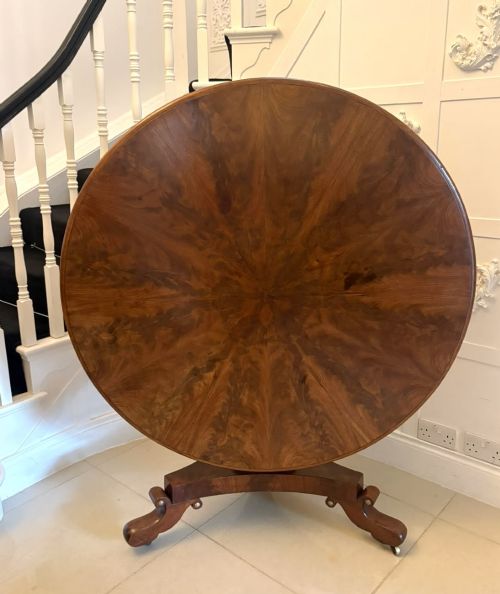
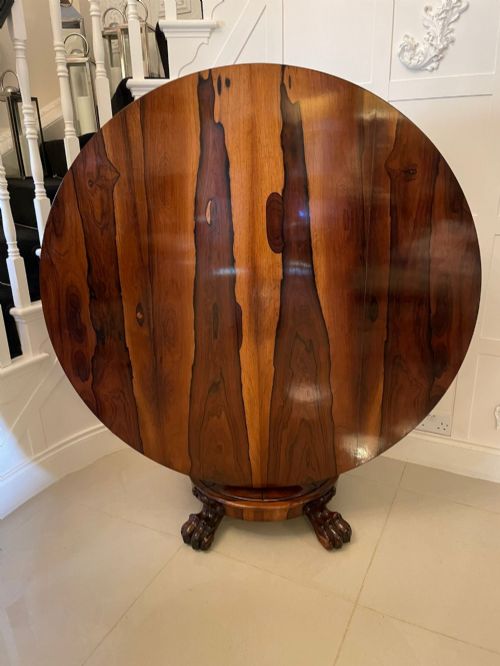
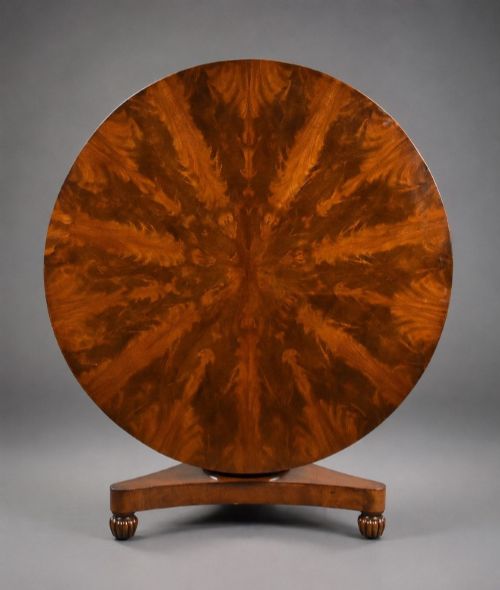
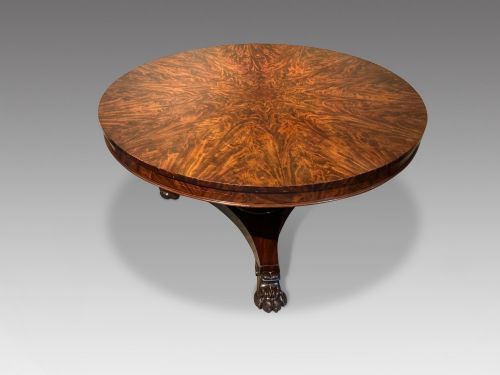
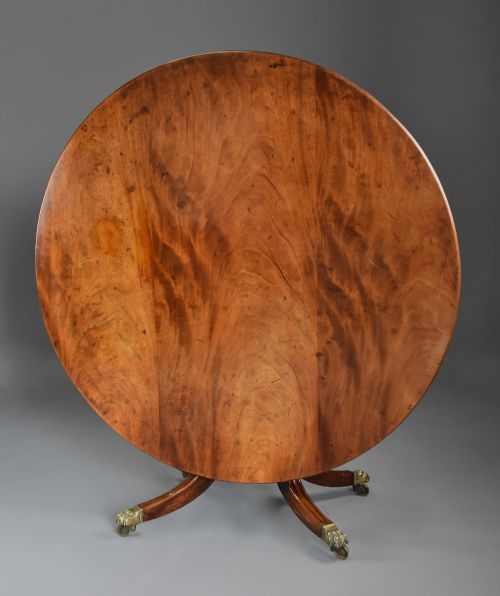
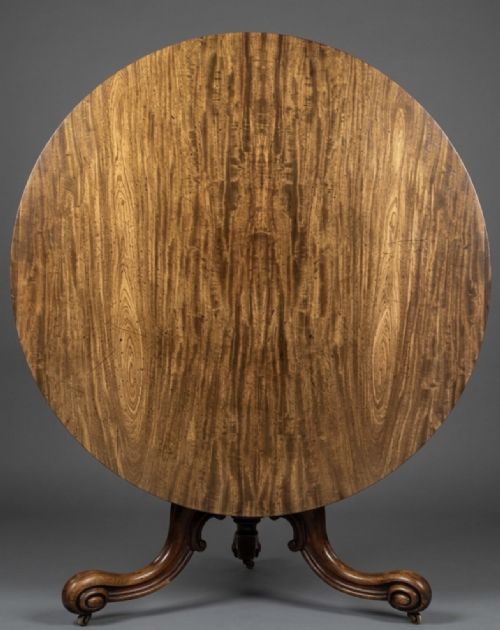
Cabinetmakers relied on dense native and exotic timbers, laying flame mahogany, figured mahogany, rosewood, satinwood and pollard oak veneers over stable secondary woods.
Decorative embellishment relied on brass inlay, ormolu mounts, parcel gilding and contrasting stringing, alongside inset leather writing surfaces and marble tops.
Pedestal bases frequently terminate in triform platforms, carved scroll feet, or bronze casters to support the heavy central shaft.
Some library drum tables incorporate secret drawers designed to hide confidential correspondence from prying eyes.
Craftsmanship and Proportion
The hierarchy of execution rests on the choice of timber figure, such as richly marked flame mahogany, burr elm or heavily grained rosewood matched symmetrically across the top.
Structural integrity reveals itself in the seamless operation of tilt-top mechanisms, secret drawers and the stability of the central pillar assembly.
Refined detailing - precision brass inlay, fine carving on the pedestal base, and well-preserved patination - distinguishes standard workshop production from exceptional cabinet work.
Gillows·Walker-Lancaster·Peters of Genoa
The Regency Circular Centre Table Glossary
- Tilt-top
- A tabletop hinged to a pedestal so it can pivot vertically to save space when not in use. This mechanism allowed large tables to stand against walls.
- Drum table
- A circular library table with a deep frieze containing alternating drawers and dummy drawers. These pieces typically rest on a robust pillar and platform base.
- Gueridon
- A small ornamental round table, often French in inspiration and supported by a single central column or tripod base. They frequently served as lamp or display stands.
- Ormolu
- Gilded bronze mounts applied to furniture for decorative contrast. This technique was favoured in high-style Regency and Empire pieces.
- Triform
- A three-sided pedestal base or platform layout. It provides stable floor contact for heavy central tables.
Regency Circular Centre Table: Frequently Asked Questions
What is a regency circular centre table used for?
These tables served multiple functions in historic interiors, acting as dining surfaces, breakfast tables or central library fixtures for books and papers.
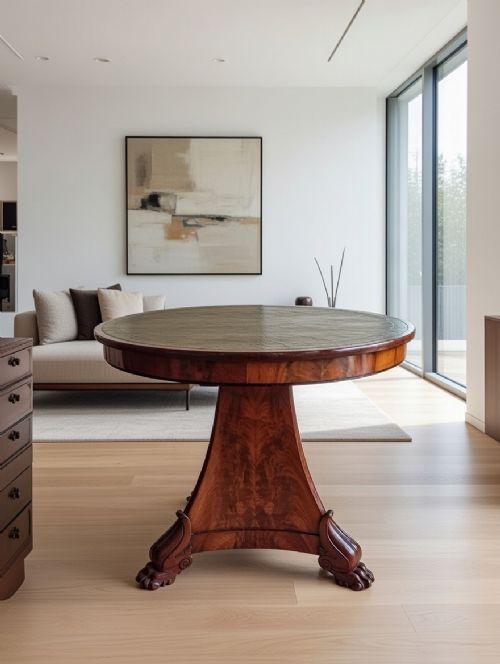
Today, they perform equally well as freestanding focal points in large hallways, living rooms or dining spaces.
How do I tell a breakfast table from a dining table?
Breakfast tables commonly feature tilt-top mechanisms designed to store the surface upright against a wall when the room was needed for other purposes.
Larger dining formats generally fixed the top permanently to a heavy pedestal base to support regular family meals.
Are these tables suitable for everyday use?
Solid mahogany and rosewood construction provides robust durability for daily activities like reading, dining or holding lamps.
Care should be taken with polished veneer surfaces to protect against excessive moisture and heat.
How do I distinguish Regency from William IV pieces?
Regency designs tend to display restrained classical elegance, featuring delicate brass inlay, reeded columns and satinwood or mahogany veneers.
William IV pieces shift toward heavier, bolder proportions with prominent architectural scrolling, massive octagonal pillars and dark rosewood.