



Regency Triform Centre Table
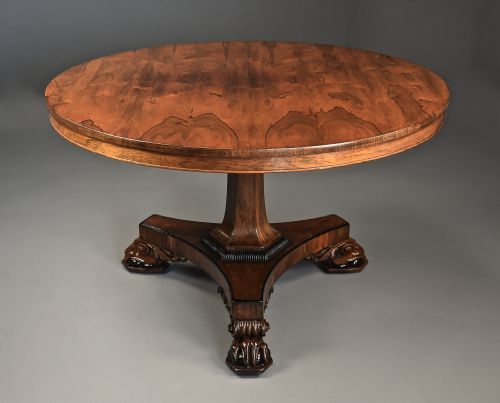
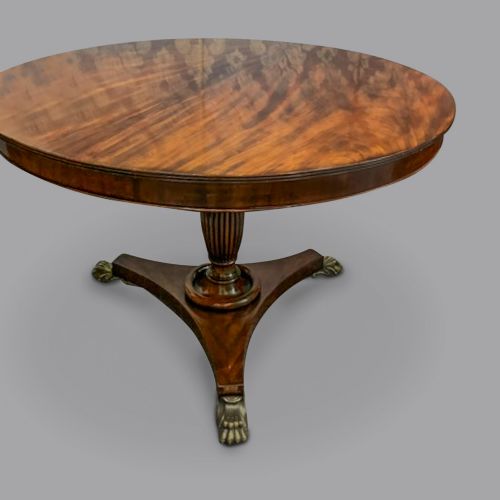
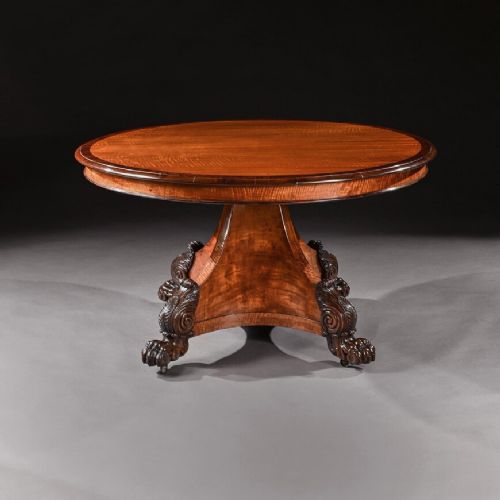
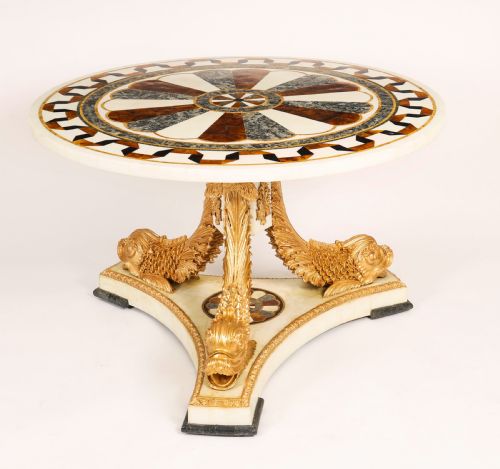
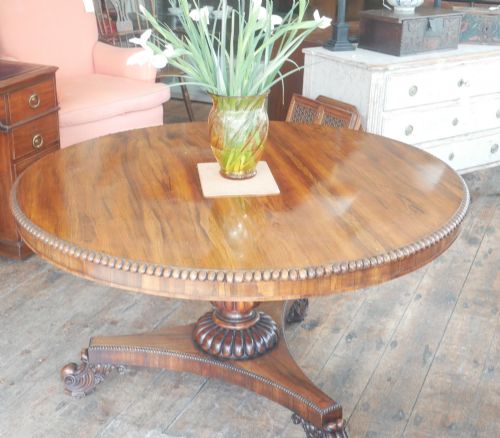
A regency triform centre table anchors a grand room with its distinctive three-sided pedestal base and striking timber grain.
Regency Triform Centre Table
A regency triform centre table stands freestanding in the middle of a room, designed to be viewed from all angles rather than pushed against a wall. The form relies on a central pillar supported by a three-sided or triangular base, often resting on paw feet or castors. Buyers seek these pieces for their architectural presence and the clever engineering that keeps such a heavy top stable on three points.
Most examples you meet on this page date from the nineteenth century, spanning the Regency, George IV, and William IV periods, alongside later revivals. Rosewood dominates the selection, frequently paired with mahogany, satinwood, goncalo alves, or marble tops. They appear as circular breakfast tables, drum tables, and dedicated centre tables designed for the middle of a grand hall or library.
How they were made
Cabinet makers utilised dense exotic hardwoods like rosewood, mahogany, and goncalo alves, often laid as sophisticated veneers over stable secondary timbers. They mastered radial veneering to make the timber grain fan outwards from the centre, creating geometric patterns that catch the light. Brass inlay, parcel gilding, and brass mounts were applied with precision to accentuate the structural lines of the pedestal and top.
The triform base required complex joinery to ensure the three sweeping legs or scrolling supports met the central pillar without splitting under the weight of a heavy marble or solid timber top. Tilt-top mechanisms appeared frequently on breakfast tables, allowing the circular surface to pivot vertically when not in use to save space.
Some tables feature secret drawers hidden inside the deep frieze of a drum top for storing confidential notes.
What varies in quality
The hierarchy of quality rests primarily on the choice of timber and the ambition of the veneering. Tables featuring figured rosewood, macassar ebony, or specimen marble tops sit at the upper end of the scale, executed by prominent workshops. Simpler mahogany or painted sycamore versions represent more utilitarian commissions from the same eras.
Execution of the carving on the triform base and the crispness of any brass inlay distinguish superior work from standard production. A heavier, more balanced pedestal with well-defined paw feet demonstrates the confidence of the maker, whereas lesser pieces can feel clumsy or out of proportion in their lower supports.
Gillows·Walker Lancaster·James Winter of Wardour Street
The Regency Triform Centre Table Glossary
- Triform base
- A three-sided lower support structure beneath a central pillar. This configuration provides stability while offering a distinct architectural silhouette.
- Tilt-top
- A hinged tabletop mechanism that pivots from horizontal to vertical. This allows the table to be stored against a wall when floor space is needed.
- Gonçalo alves
- A dense South American hardwood prized for its rich, mottled figure. Makers utilised this striking timber to add dramatic contrast to table tops and pedestals.
- Gueridon
- A small circular table supported by a central column or figures. These pieces originated in France and serve similar freestanding functions in a room.
- Drum table
- A circular library table with a deep top containing drawers around the perimeter. They share the central pedestal format common to this group.
Regency Triform Centre Table: Frequently Asked Questions
Where should a triform centre table go?
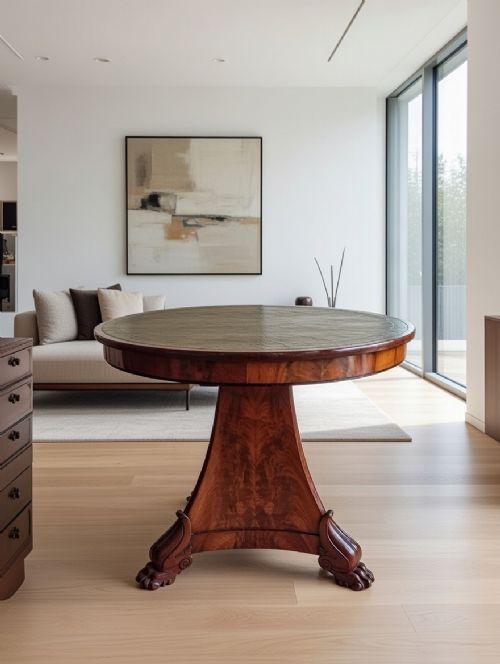
These tables are designed to sit freestanding in the middle of a room, such as a grand entrance hall, library, or drawing room. Because the triform base and timber grain look finished from every angle, they work best away from walls.
Positioning the piece centrally allows you to walk completely around it and appreciate the symmetry of the three-sided base. Ensure you leave adequate clearance around the perimeter for movement.
Can I use a breakfast table for dining?
Many of these tables were originally built for breakfast or dining use, featuring sturdy pedestal bases that easily accommodate chairs. The circular format encourages conversation during meals.
When using an antique tilt-top or pillar table daily, protect the polished rosewood or mahogany surface with appropriate pads or linens to prevent water rings and heat damage.
How do I tell Regency from William IV?
Regency pieces generally date from the early nineteenth century and lean toward restrained neoclassical elegance, often featuring finer brass inlay and delicate proportions. William IV examples from the 1830s tend to be heavier and more robust.
William IV furniture frequently showcases bolder rosewood grains, heavier scrollwork on the triform base, and more massive pillars. Both periods overlap in materials like mahogany and goncalo alves.
What is a tilt-top mechanism used for?
The tilt-top mechanism allows the circular surface to pivot ninety degrees into a vertical position by releasing a brass catch under the top. This practical feature let owners fold the tables away against the wall when rooms needed to be cleared for dancing or entertaining.
When living with a tilt-top table today, check that the brass latch locks securely into the horizontal position before placing heavy items on the surface.