


Carved Pollard Oak Table
A carved pollard oak table brings distinctive burr-figured timber and robust nineteenth-century joinery directly into a room.
Carved Pollard Oak Table
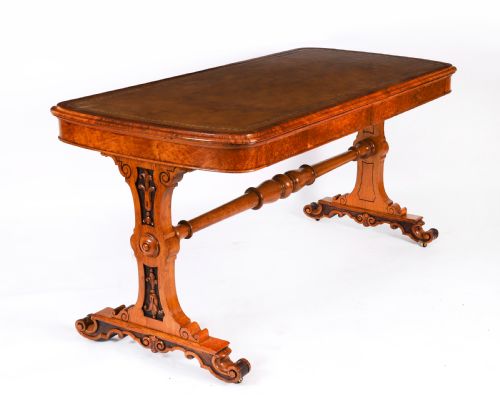
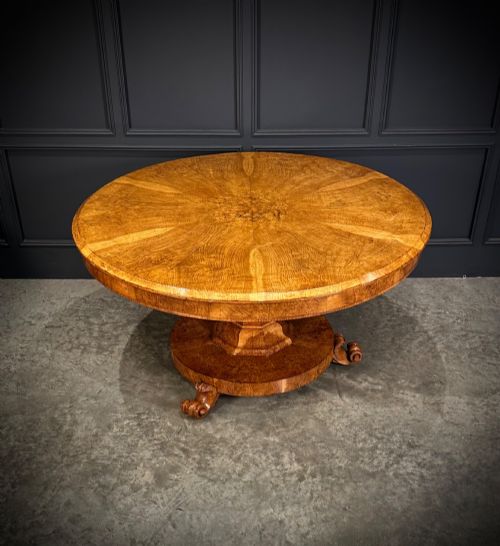
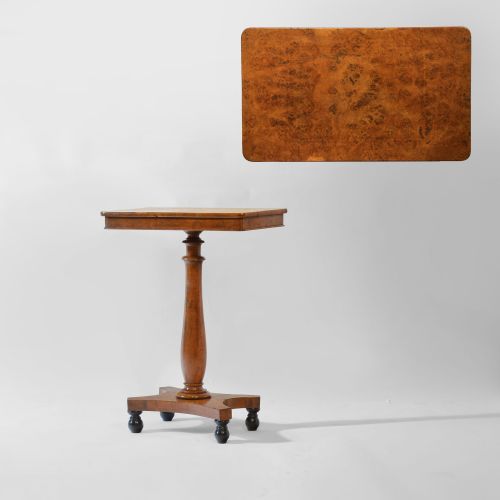
A carved pollard oak table encompasses a variety of forms designed for nineteenth-century domestic and library use, ranging from centre tables and breakfast tables to writing desks and large dining tables. These pieces draw upon Georgian, Regency, William IV, Victorian, and Elizabethan Revival styles, showing how cabinet makers utilised richly figured timber across different decades.
The version most likely to meet a buyer on this page is the nineteenth-century centre table or writing table, often featuring distinctive pollard or burr oak veneers. Such pieces frequently incorporate carved bases, pedestals, or tripod supports that reflect the stylistic preferences of the Regency and Victorian eras.
Judging the work
Quality in these tables rests upon the selection and matching of the pollard oak veneer, where harmonious grain patterns across large surfaces distinguish superior cabinet work from simpler construction. The depth and crispness of the carved details on the bases, legs, and borders also indicate the level of craftsmanship invested in the piece.
The integrity of the timber framing and the preservation of original secondary materials, such as fitted leather inserts or brass hardware, further separate standard examples from exceptional ones. Well-executed construction ensures that heavy tables, particularly large dining and partner desks, maintain stability across their joints and pedestals.
Several tables come with partner configurations, proving that nineteenth-century colleagues had to share their notoriously knotty wood.
James Winter & Sons·Boothroyd Sons & Rimmer·Williams and Gibton·Thomas Turner·Howard & Son's
The Carved Pollard Oak Table Glossary
- Pollard oak
- Timber taken from trees that have been pollarded, a pruning method that produces dense clusters of branches and results in a highly figured, knotty wood grain.
- Burr oak
- A growth on an oak tree that yields timber with swirling, speckled grain patterns prized by nineteenth-century cabinet makers for decorative veneer work.
- Centre table
- A freestanding table finished on all sides, intended to stand in the middle of a room rather than against a wall.
- Partner desk
- A large writing table designed for two people to work opposite one another, typically featuring drawers on both long sides.
- Giltwood
- Wood that has been coated with gold leaf or gold paint to provide decorative metallic highlights, often seen on Regency console tables.
Carved Pollard Oak Table: Frequently Asked Questions
What is pollard oak?
Pollard oak is timber harvested from trees that have been pruned near the trunk to encourage dense branch growth. This process creates a mottled, highly figured grain pattern rich in small knots.
Cabinet makers valued this wood for surface veneers on prominent furniture pieces like writing desks and centre tables.
How do I date these tables?
Dating relies on stylistic clues, construction methods, and prevailing design periods associated with the nineteenth century. Pieces range from Regency and George IV forms through to Victorian and Elizabethan Revival expressions.
Specific design traits, such as pedestal bases or carved supports, help align a table with eras like 1870 or 1880.
Where were centre tables placed?
Centre tables were designed to stand free in the middle of principal rooms, library spaces, or entrance halls. Because they are finished on all sides, they served as decorative and functional focal points.
They frequently held lamps, books, or decorative objects rather than sitting against a wall.
Are these tables suitable for daily use?
These tables are built from robust nineteenth-century oak and heavy framing, making them well-suited for everyday dining, writing, or display. Regular care helps protect the polished pollard oak surfaces and any inset leather panels.
Larger extending models also accommodate modern dining requirements while retaining their period character.