




Regency Chimney Glass
A regency chimney glass sits above the hearth, anchoring the room with light and proportion.
What a regency chimney glass is
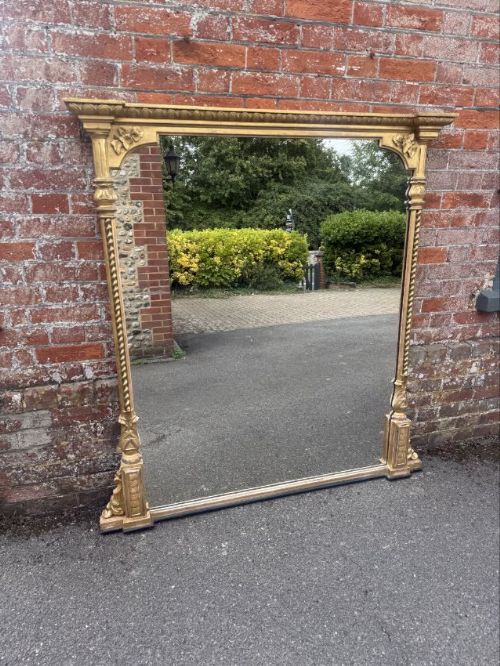
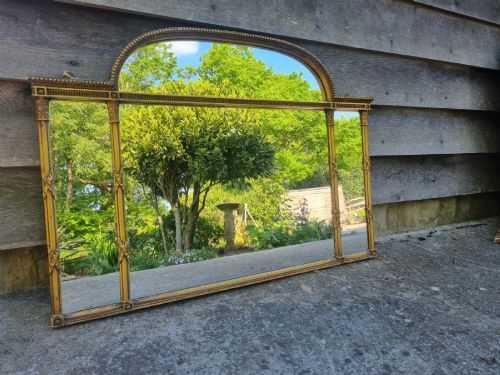
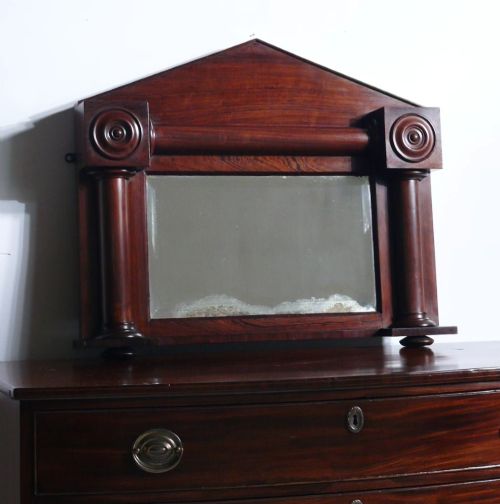
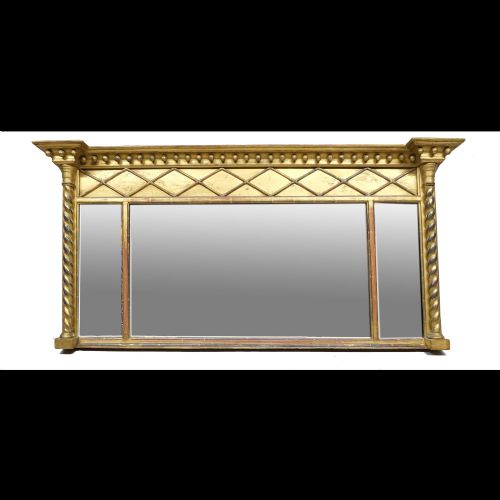
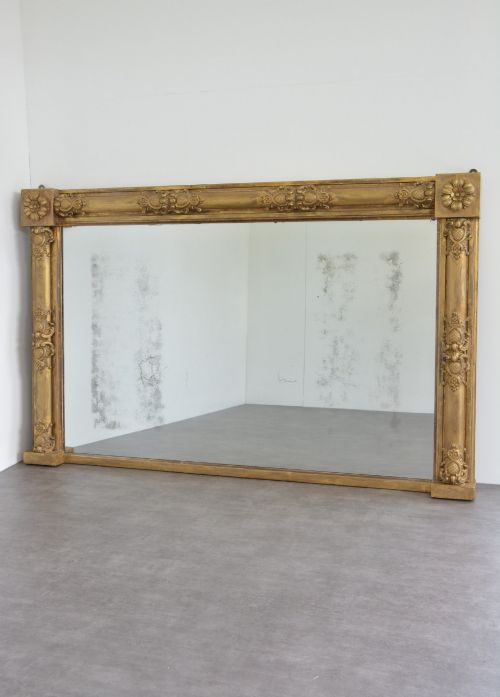
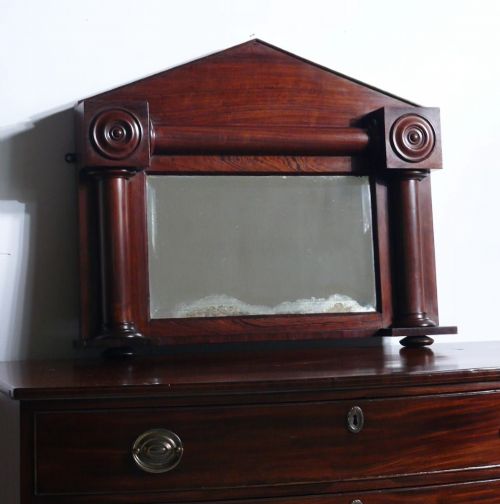
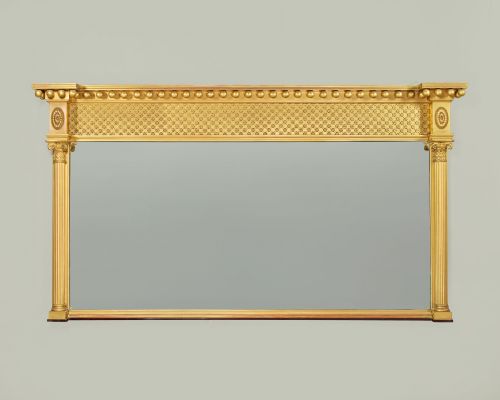
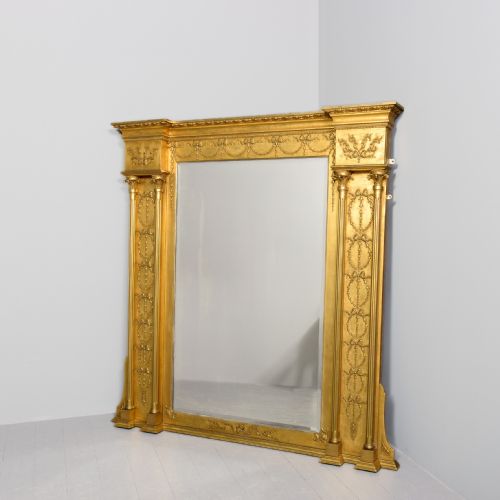
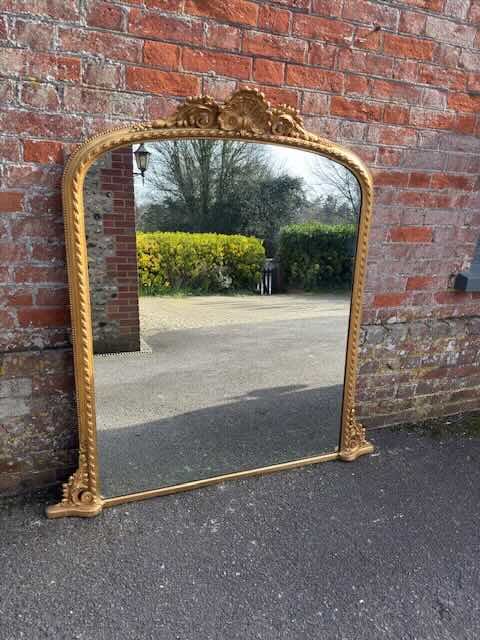
A regency chimney glass is a wide, horizontal mirror designed to hang above a fireplace mantelpiece. The forms seen in current listings include overmantel mirrors and wall mirrors, spanning the nineteenth century, the Regency period, and the year eighteen hundred. These pieces reflect natural daylight and candle illumination across the principal reception rooms of period houses.
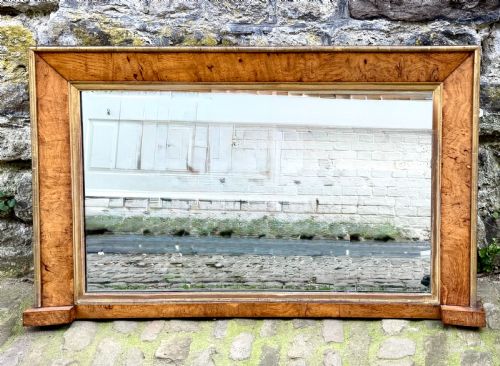
The buyer meets pieces fashioned in mahogany, rosewood, walnut, and burl wood, alongside surfaces finished in giltwood, gesso, and gilded wood. Most examples follow the low, broad proportions required to fit the architectural space between the mantel shelf and the cornice. Oval and rectangular formats dominate the selection available on this page.
Originating in the early nineteenth century, these mirrors served both a practical purpose and a decorative function in domestic interiors. They visually expand smaller chambers while offering a focal point for the mantelpiece arrangement below. The surviving examples demonstrate the enduring appeal of Regency design principles.
How they were made
Cabinetmakers constructed the wooden frames of a regency chimney glass using solid timbers such as mahogany, rosewood, and walnut, frequently selecting burl wood for its decorative grain patterns. These wooden structures provided a stable housing for the fragile mirror glass panels within. Artisans also utilised gesso applied over a wooden base to build up intricate moulded details before applying gold leaf.
Giltwood and gilded wood surfaces required meticulous application of thin metal leaf over prepared grounds, creating the brilliant metallic sheen characteristic of the style. Mirror glass of this era was silvered using traditional techniques, resulting in the characteristic depth and slight imperfections visible in early nineteenth-century plates. Each frame was joined using period woodworking techniques suited to large, heavy hanging objects.
Retail Price Guide 2026
Typical UK retail prices for regency chimney glass, calculated from the Sellingantiques database of over a million retail prices indexed since 2003. This retail price guide relies exclusively on Sellingantiques data; no external sources or auction records are used, so the figures do not describe the wider market.
What varies in quality
The quality of a regency chimney glass is determined by the selection of timber veneers and the crispness of the carved or moulded ornament. Finer examples display carefully matched burl wood or richly grained rosewood, whereas simpler pieces utilise plain mahogany or walnut. The depth and execution of the giltwood work further separate standard production from superior craftsmanship.
The preservation of the original mirror glass and the integrity of the frame construction influence the character of each piece. Surviving frames retain their structural rigidity and original surface treatments without heavy modern intervention. Proportion and balance between the frame width and the central glass plate govern the visual success of the mirror.
The Regency Chimney Glass Glossary
- Overmantel mirror
- A large horizontal looking glass specifically designed to be positioned above a fireplace mantel. These mirrors often feature wide frames to suit the proportions of the chimney breast.
- Giltwood
- Timber that has been coated with gold leaf or gold paint for decorative effect. This finish catches the light and adds brightness to period interiors.
- Gesso
- A plaster-like material applied to wooden frames as a smooth base for gilding. It allows craftsmen to model sharp relief details before applying metal leaf.
- Burl wood
- Wood cut from a tree growth featuring swirling, irregular grain patterns. Cabinetmakers prized this material for its highly decorative surface appearance.
- Regency
- The British design period spanning the early nineteenth century, defined by classical restraint and refined proportions. It draws inspiration from ancient Greek and Roman forms.
Frequently Asked Questions
Where should I hang a chimney glass?
These mirrors traditionally hang centrally above a fireplace mantelpiece, where their horizontal proportions balance the width of the hearth. They work equally well mounted on a primary wall in a principal reception room to reflect light.
Ensure the wall construction and fixings can support the substantial weight of a timber and glass mirror frame before hanging.
How do I identify a Regency mirror?
Look for classical restraint, clean architectural lines, and specific timber choices such as mahogany, rosewood, or giltwood surfaces. The proportions tend to be wide and low to suit nineteenth-century mantelpiece dimensions.
Construction methods and the character of the mirror glass provide further clues to nineteenth-century origins.
Did these mirrors replace paintings?
Chimney glasses often shared wall space with oil paintings or directly replaced them above the fireplace during the nineteenth century. Their reflective qualities made them increasingly popular for maximising daylight in formal rooms.
Many houses used them to create an illusion of greater space and architectural grandeur.
How do I care for antique mirror glass?
Clean the glass surface gently with a soft cloth and avoid harsh chemical sprays that might damage the silvering or the surrounding frame. Keep the mirror away from direct sources of dampness or extreme heat fluctuations.
Check the hanging wire and structural fixings periodically to ensure the heavy frame remains secure.