




Regency Cellarette Chest
A regency cellarette chest stores wine beside the dining table, combining architectural proportion with deep timber figure.
Regency Cellarette Chest
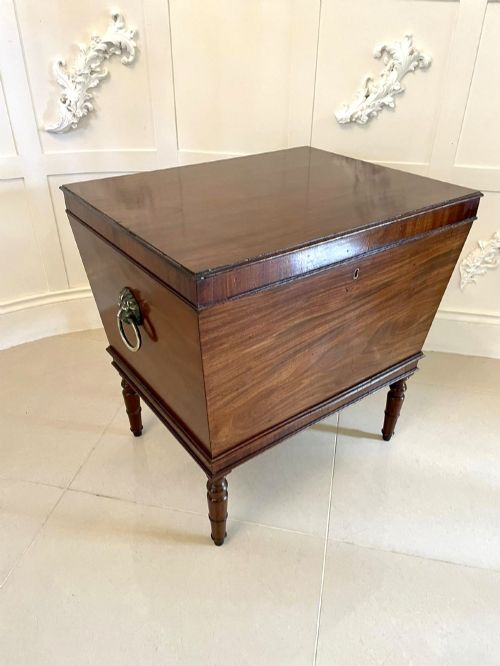
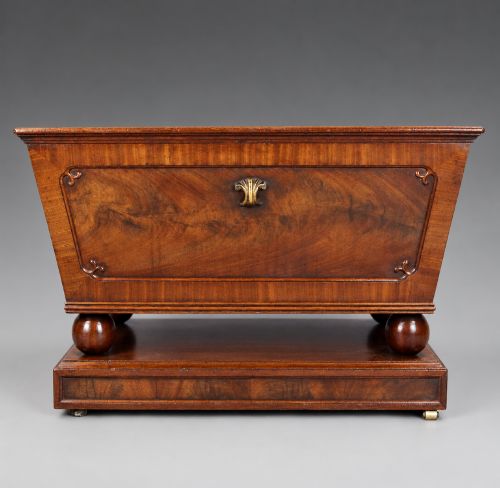
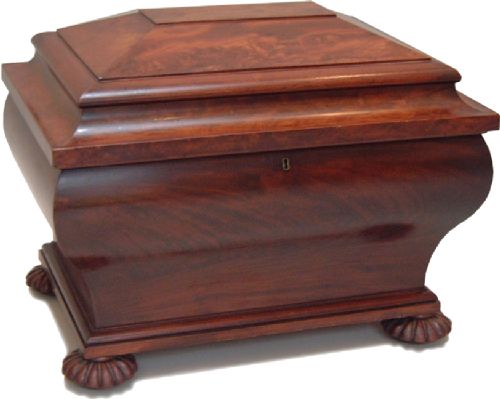
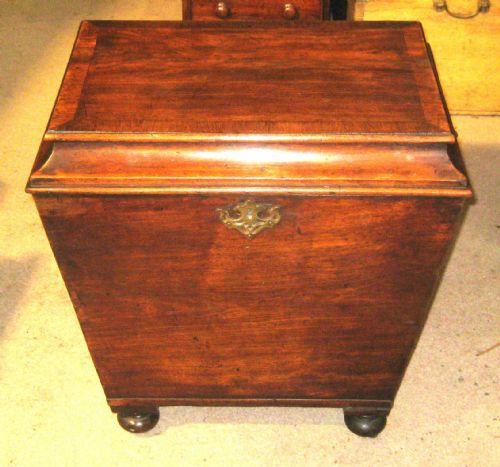
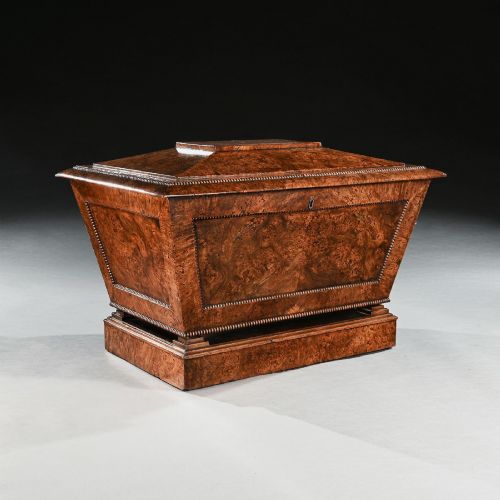
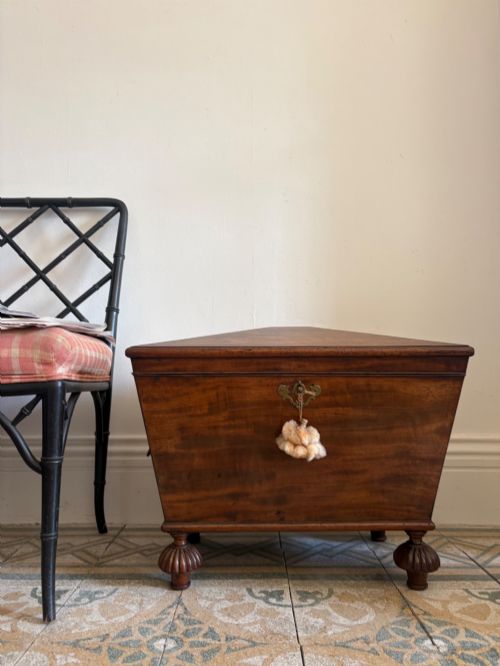
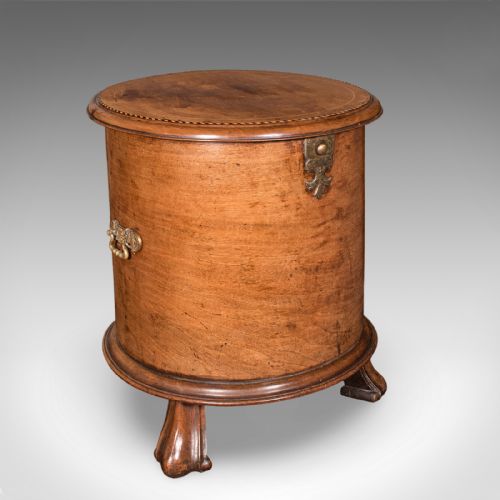
A regency cellarette chest is a specialised storage container designed for cooling and housing wine bottles in the dining rooms of the Georgian and Regency periods. The forms encountered on this page range from modest box cellarettes to grand sarcophagus-shaped vessels resting on paw feet.
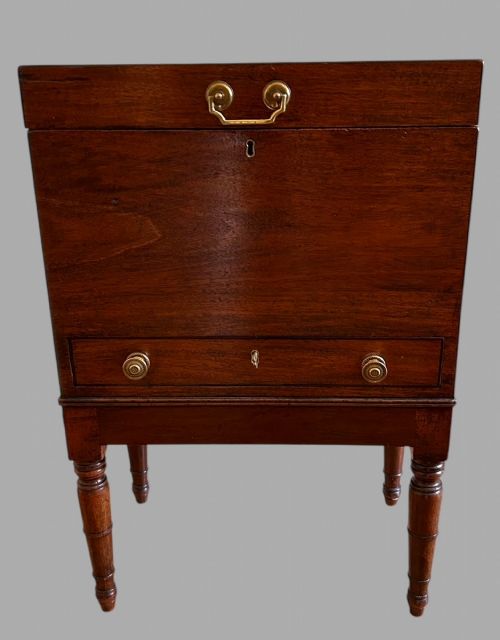
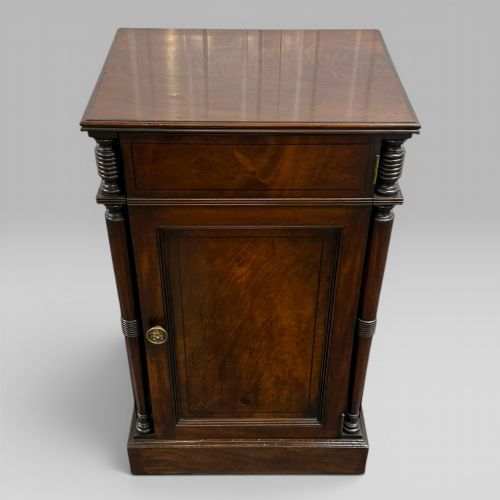
Most examples date from the early nineteenth century, constructed to hold bottles securely in partitioned interiors lined for ice or water. Makers also produced variations resembling chests of drawers or pedestal cupboards during the subsequent William IV and Victorian eras.
How they were made
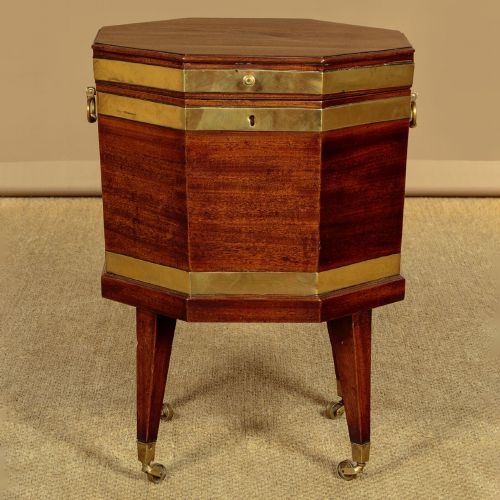
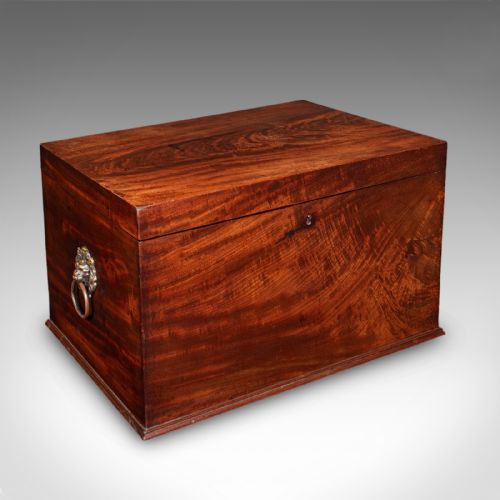
Cabinetmakers constructed these pieces primarily from solid mahogany and flame mahogany veneer, sometimes selecting pollard oak, walnut, or rosewood for distinct grain pattern. Brass handles, ormolu mounts, and lead linings reinforced the heavy timber structures against dampness and daily use.
Joinery involved precise box construction and veneering techniques over secondary woods, with lead inserts soldered to contain melting ice safely. Carved details such as paw feet, lions' heads, and reeded mouldings were applied to the corners and plinths.
Listings feature mahogany, pollard oak, walnut, and rosewood across Georgian, Regency, and William IV periods.
What varies in quality
Quality rests upon the selection of timber figures, such as highly figured flame mahogany or figured pollard oak, paired with crispness in the carved mouldings and mounts. Superior pieces display harmonious proportions and retain their original interior lead linings and fitted bottle dividers.
Attribution to known workshops or cabinetmakers elevates an example above standard cabinetwork, particularly when combined with exceptional colour and original brass hardware. Lesser examples show simpler construction in secondary timbers with plain, unfigured mahogany surfaces.
Gillows·T.Feetham·Gillingtons
The Regency Cellarette Chest Glossary
- Cellarette
- A lockable container used for storing and cooling wine bottles near the dining table. They evolved from simple wooden boxes into architectural sarcophagus forms during the Regency period.
- Sarcophagus
- A monumental chest shape tapering towards the base, heavily utilised by Regency designers for wine coolers. This classical form often featured carved paw feet and recessed panel work.
- Flame mahogany
- A decorative veneer cut from where a branch joins the main trunk, producing a rippling flame-like pattern. Cabinetmakers reserved this timber for the primary display surfaces of high-end furniture.
- Lead liner
- A protective interior trough fitted inside wine coolers to hold ice and water without damaging the surrounding wood. Many original liners survive in varying states of preservation.
- Ormolu
- Gilded bronze mounts applied to furniture for decorative contrast against dark timbers. This technique added considerable cost and status to early nineteenth-century pieces.
Regency Cellarette Chest: Frequently Asked Questions
What is a regency cellarette chest used for?
These chests served as portable or stationary cellars inside the dining room, keeping wine chilled or accessible during meals.
Servants filled the internal lead compartments with ice to lower the temperature of the bottles before placing them on the dining table.
How do I tell a Regency cellarette from a Victorian one?
Regency examples typically display classical architectural proportions, crisp flame mahogany veneers, and restrained ormolu or brass mounts.
Victorian and later revival pieces often introduce heavier carving, darker finishes, and proportions that differ from the strict geometry of the early nineteenth century.
Are original lead liners common in these pieces?
Original lead liners survive in a portion of surviving examples, though many have been removed or replaced over centuries of use.
Their presence indicates that the interior was actively used for holding ice and water during the Georgian period.
Where should I place a cellarette in a modern home?
These substantial wooden chests function well as side tables, drinks cabinets, or decorative focal points in dining rooms and studies.
Their deep timber figures and fitted interiors provide practical surface area alongside historical presence.