

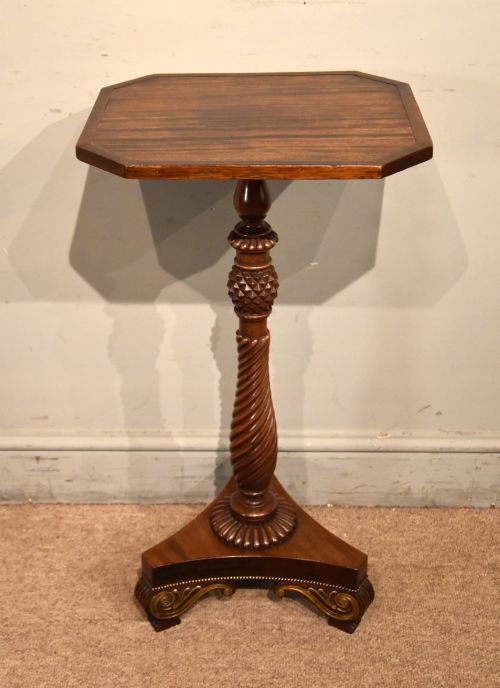
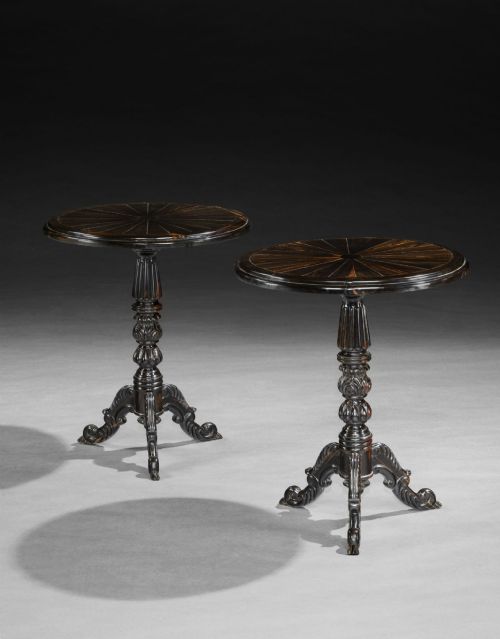
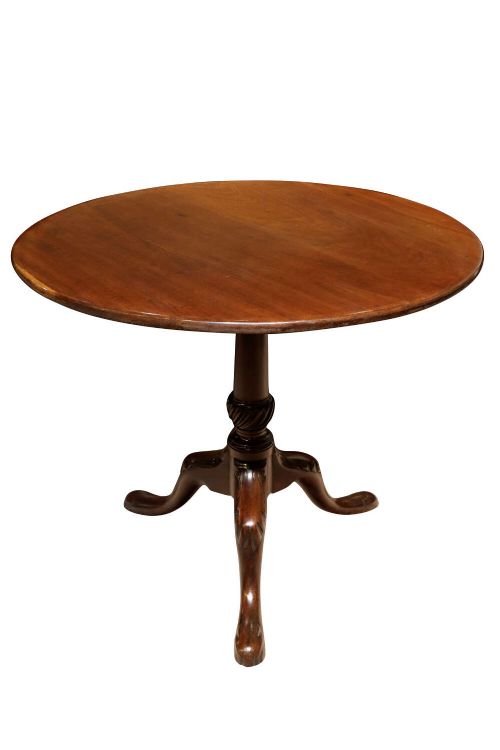
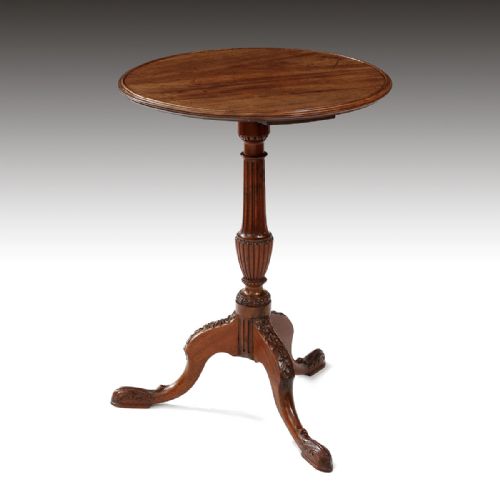
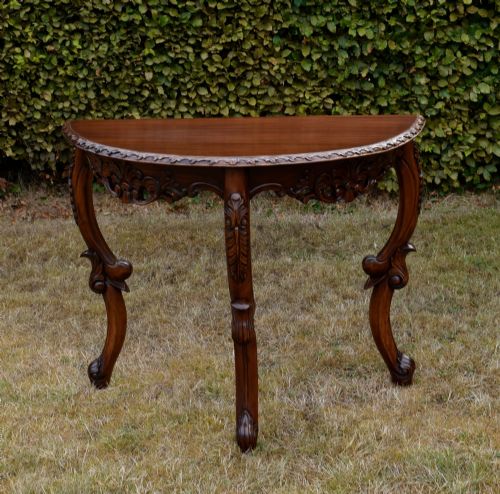
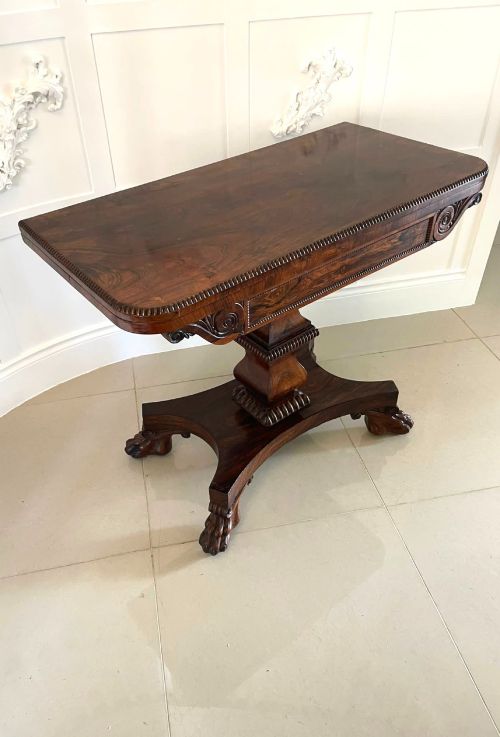
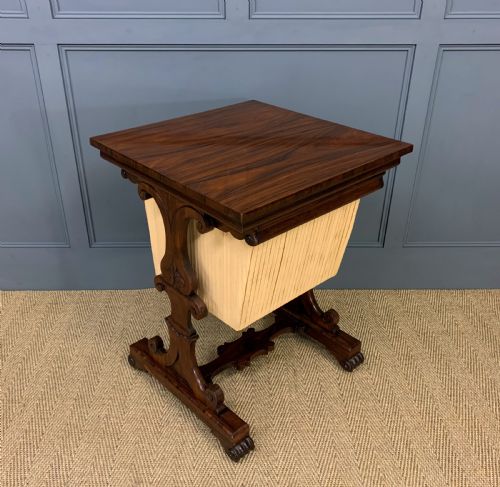
Regency Carved Side Table
A regency carved side table offers robust timber and crisp classical lines, providing a functional focal point for a period interior.
Regency Carved Side Table
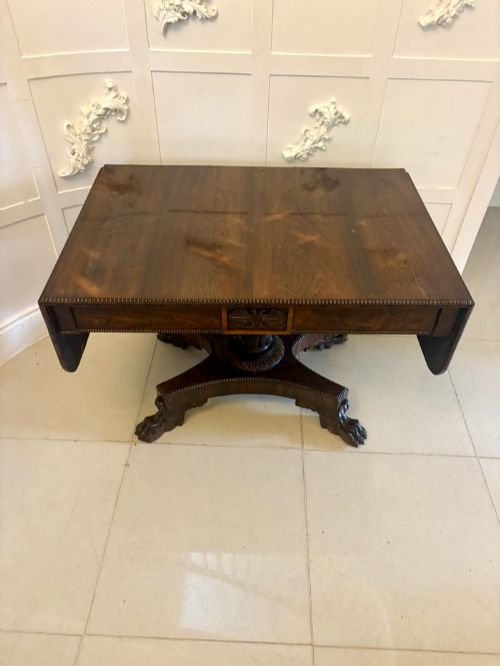
A regency carved side table brings formal proportion and architectural detail into a room, serving as a surface for lamps, books, or decorative objects. These forms range from Pembroke and card tables to console and occasional tables, often featuring folding leaves or freestanding designs.
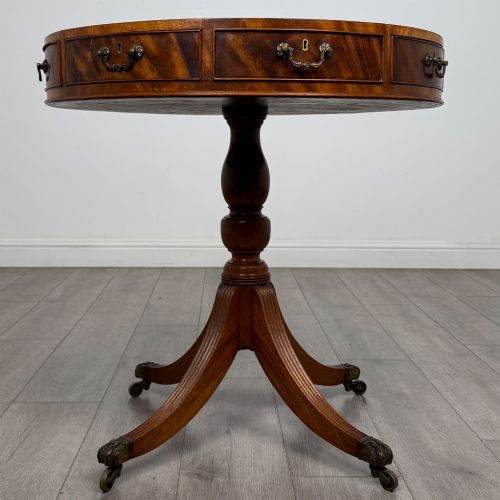
The pieces appearing on this page span the nineteenth century and the Georgian period, alongside later revivals from the twentieth century. Mahogany and rosewood dominate the material record, frequently accompanied by oak, burr walnut, and pine.
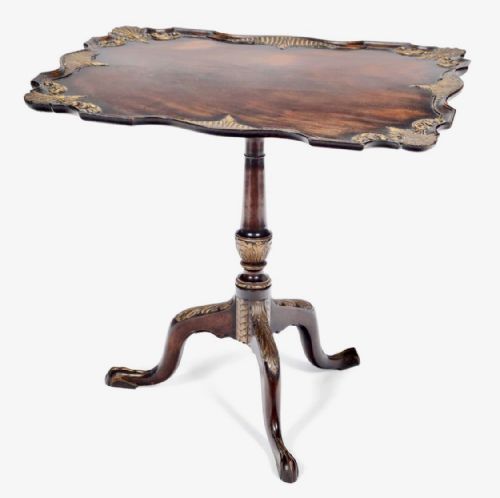
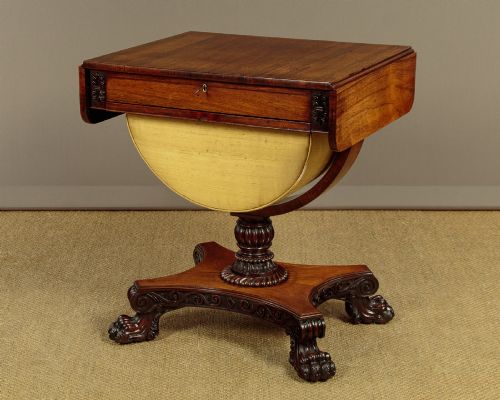
Buyers encounter console tables, drop-leaf sewing tables, and tripod bases among the current stock. Many incorporate brass inlay or parcel gilt detailing that reflects classical design influences.
Materials and Construction
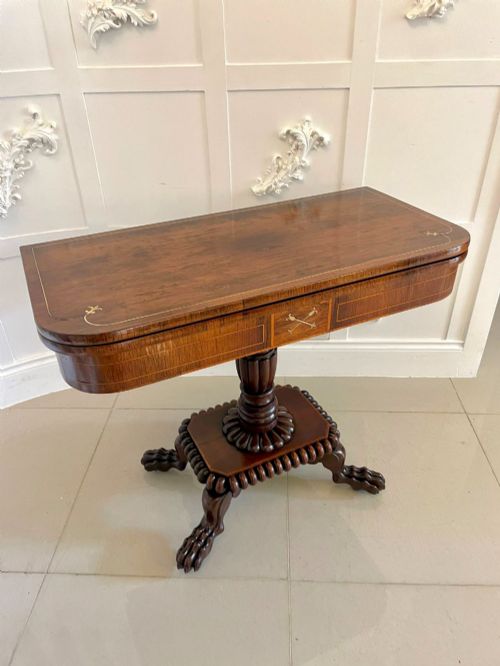
Cabinet makers utilised dense hardwoods such as mahogany and rosewood for their stability and fine grain, allowing for intricate carved details on paw feet and pedestal supports. Brass stringing and brass inlays provide linear contrast against dark timber surfaces.
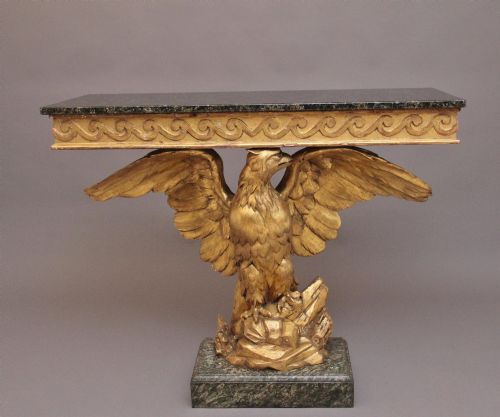
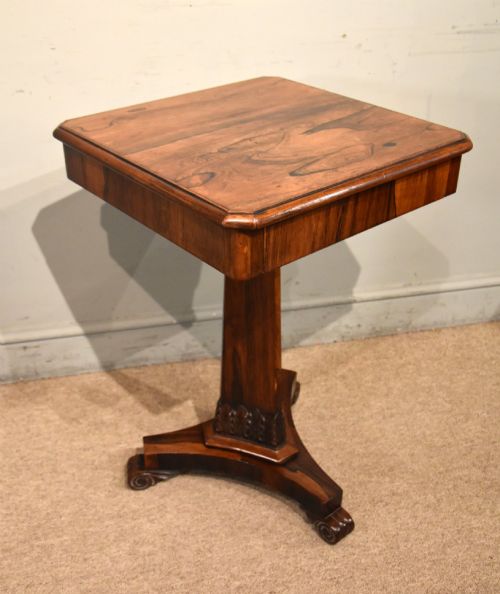
Marble tops appear alongside timber panels, supported by parcel gilt carved wood or architectural pedestals. Construction methods include tilt-top mechanisms, fold-over leaves, and robust tripod bases designed to bear weight securely.
Listings feature mahogany, rosewood, oak, and marble alongside brass and leather details across various periods.
Judging Quality
The refinement of the carved ornament separates standard production from superior examples, with crisp undercutting on paw feet and foliage indicating skilled workshop execution. Timber selection also dictates grade, where richly figured rosewood veneer or solid burr oak elevates an object.
Structural integrity relies on original joinery within the tilt-top mechanisms, pedestals, and folding table actions. Pieces retaining their brass inlay intact and displaying balanced proportions demonstrate greater workshop competence.
Gillow·James Mein of Kelso
The Regency Carved Side Table Glossary
- Pembroke table
- A small rectangular table with two hinged side leaves that drop down. These domestic pieces served flexibly for breakfast or writing.
- Console table
- A table designed to stand against a wall, frequently secured to it or supported by front legs and console brackets. They often feature marble tops or mirror backs.
- Tripod table
- A freestanding table supported by a pillar above three spreading legs. Many examples feature a tilt-top mechanism for convenient storage.
- Card table
- A folding table designed for gaming, featuring a hinged top that opens to reveal a baize-lined playing surface. They double as side tables when closed.
- Parcel gilt
- Partly gilded with gold leaf or gold paint to highlight specific carved details. This technique emphasises architectural motifs on wood.
Regency Carved Side Table: Frequently Asked Questions
What is a regency carved side table used for?
These tables provide a compact surface for lamps, decorative objects, or serving drinks in a drawing room or hallway. Many variants include folding leaves or compartments that adapt the surface for writing and card games.
Their sturdy timber construction and decorative carving ensure they function as permanent decorative furniture while remaining practical for daily domestic use.
How do I identify a regency piece?
Look for classical architectural motifs, such as reeded legs, parcel gilt enrichment, and carved paw feet. The proportions typically reflect neoclassical symmetry and restraint.
Materials commonly involve dark hardwoods like mahogany and rosewood, often accented with brass inlay or mounted on robust tripod pedestals.
Are these tables suitable for modern rooms?
Their compact dimensions allow them to fit easily into hallways, alcoves, or behind sofas where floor space is limited. The dark timber tones anchor bright modern colour schemes with traditional texture.
Pairing a antique console or occasional table with contemporary lighting creates a balanced interior layout that highlights the craftsmanship.
What is the difference between a console and a side table?
A side table stands independently on four legs or a central pedestal, whereas a console table traditionally anchors against a wall and may require structural support. Console versions frequently feature marble tops and elaborate wall-facing designs.
Both forms provide flat display surfaces, but console tables lean towards formal architectural display while side tables offer greater portability.