

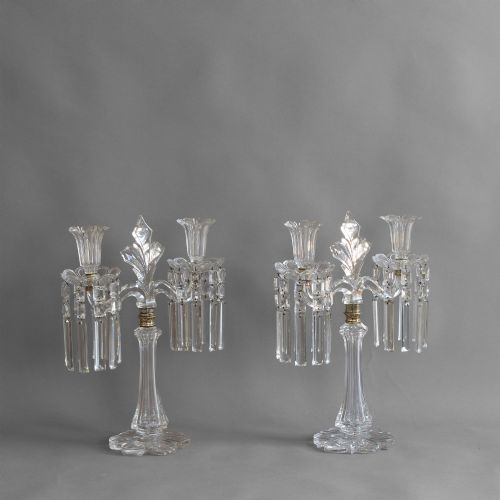
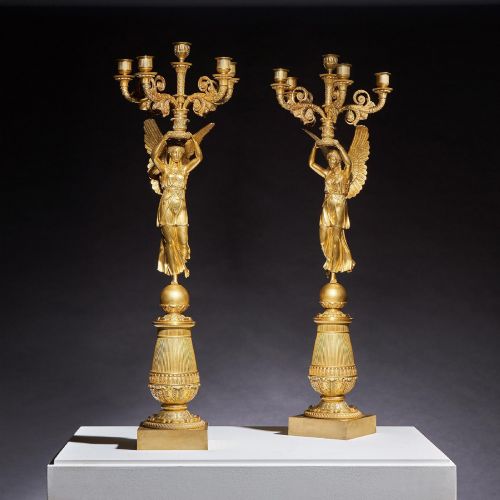
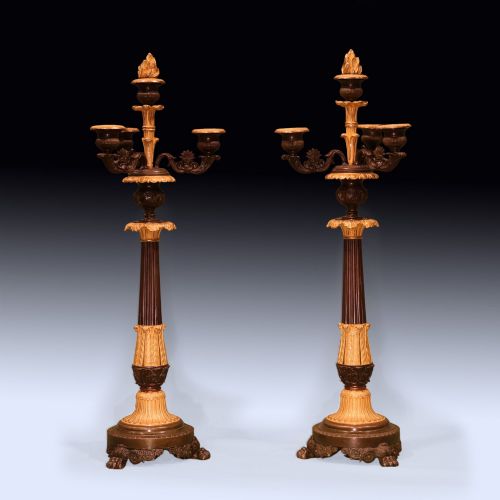
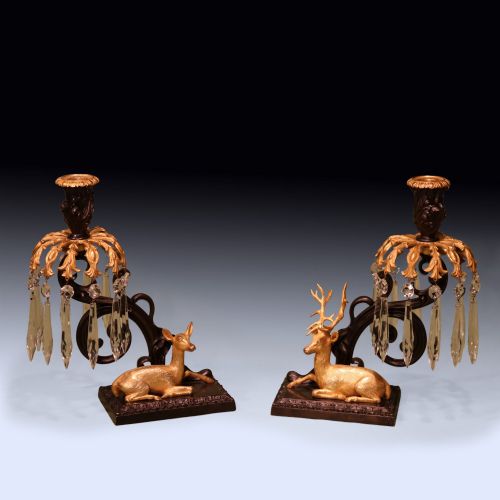


Regency Candelabra Pair
A regency candelabra pair brings striking neoclassical symmetry and warm metallic contrast to any mantel or dining table.
Regency Candelabra Pair
When you search for a regency candelabra pair, you encounter dual lighting fixtures designed to hold multiple candles in balanced formation. The selections on this page span the nineteenth century and the Georgian era, incorporating distinct neoclassical and empire influences.
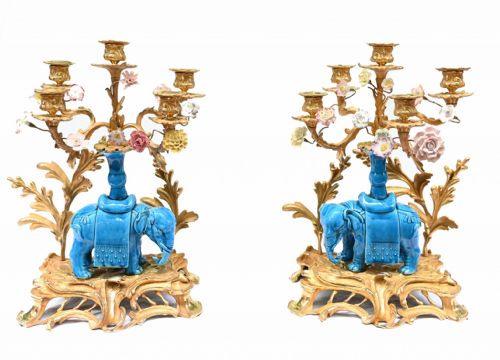
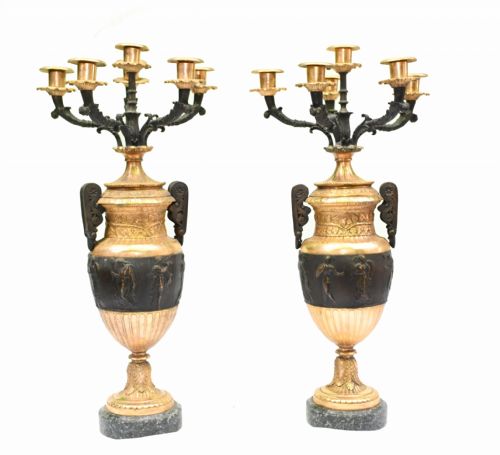
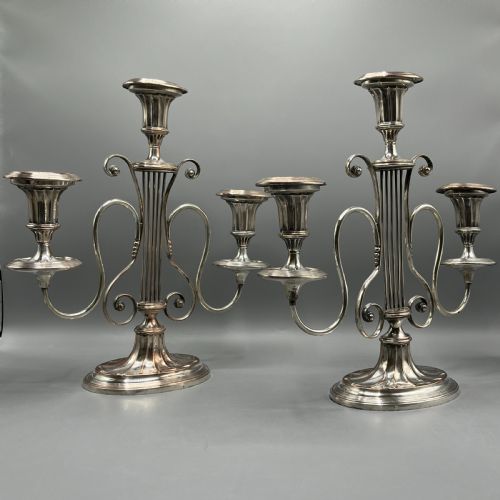
Most examples combine patinated dark bronze with bright ormolu mountings, taking the form of multi-arm candelabra or adaptable candlesticks with branch extensions. You also find alternative interpretations executed in silver plate, marble, and porcelain.
The decorative vocabulary draws heavily on classical antiquity, featuring figural supports, merman motifs, lyre shapes, and animal subjects like stags. These matched pairs provide the symmetrical presence demanded by period interior schemes.
How they were made
The primary construction relies on cast bronze and brass, finished with a dark patination or mercury gilding known as ormolu. Artisans chased and detailed the metal surfaces by hand to create sharp contrasts between matte dark sections and burnished gold highlights.
Silver-plated items utilise fused Sheffield plate techniques, layering silver over a copper core before shaping and assembling the branches. Additional materials such as white marble bases and porcelain elements integrate through pinned and screwed mechanical joints.
Stylistic influences span Regency, French Empire, Georgian, Victorian, Neoclassical, Swedish Empire, and Egyptian Revival.
What varies in quality
Lighter or later revival castings often soften these details, showing smoothed-over edges and simplified ornamentation on the bripetch and base. The weight of the metal and the integrity of the original assembly also distinguish workshop output.
Pierre Philippe Thomire·Thomas Hope·Creswick and Co·Blagden Hodgson and Co
The Regency Candelabra Pair Glossary
- Ormolu
- Gilded bronze produced by applying an amalgam of gold and mercury to a bronze base and heating it. This historic technique creates a durable, warm golden finish.
- Patinated bronze
- Bronze treated with chemical solutions to darken the surface tone to a rich brown or near-black. It provides visual contrast against bright ormolu mounts.
- Old Sheffield plate
- A composite material made by fusing a thin sheet of silver to a thicker copper ingot. Early examples often reveal a thin line of copper at the cut edges.
- Candelabra
- A branched candlestick designed to hold multiple candles simultaneously. They often feature removable branch attachments to function as simple single candlesticks.
- Grand Tour
- Cultural travel undertaken by wealthy Europeans in the nineteenth century, inspiring souvenir acquisitions like classical bronze figurines and architectural reductions.
Regency Candelabra Pair: Frequently Asked Questions
How do I clean a regency candelabra pair?
Dust gently with a soft dry brush to protect the delicate gilding and patinated surfaces. Avoid harsh metal cleaners or abrasive cloths that strip historical finishes.
Keep moisture away from any internal pins or mounted marble bases. Professional advice is recommended if deeper conservation becomes necessary.
Can I use real candles in them?
Standard taper candles fit most historical sockets, but you should check the diameter carefully before lighting. Drip catchers or careful placement prevent wax from contacting sensitive metal surfaces.
Extinguish flames well before the candle burns down to the bripetch to prevent heat damage. Many owners prefer modern LED alternatives for everyday ambiance.
How do I tell original regency from later revival pieces?
Examine the casting quality and the construction of the joints holding the arms together. Nineteenth-century originals typically show hand-finished chasing and heavy, tactile bronze components.
Revival pieces often feel lighter and display uniform machine finishing without tool marks. Sheffield plate manufacturing methods and hallmarks also help confirm the correct period.
Were these always sold as pairs?
High-status lighting was almost invariably commissioned in balanced pairs to flank mirrors, clocks, or architectural focal points. Surviving matched sets reflect this original interior design requirement.
Some examples combine period silver candlesticks with slightly later matching plate branches. Matching pairs command higher interest from collectors than single survivors.