
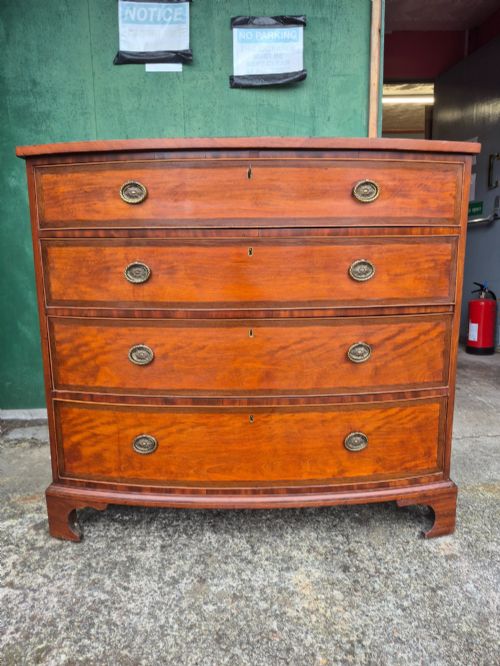
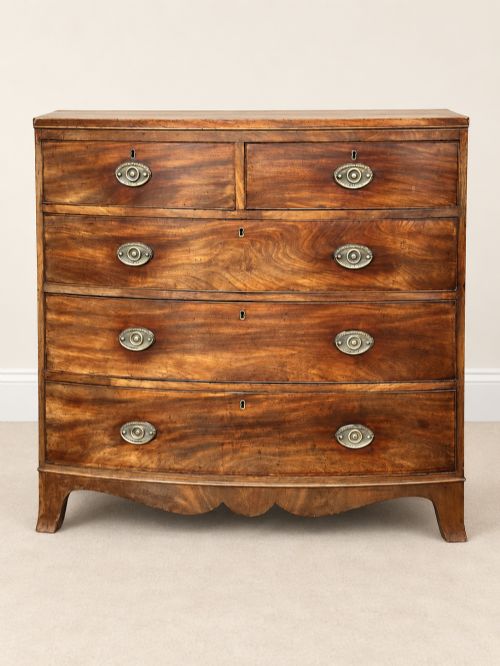
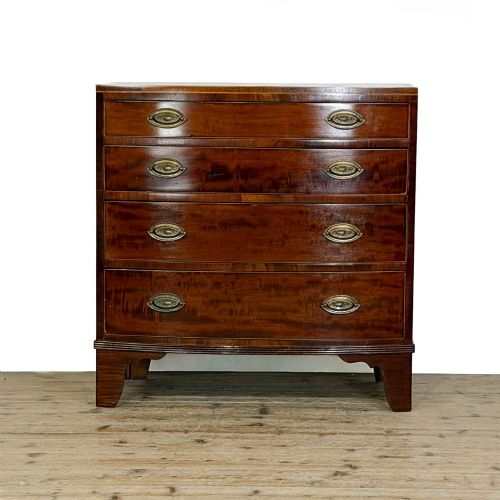

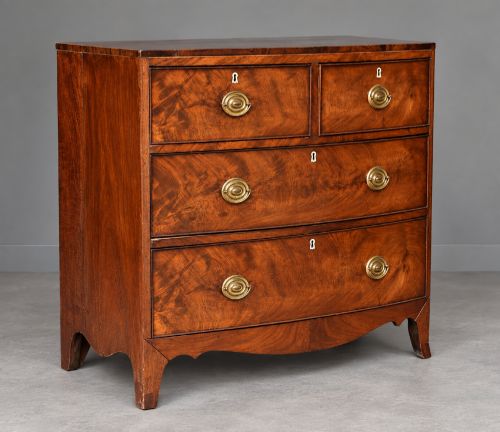
Regency Bowfront Dresser
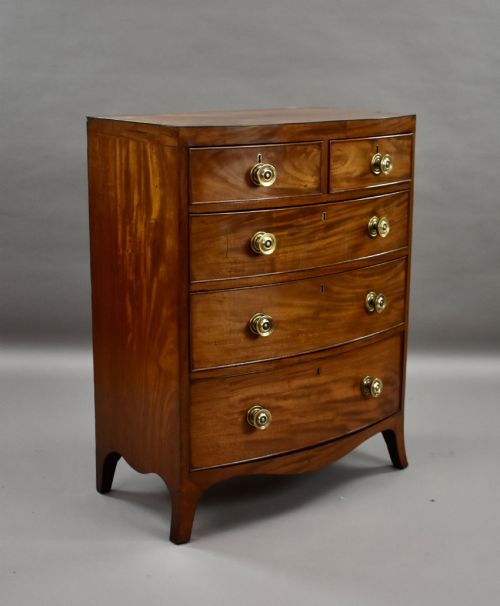
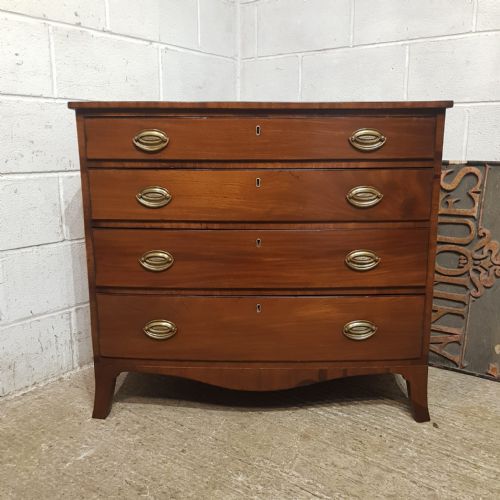
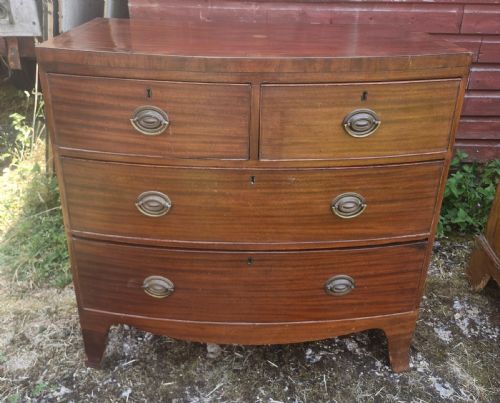
A regency bowfront dresser brings curved mahogany elegance and practical storage to a room, offering period character through its distinctive swelling facade.
Regency Bowfront Dresser
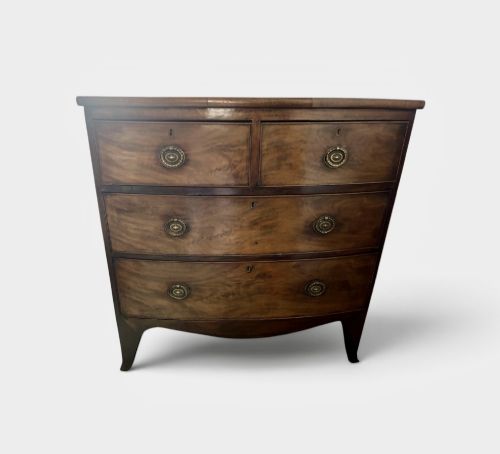
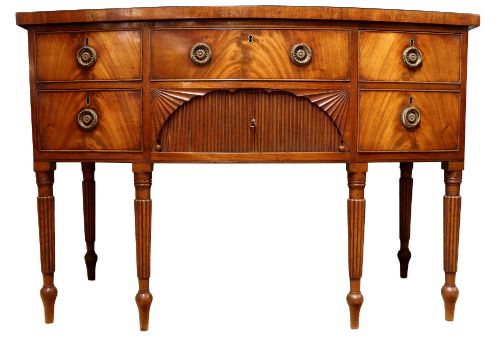
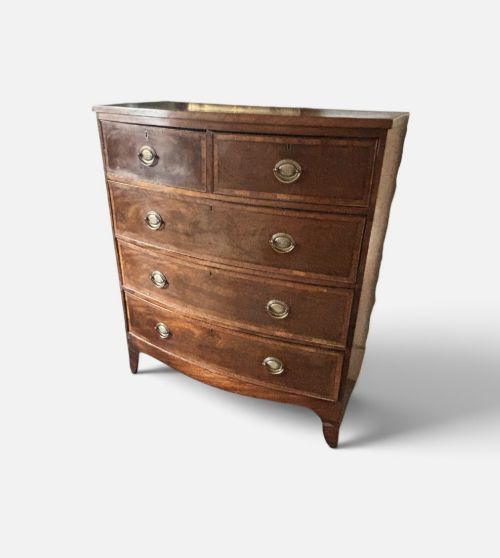
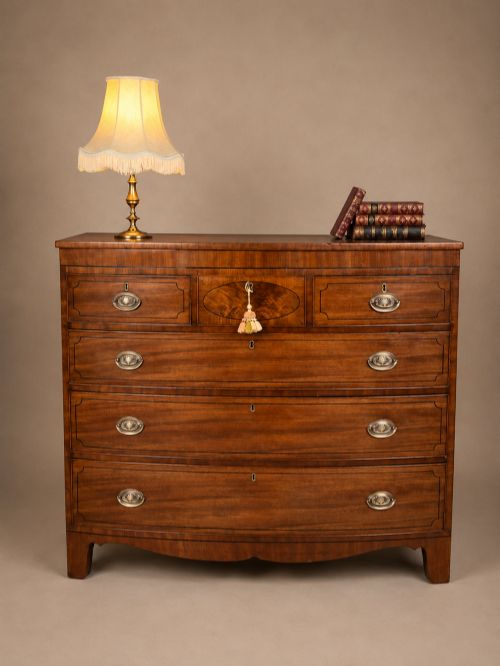
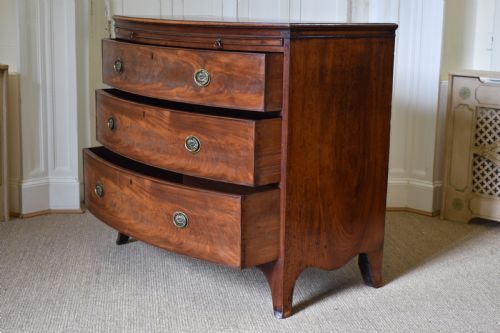
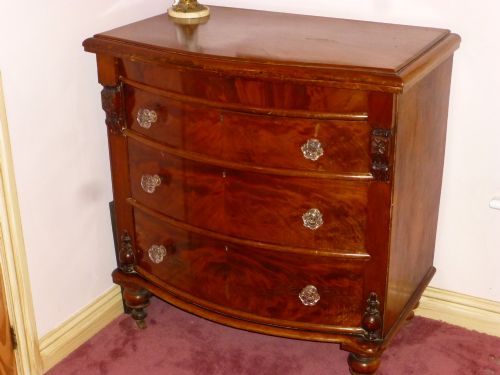
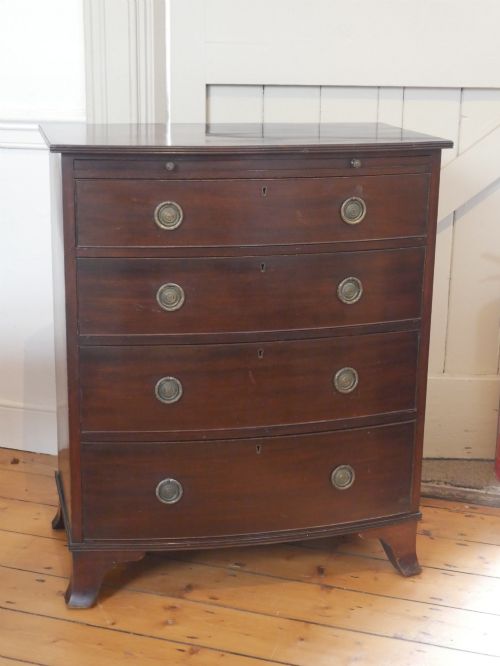
When you examine a regency bowfront dresser, you are looking at storage furniture defined by a convex curving front that softens the corners of a room. The pieces appearing here span the Georgian, Regency, and William IV eras, stretching into later nineteenth-century interpretations.
How they were made
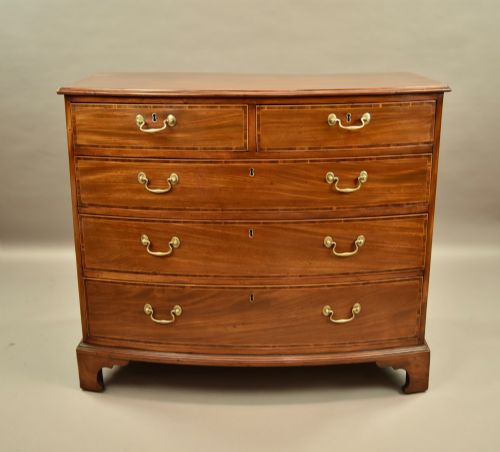
Cabinet makers built these pieces using solid mahogany and oak for structural integrity, applying figured flame mahogany veneers to the curved drawer fronts to create movement and depth. Crossbanding in satinwood and contrasting stringing lines further delineate the curved edges.
Hardware typically consists of brass drawer pulls, while internal construction relies on dovetailed joints for the drawer boxes and secondary timbers like oak. Ebonised finishes and painted wood surfaces also appear among the listed variations.
Some Welsh variations include a secret drawer tucked away just out of sight.
What varies in quality
The distinction between standard and superior pieces rests on the choice of timber and the precision of the curved drawer fronts. High-grade examples employ heavily figured flame mahogany veneers that are book-matched across the facade, whereas lesser versions rely on plain, unfigured wood.
Proportion and detail dictate the overall merit of the piece. Skilful execution shows in tight dovetailing, subtle crossbanding details, and secondary timbers that remain intact and original to the construction.
The Regency Bowfront Dresser Glossary
- Bowfront
- A convex curving front facade that projects outward in an arc. This shape defined much of the cabinet making during the Regency and Georgian periods.
- Flame mahogany
- A veneer cut from the fork of the mahogany tree where the branch meets the trunk. It creates a distinctive, fiery pattern with intense visual movement.
- Crossbanding
- A border of veneer laid around the perimeter of a drawer front with the grain running perpendicular to the centre panel. This technique frames the wood figure effectively.
- Graduated drawers
- A series of drawers that decrease in depth from the bottom to the top of the chest. This arrangement creates a balanced visual weight.
- Secret drawer
- A concealed compartment built into the frieze or upper section of the furniture. Cabinet makers used these hidden spaces for storing valuables.
Regency Bowfront Dresser: Frequently Asked Questions
Where did people place these in period homes?
These pieces served primary storage functions in bedrooms, parlours, and dining spaces. Their curved fronts allowed servants and residents to navigate tight hallways more easily than with square furniture.
Dining rooms often utilised the sideboard variations for serving food and storing linens, while bedroom chests held folded garments and personal items.
How do I identify the Regency period features?
Regency items display classical restraint combined with figured mahogany timbers and brass hardware. Look for clean lines alongside the characteristic swelling front.
Subtle details such as satinwood crossbanding and delicate stringing help separate Regency production from later Victorian interpretations.
Are these pieces suitable for modern bedrooms?
Their modest depth and generous drawer capacity make them practical for contemporary living spaces. The curved facade softens rigid modern room layouts.
Smaller regional variants fit easily into compact flats while providing substantial concealed storage for daily use.
What maintenance do these wooden surfaces need?
Polishing with traditional beeswax preserves the lustre of the mahogany veneer and protects the timber from drying out. Avoid placing the furniture in direct sunlight.
Maintaining stable room humidity prevents the timber and veneers from shifting or splitting over time.