


Regency Basin Stand
A regency basin stand brings functional elegance to a room, offering compact tiered surfaces and refined timber frames designed for daily toilette.
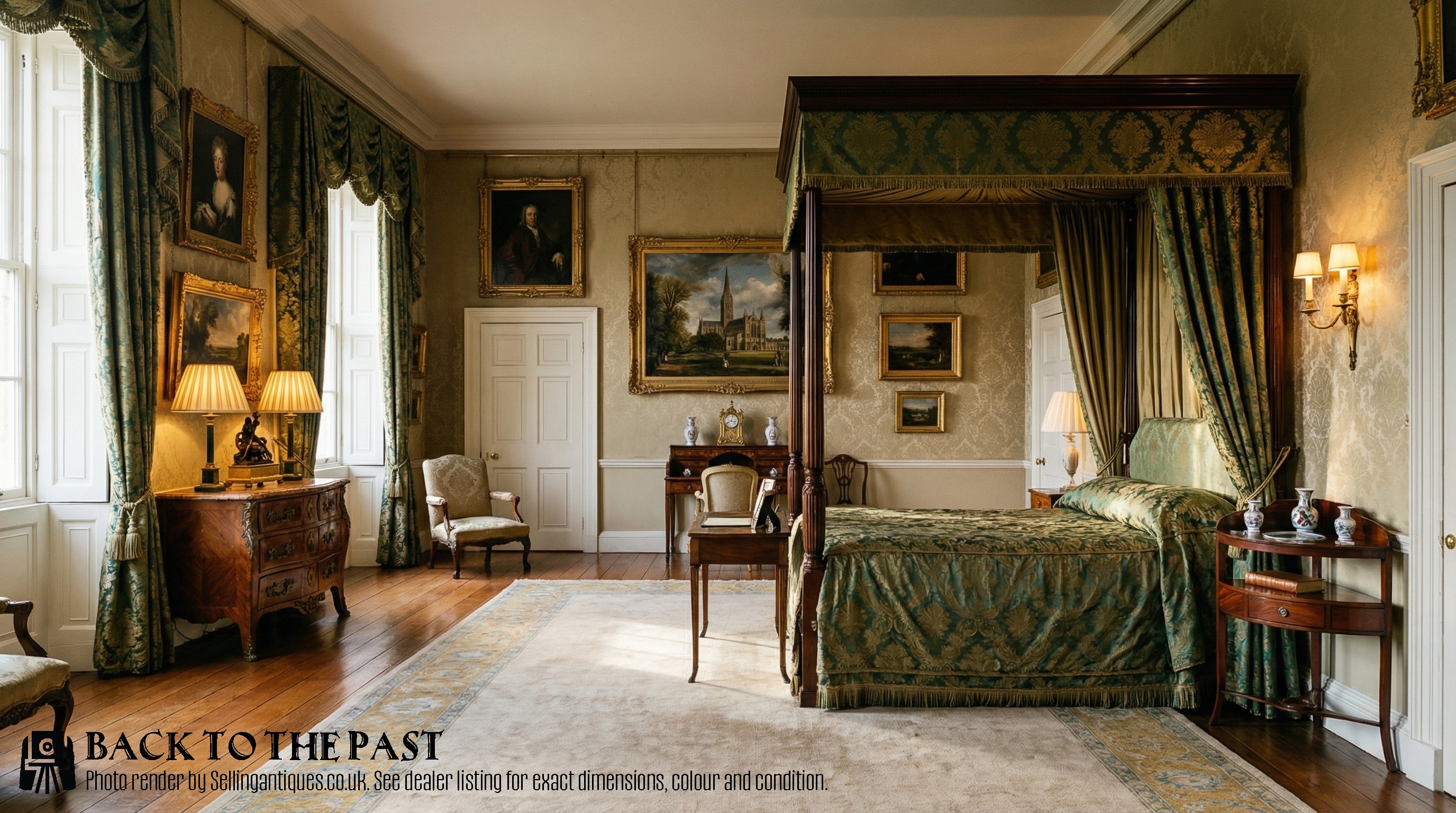
Regency Basin Stand
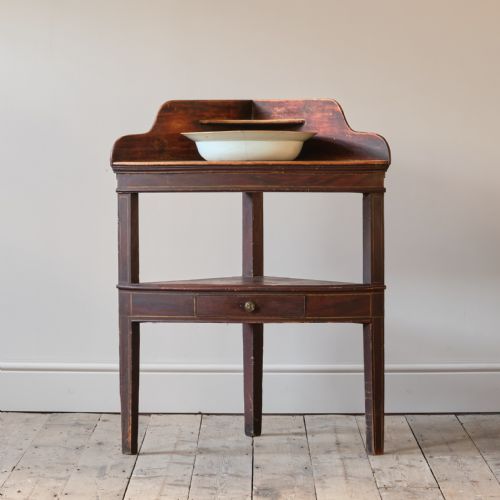
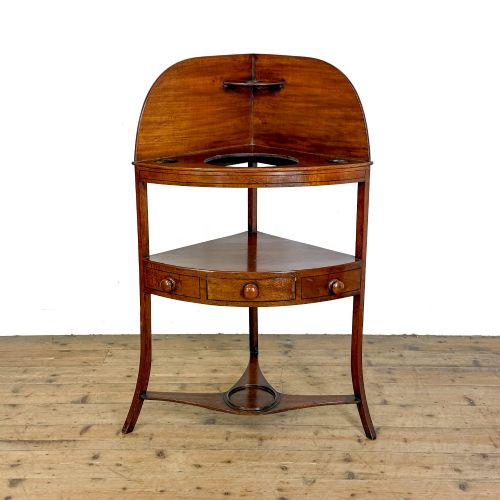
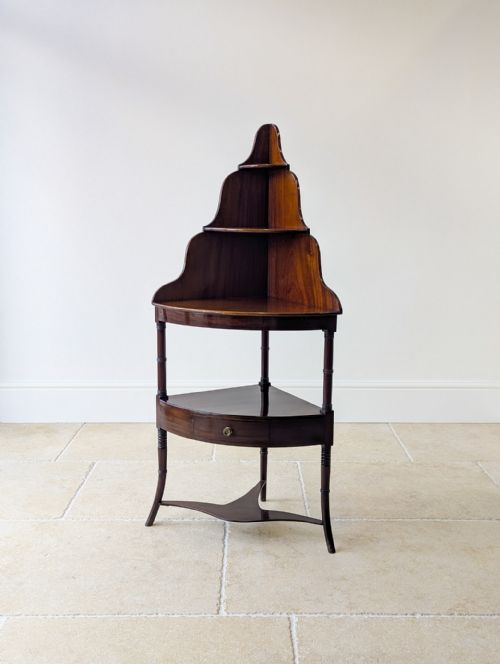
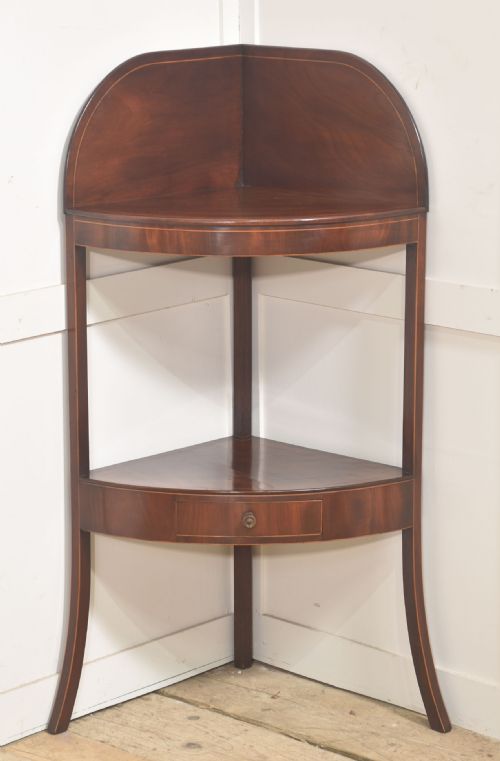
The versions most frequently met on this page are mahogany corner stands featuring tiered shelves and bow fronts. Pieces span styles from Regency and Georgian to French Empire and Victorian, utilising timber, marble, and bronze.
How They Were Made
Cabinetmakers constructed these frames predominantly from mahogany, occasionally employing pine as a secondary timber and incorporating boxwood for inlay work. Brass fittings and bronze mounts provide structural and decorative accents on selected pieces.
Surfaces receive different treatments, ranging from original paint on pine to polished mahogany and heavy marble tops on Victorian examples. Glazed ceramic elements and bronze Athenienne structures demonstrate the variety of specialised manufacturing techniques utilised across the periods.
Some washstands double happily as plant frames, proving that nineteenth-century hygiene furniture makes an agreeable host for modern ferns.
What Varies in Quality
The distinction between standard examples and superior pieces rests on the selection of timber and the precision of the joinery. Fine grain mahogany and crisp boxwood inlay elevate a corner washstand above simpler painted pine alternatives.
The presence of original surfaces, such as untouched paint or period marble and bronze mounts, distinguishes exceptional items from heavily restored or later pieces.
The Regency Basin Stand Glossary
- Regency
- A style and period spanning the early nineteenth century defined by classical restraint and neoclassical influence. Furniture from this era often incorporates clean lines and dark timber.
- Corner Washstand
- A specialised piece of furniture designed to fit neatly into the corner of a room, typically featuring multiple tiers for basin and ewer placement.
- Bow Front
- A convex curved front section on a cabinet or stand, which softens the angles of a room and demonstrates advanced woodworking skill.
- Athenienne
- A decorative tripod stand supporting a basin, inspired by classical Greek archaeological discoveries and executed in bronze or patinated metal during the nineteenth century.
- Inlay
- A decorative technique where contrasting materials such as boxwood are embedded into the surface of the primary timber to create geometric patterns.
Regency Basin Stand: Frequently Asked Questions
What is a regency basin stand?
A regency basin stand is a small piece of furniture designed during the early nineteenth century to hold washing equipment in bedrooms or dressing rooms.
These stands often feature multiple tiers, corner designs, or bow fronts to maximise space while providing sturdy surfaces for basins and jugs.
How were basin stands used?
These stands served a purely practical function for morning hygiene before plumbed bathrooms became common in homes.
Upper tiers held a bowl and pitcher for washing, while lower shelves provided space for soap, towels, and water pitchers.
Can I use a washstand today?
Many people repurpose these stands as plant tables, lamp tables, or corner display furniture in modern living spaces.
The compact footprint and tiered shelving make them practical for holding decorative objects or smaller houseplants.
How do I identify a Regency piece?
Identification relies on examining the timber, construction methods, and stylistic details characteristic of the early nineteenth century.
Pieces from this period frequently use mahogany, sometimes enhanced with boxwood inlay, and reflect neoclassical design influences.