
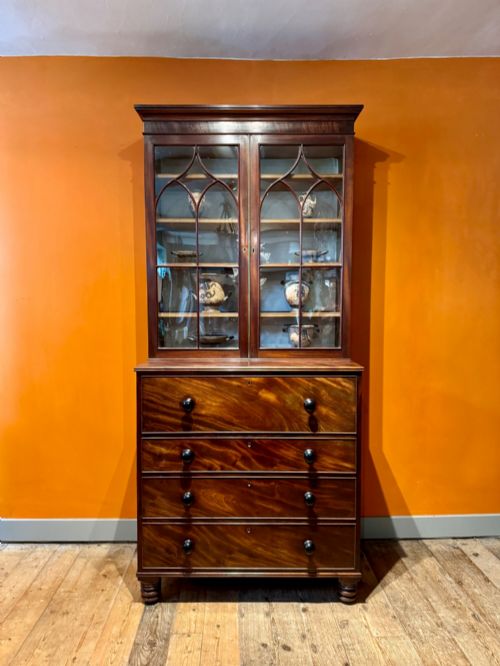
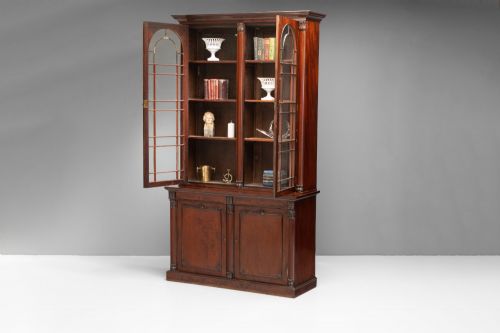


Regency Astragal Bookcase
A regency astragal bookcase brings together fine timber, glazed doors, and practical storage, making it a distinguished centrepiece for any room.
Regency Astragal Bookcase
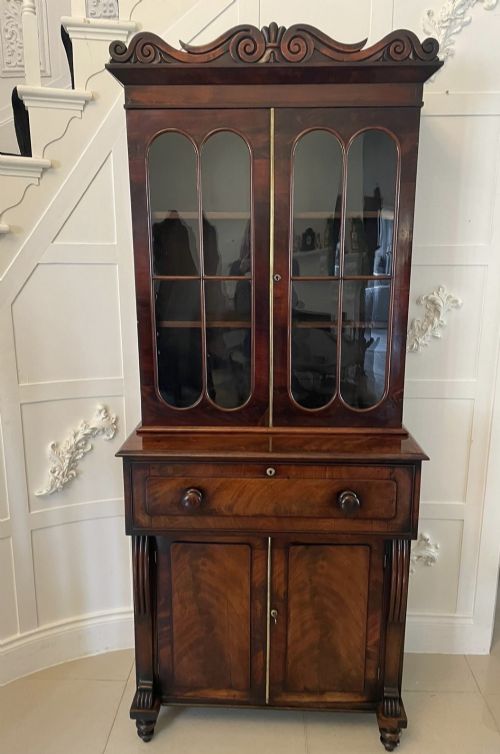
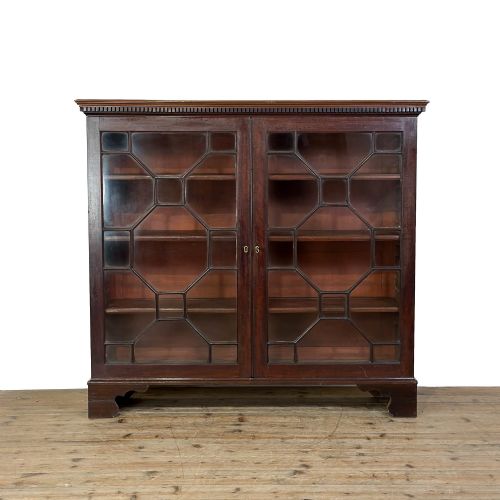
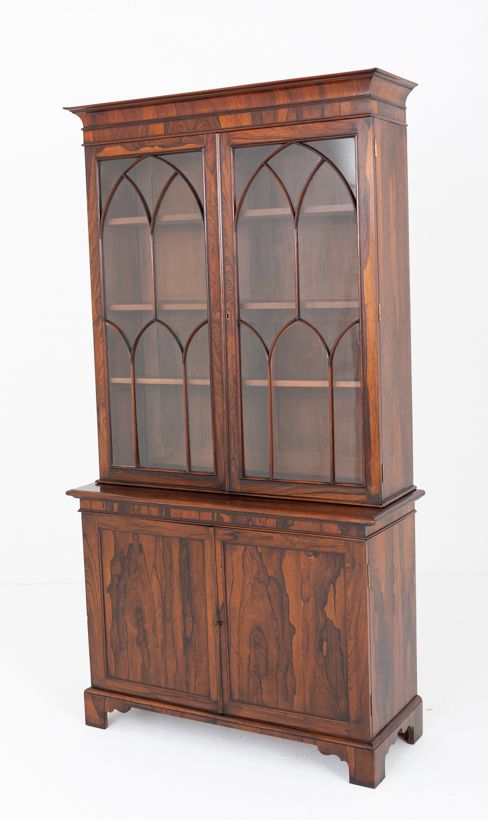
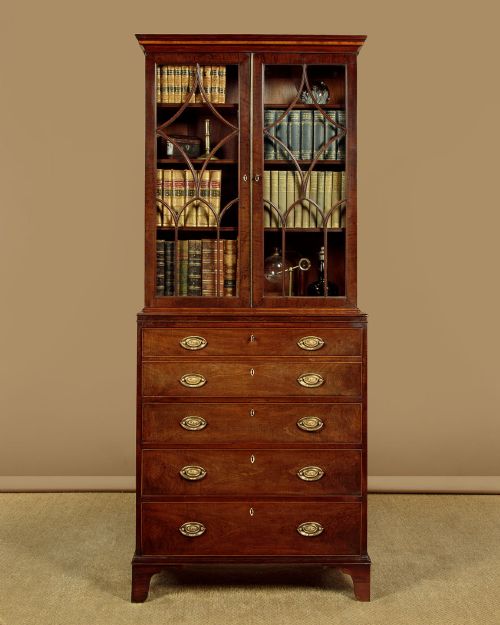
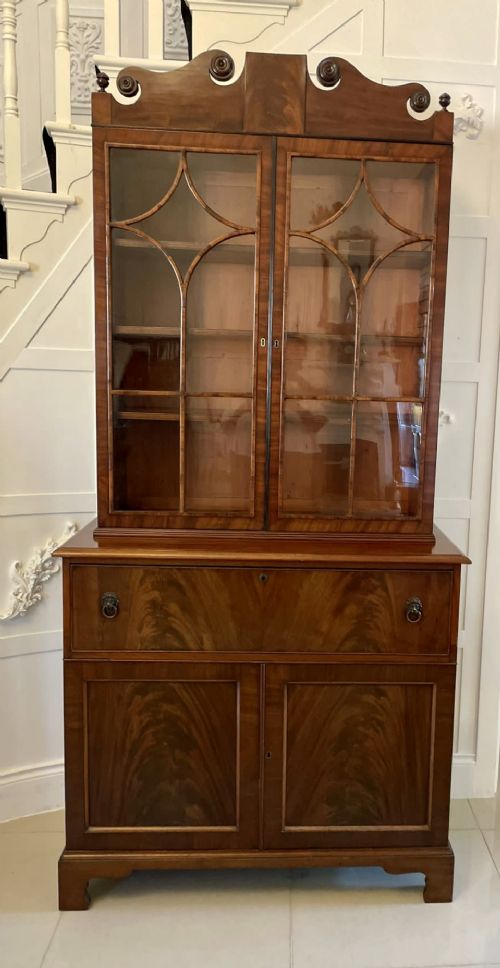
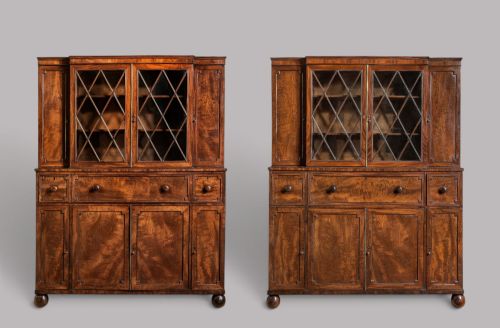
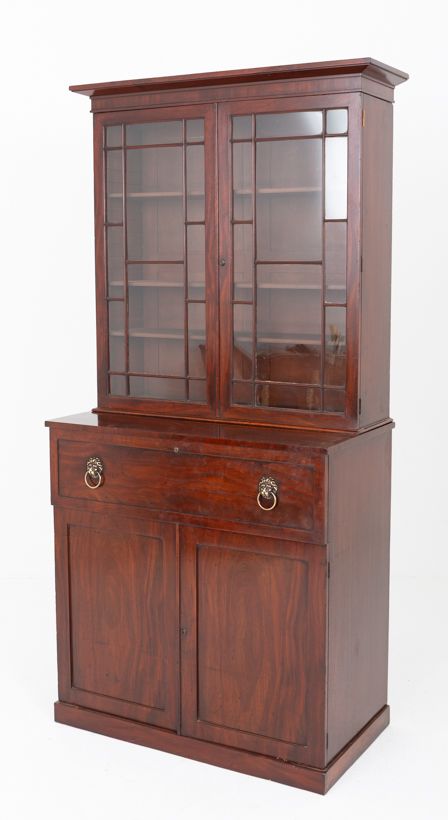
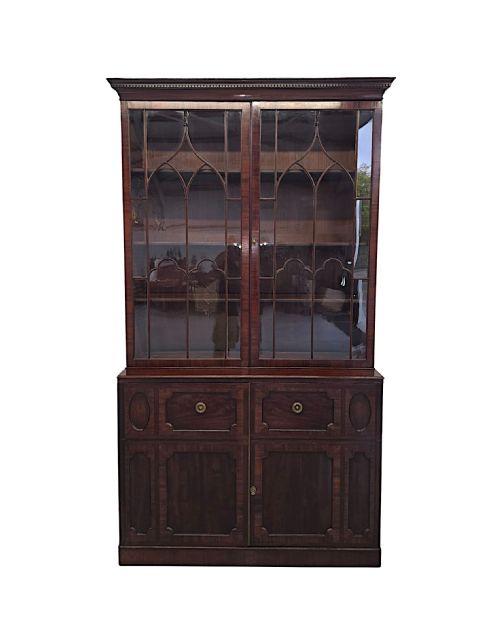
A regency astragal bookcase is a tall cabinet designed to display books behind glass panes held together by wooden framing known as astragals. The pieces seen here span periods from the Georgian era through to the Victorian age, with the majority hailing from the early nineteenth century and the Regency period.
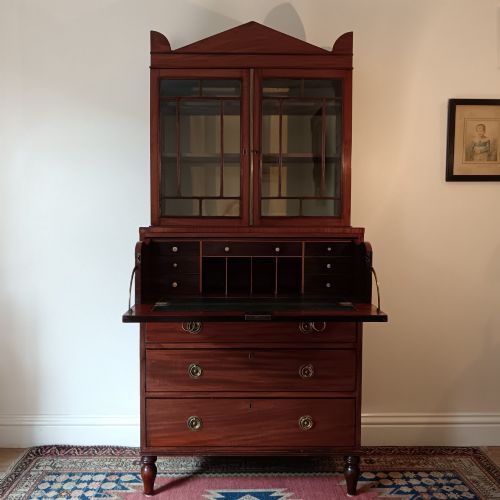
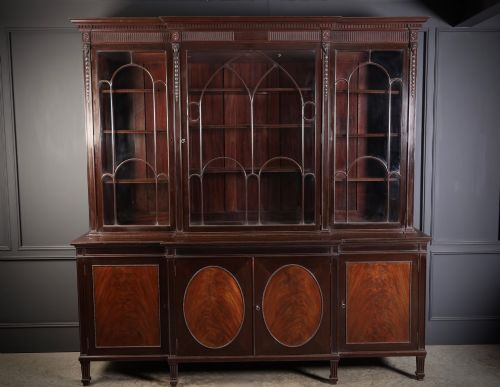
Most examples combine an upper display section with a lower base that takes the form of cupboards, drawers, or a secretaire desk with a fitted interior. These architectural pieces served grand libraries and drawing rooms, often constructed as breakfronts or two-door cabinets to house leather-bound volumes.
The dominant material across these listings is mahogany, frequently enhanced by flame mahogany veneer, rosewood, and subtle wood inlay or marquetry. While most adhere to classic Regency and Georgian proportions, variations include Gothic Revival details, compact bureau forms, and large scale library editions.
How they were made
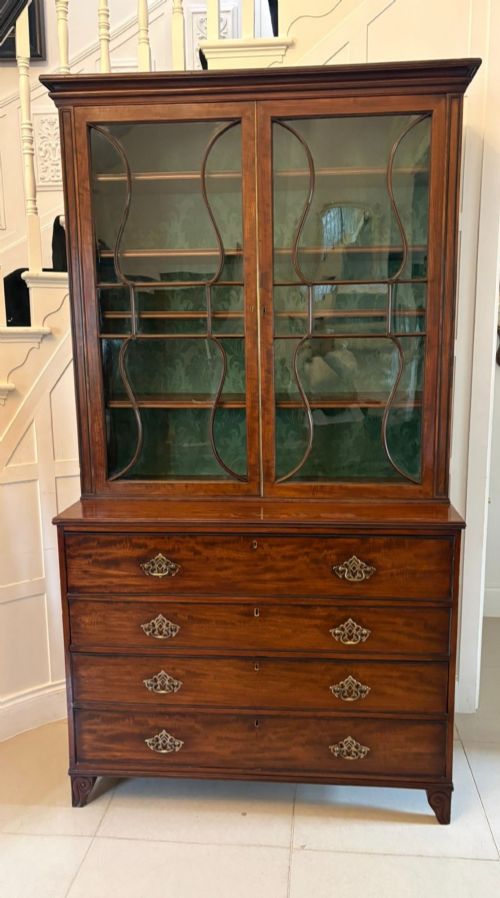
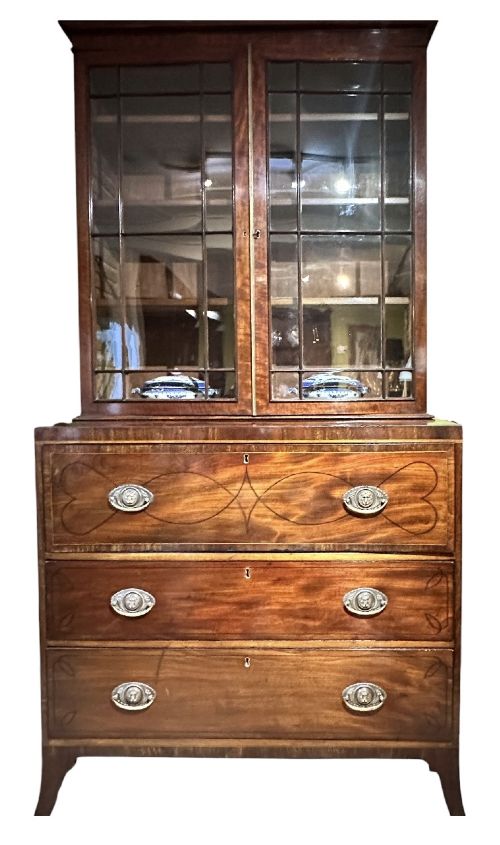
Cabinetmakers utilised solid mahogany and carefully selected veneers, applying flame mahogany to drawer fronts and door panels to create rippling grain patterns. Wood inlay and marquetry added delicate linear contrast around borders and panels.
The characteristic glass doors relied on slender wooden astragal bars, shaped by hand to divide the panes into geometric patterns. Brass fittings, including locks, hinges, and handles, secured the heavy doors and fitted drop-front desks.
Some secretaire drawers hide tiny secret compartments behind miniature pigeonholes for stashing love letters.
What varies in quality
The quality of a regency astragal bookcase rests upon the selection of timber and the precision of the cabinetwork. Finer pieces display matched flame mahogany veneers that flow seamlessly across multiple drawers, alongside exquisitely slender astragal bars that maintain structural integrity without undue bulk.
Interior fittings also distinguish finer examples, particularly where secretaire drawers conceal pigeonholes and small satinwood drawers with intricate crossbanding. The presence of original brass hardware and well-proportioned cornices further elevates a piece above standard utility furniture.
Gillows·George Oakley
The Regency Astragal Bookcase Glossary
- Astragal
- The moulded wooden bar that holds individual panes of glass within a glazed door. These delicate divisions form the characteristic grid pattern seen on cabinet fronts.
- Secretaire
- A desk drawer featuring a drop-front that opens to reveal a fitted interior of small drawers and pigeonholes. It allows a bookcase to double as a writing station.
- Breakfront
- A large cabinet design where the central section projects forward from the flanking wings. This architectural arrangement creates depth and shadow on grand library pieces.
- Flame mahogany
- A highly figured veneer cut from the fork of the mahogany tree where branches meet the trunk. The resulting grain resembles flickering flames.
- Marquetry
- Decorative patterns formed by inserting thin pieces of contrasting wood into a veneered surface. It appears on finer surfaces to create geometric or floral motifs.
Regency Astragal Bookcase: Frequently Asked Questions
What is an astragal bookcase?
An astragal bookcase is a tall cabinet featuring glass doors divided into smaller panes by slender wooden mouldings called astragals. These pieces were built to protect valuable libraries from dust while keeping volumes visible.
Most examples date from the Regency and Georgian periods, combining display space above with enclosed cupboards or desks below.
How do I use a secretaire bookcase?
The secretaire drawer pulls out and the front hinges down to reveal a writing surface, pigeonholes, and small stationery drawers. This clever integration provides a private desk without requiring a separate piece of furniture.
When writing is finished, simply fold the desk flap back up and lock the drawer to conceal correspondence.
Where were these bookcases placed?
These tall cabinets were traditionally housed in gentlemen's libraries, drawing rooms, and studies of large country houses. Their grand scale and refined mahogany timber made them statement pieces for entertaining guests.
Today, they serve the same purpose in domestic settings, storing books and displaying collections behind glass.
How do I distinguish Regency from Victorian pieces?
Regency and Georgian pieces generally exhibit cleaner architectural lines, finer mahogany veneers, and lighter proportions inspired by classical antiquity. Victorian interpretations, including Gothic Revival variants, often feature heavier mouldings and darker timber finishes.
Examining the construction of the interior drawers and the timber selection helps clarify the period of manufacture.