


Red Woven Tent Bag
When you search for a red woven tent bag, you enter the nomadic world of Central Asian tribal textiles made for daily transport and storage.
Red Woven Tent Bag
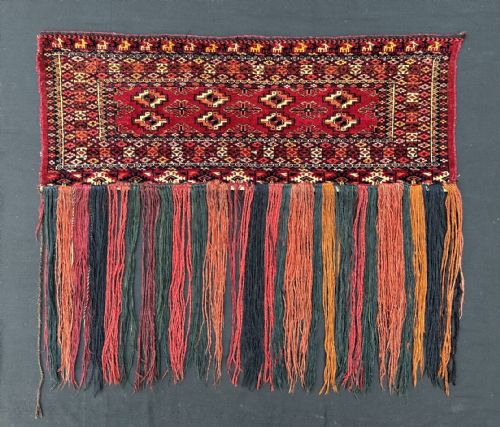
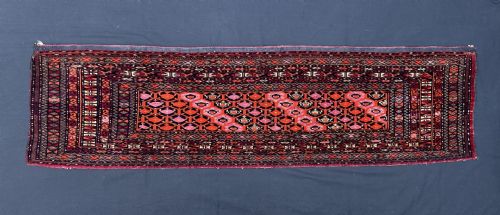
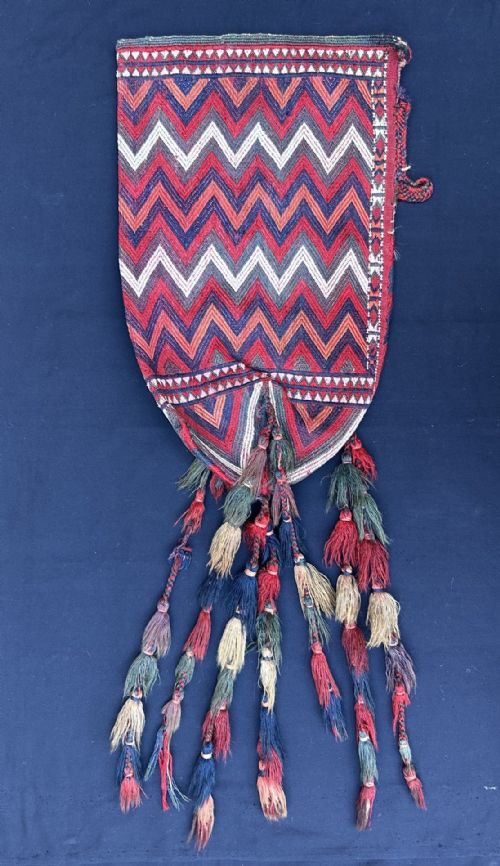
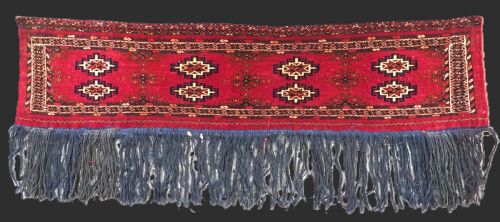
A red woven tent bag encompasses traditional Turkmen utility pieces such as torbas, chuvals, jollars, and okbash woven across the oases and steppes. These nomadic containers served practical household functions within the yurt, functioning as storage for bedding, clothing, and tent poles.
The pieces listed on this page span from the middle of the eighteenth century through to the end of the nineteenth century, reflecting various tribal traditions including Tekke, Saryk, Yomut, and Ersari weavers. Most examples survive as individual faces or complete bags incorporating their original flat-woven backs and tassels.
The dominant visual theme across these textiles is a rich crimson or madder red ground populated by repeating tribal medallions known as guls. Collectors encounter formats ranging from small tent door hangings to larger storage sacks carrying intricate geometric layouts.
Materials and construction methods
Weavers relied primarily on hand-spun wool for the pile and foundation structure, utilising natural dyes derived from local flora and minerals to achieve deep madder reds and secondary tones. Cotton and silk frequently appear as structural elements or surface highlights, adding crisp contrast and tactile variation to specific tribal designs.
The construction typically involves dense pile knotting combined with flat-woven techniques for the backs, side panels, and suspension loops. Artisans finished these utilitarian items with secure selvedges and occasional braided tassels to withstand the rigours of nomadic existence.
Listings feature madder-dyed wool foundations combined with structural cotton and silk highlights across multiple nineteenth-century tribal groups.
Distinctions in quality
Quality in a red woven tent bag is determined by the density and precision of the knotting, which dictates the crispness of the geometric gul patterns. Finer weaves demand greater technical skill from the weaver, resulting in a more supple textile structure.
The purity and depth of the natural dyes significantly influence the visual impact of the piece, alongside the preservation of original backing materials and structural integrity. Secondary details, such as the inclusion of silk highlights or white cotton contrasts, distinguish exceptional examples from standard utilitarian weaving.
The Red Woven Tent Bag Glossary
- Torba
- A small rectangular storage bag used by nomadic tribes inside the yurt. These pieces typically hung against the tent wall to hold personal possessions.
- Chuval
- A large storage sack utilised for bulky household items such as bedding and clothing. They frequently feature multiple primary guls arranged across the field.
- Gul
- A repeating medallion or principal design motif characteristic of Turkmen tribal weaving. Each tribe utilised distinct gul forms to signal lineage and identity.
- Okbash
- A specialised tent pole bag designed to cover and protect the ends of wooden struts. These narrow textile pieces are relatively scarce in surviving collections.
Red Woven Tent Bag: Frequently Asked Questions
What were tent bags used for?
Nomadic families utilised these woven containers for organising possessions, bedding, and structural elements inside the yurt.
They hung from the interior lattice walls or stored items securely during seasonal migrations across the steppes.
How do I hang a textile?
Collectors typically mount these pieces using a concealed sleeve attached to a flat wooden batten or display them behind conservation-grade glass.
Care should be taken to distribute the weight evenly across the upper edge to prevent stretching the historic wool foundation.
How do I tell tribes apart?
Tribal affiliation is identified through the specific geometry of the guls, the choice of secondary ornament, and the colour palette.
Tekke, Yomut, Saryk, and Ersari weavers each employed distinct structural traits and drawing styles unique to their region.
Are original backs important?
The presence of the original flat-woven back and closure system adds significant historical completeness to a surviving textile.
Many examples survive solely as face panels, making complete bags with tassels particularly valued by traditional textile specialists.