



Red Wool Saddlebag
A red wool saddlebag brings nomadic tribal weaving directly into a room, offering robust utility and rich natural colour.
Red Wool Saddlebag
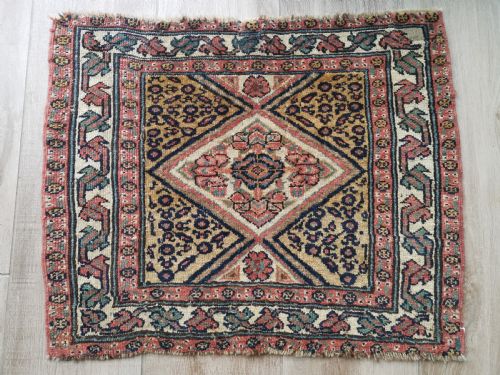
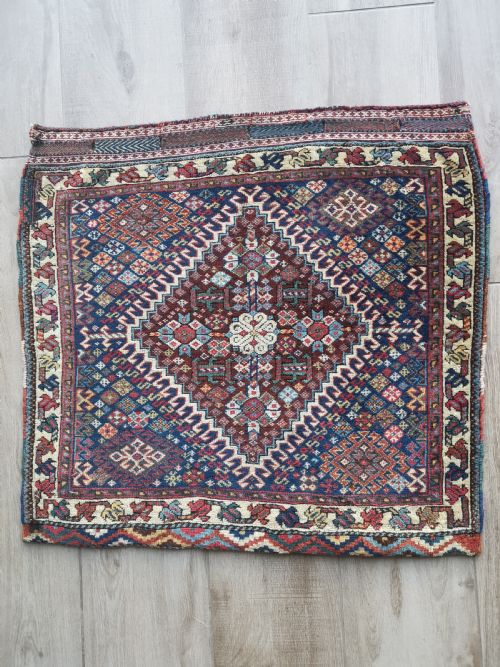
A red wool saddlebag represents the practical textile output of nomadic and village weavers across Persia, Azerbaijan, and Anatolia. When searching for a red wool saddlebag, buyers encounter functional pieces designed for transport on animals, surviving as complete double bags, single bag faces, or fragments.
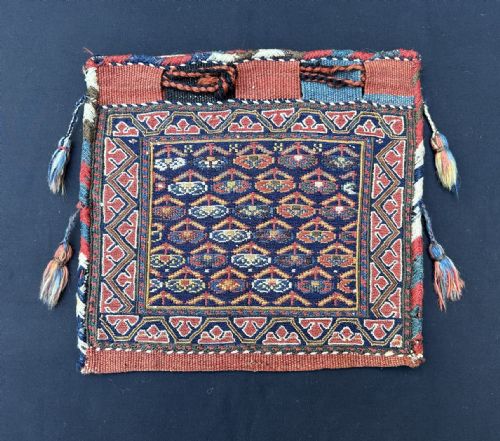
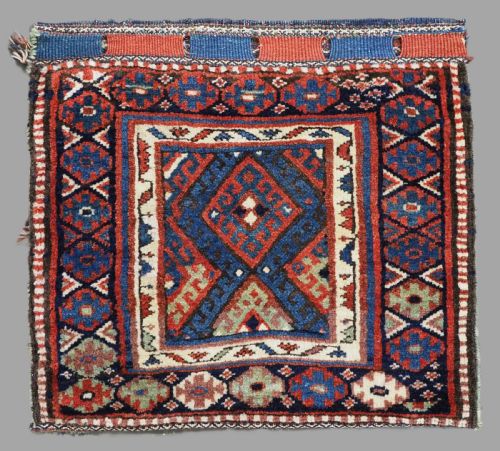
The pieces listed on this page span the mid-nineteenth century to the early twentieth century, originating from tribal confederations such as the Shahsevan, Qashqa'i, Afshar, and Jaf Kurd. These items display distinct regional patterns, from geometric medallions to repeated boteh motifs and banded weft work.
Most examples take the form of bag faces or half-khorjins, retaining the dense pile or flatweave structures originally utilised for pack animal storage. Collectors value these textiles for their direct connection to nomadic daily life and their robust construction.
Materials and construction
Weavers utilised hand-spun wool for both the pile and the foundation threads, frequently combining it with cotton and occasionally leather or metal elements for reinforcement. Natural dyes provide the deep red ground colours and contrasting details, creating a luminous quality as the wool ages.
Techniques vary between pile knotting and flatweave methods such as Soumak work, where supplementary weft wrapping creates crisp geometric patterns. Plain weave backs often accompany surviving bag faces, showing the functional duality of the original khorjin structure.
Red Wool Saddlebag Retail Price Guide 2026
Typical asking prices for red wool saddlebag among the pieces listed under this phrase on Sellingantiques today, from the lower quarter to the upper quarter. They describe what is for sale here now, not the wider market.
Some surviving bags still retain traces of mountain dust caught in the deepest recesses of their Soumak weave.
Evaluating quality and condition
Quality rests in the handle and lustre of the wool, where high-grade hand-spun fleece retains natural oils that impart a vibrant sheen. The clarity and precision of the tribal design work, alongside the depth of the natural dye palette, separate standard utility pieces from exceptional weaving.
Structural integrity also defines the tier of a piece, with complete double bags and intact plain weave backs commanding greater interest than worn fragments. The tightness of the knotting or the crispness of the Soumak wrapping indicates the weaver's skill.
Shahsevan Nomads·Qashqa'i Tribes·Afshar Nomads·Jaf Kurd
The Red Wool Saddlebag Glossary
- Khorjin
- A traditional double saddlebag used by nomadic tribes for transport and storage. These pieces were thrown across the backs of animals to carry household goods.
- Bagface
- The decorative front of a saddlebag that remained visible when packed. Many surviving pieces exist as isolated faces after the plain weave backs wore away.
- Soumak
- A flatweave technique involving wrapping supplementary weft threads around the warp. This method produces a durable fabric with a braided surface texture.
- Boteh
- A traditional almond-shaped or paisley motif representing a floral spray or cypress tree. This design appears frequently in Afshar and Persian tribal weaving.
- Plain weave
- A simple alternating over-under interlacing of warp and weft threads. It forms the unpatterned backs and structural sections of nomadic bags.
Red Wool Saddlebag: Frequently Asked Questions
What is a red wool saddlebag?
A red wool saddlebag is a woven container made by nomadic tribes in regions like Persia and Anatolia for animal transport. These textiles feature wool pile or flatweave structures decorated with traditional tribal motifs.
Today, they survive primarily as decorative wall hangings, small rugs, or table mats due to their durable construction and rich natural colours.
How were saddlebags used originally?
Nomadic groups utilised these double bags to transport household possessions, grain, and personal items across rugged terrain. They were slung across horses, camels, or donkeys during seasonal migrations.
The bags were divided into two equal compartments, often featuring reinforced leather edges and sturdy plain weave backs to withstand constant friction.
How should I display a saddlebag?
Many collectors mount complete bag faces or small fragments on neutral fabric to highlight the geometric patterns and wool texture. They also function well as small floor mats in low-traffic areas.
Protecting the antique wool from direct, harsh sunlight prevents the natural red dyes from fading over extended periods.
How do I identify different tribal styles?
Tribal styles are distinguished by specific colour palettes, knotting densities, and characteristic geometric or figurative motifs. For instance, Shahsevan pieces often showcase precise Soumak wrapping, while Afshar weaving frequently incorporates boteh designs.
Examining the structure of the wool and the composition of the field helps attribute pieces to specific regional confederations.