



Red Wool Embroidery
Red wool embroidery encompasses textile panels, wall hangings and domestic furnishings worked in vibrant wools, valued for their rich textures and intricate tribal or traditional motifs.
Red Wool Embroidery
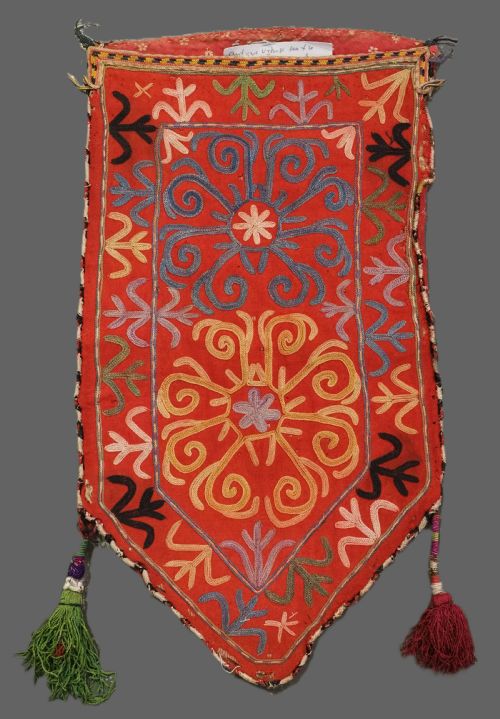
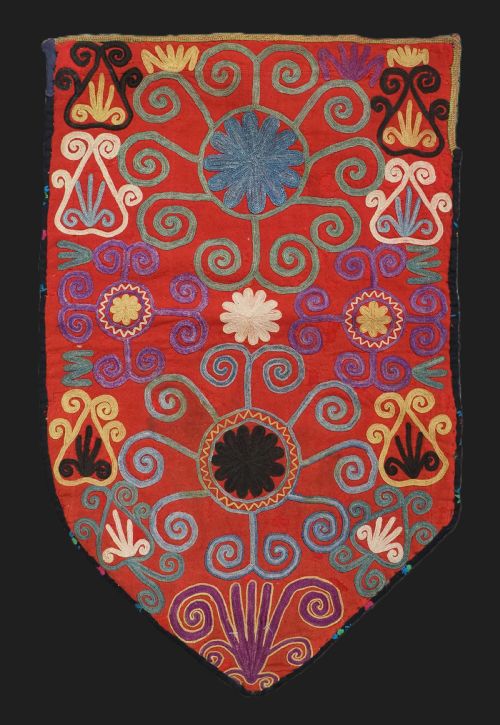
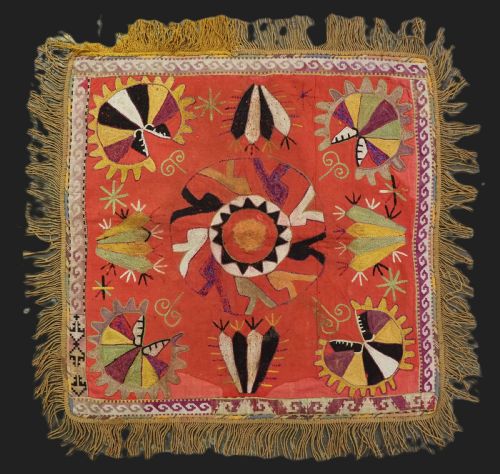
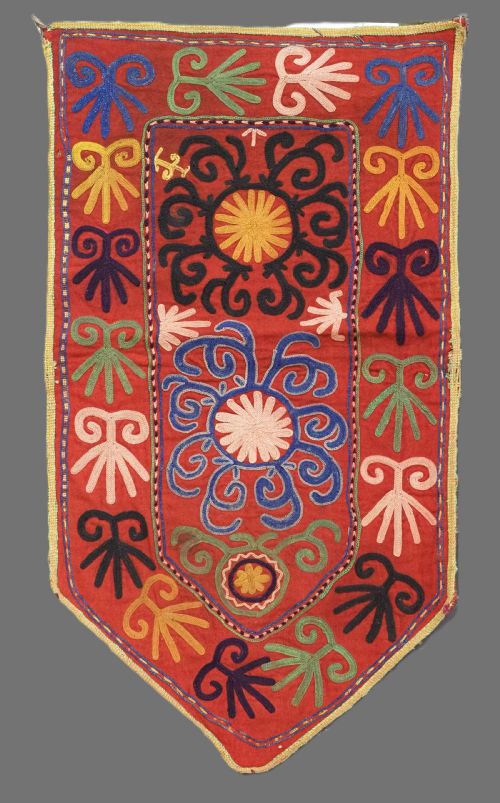
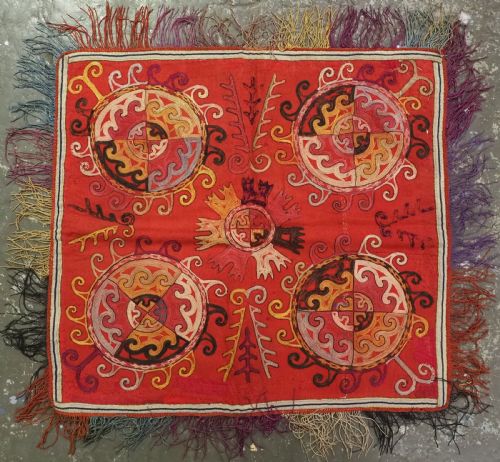
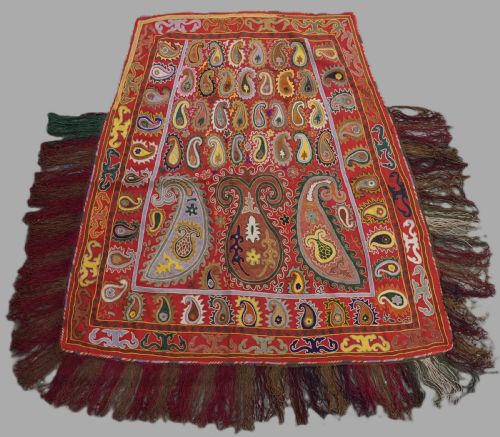
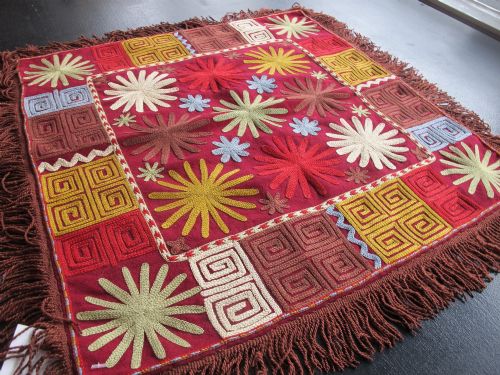
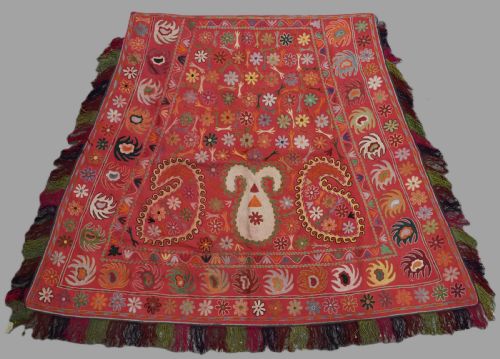
Red wool embroidery brings together diverse textiles ranging from Central Asian tribal wall hangings and dowry pieces to Victorian needlework pictures and footstools. These items often feature dense stitching upon a red woolen, felted wool or felt ground, serving decorative or ceremonial purposes in homes across different cultures.
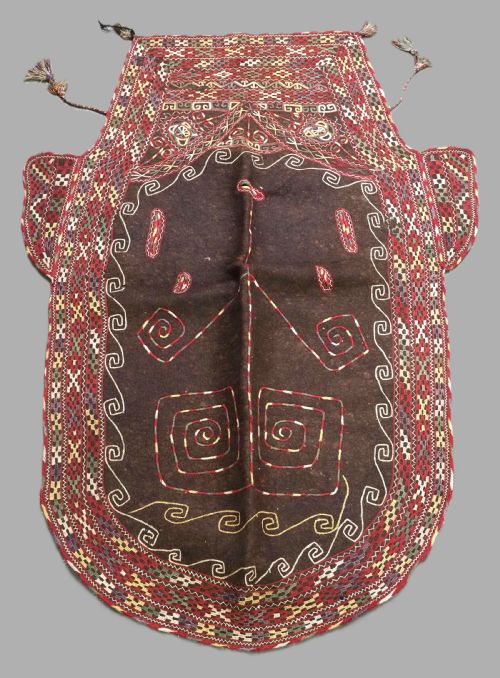
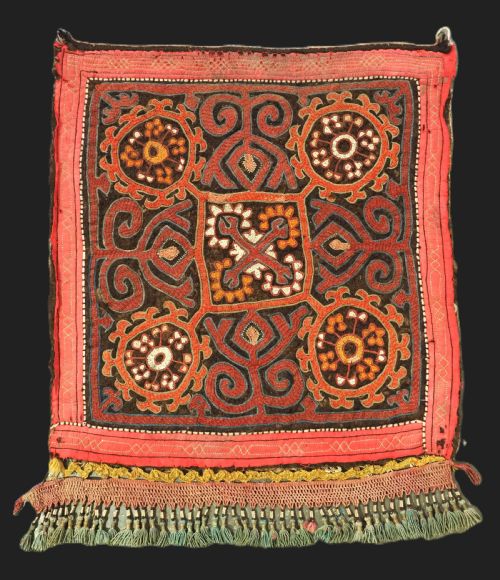
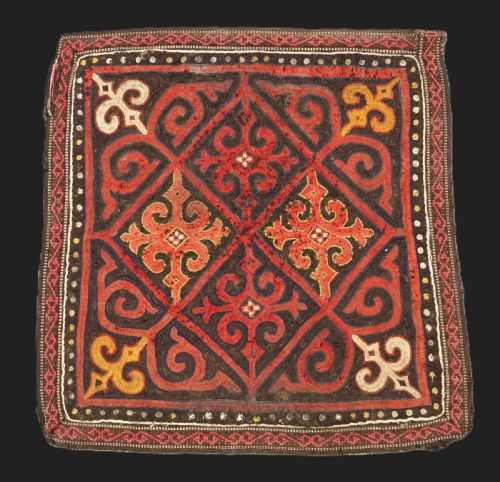
The selection on this page leans heavily into pieces originating from Central Asia, including Uzbek Lakai tribal works, Kyrgyz felt panels, and Turkmen bags, alongside European needlework and Persian Rasht embroidery. Buyers frequently encounter wall hangings, saddle covers, dowry embroideries, and framed needlepoint pictures spanning the eighteenth century to the early twentieth century.
Tribal examples such as the uut kap ilgich or horse covers reflect nomadic artistry through geometric and symbolic designs, whereas European and Victorian entries demonstrate sampler stitching, religious portraits, and beadwork on seat frames. Each piece offers a distinct glimpse into traditional handwork traditions that utilised red grounds for dramatic visual impact.
Materials and Construction
The foundational structures rely primarily on wool, felted wool, and heavy felt grounds, often dyed in deep reds and serving as a stable base for detailed needlework. Artisans applied silk and wool threads using chain stitch, applique, and various needlepoint techniques to build up intricate patterns.
Many Central Asian and Persian textiles incorporate silk highlights alongside wool embroidery, occasionally enhanced with glass beads or cotton details to add contrast and texture. Support materials such as canvas or cotton backing appear in specific European needlework panels and framed pictures.
Listings feature items spanning the eighteenth century through to the nineteen-thirties, including Victorian needlework and Central Asian tribal works.
Assessing Quality and Execution
Quality in red wool embroidery rests upon the density of the stitching, the precision of the needlework, and the complexity of the design layout. Finer examples display meticulous execution with tight, even stitches that articulate intricate motifs clearly without distortion.
The choice of materials and the preservation of the original ground fabric also influence the standard of a piece. Well-preserved textiles retain vibrant colour saturation in the wool and silk threads, while maintaining the structural integrity of the felt or woven backing.
The Red Wool Embroidery Glossary
- Ilgich
- A type of Central Asian embroidery, often created as dowry work by the Lakai tribe for wall hanging and display.
- Uut Kap
- A storage bag or hanging used in nomadic Central Asian dwellings, frequently heavily embroidered on a red ground.
- Suzani
- A type of embroidered tribal textile from Central Asia, typically worked in silk on a woolen or cotton foundation.
- Torba
- A small ceremonial bag or trapping produced by Turkmen groups, featuring detailed face embroidery.
- Needlepoint
- A form of counted thread embroidery stitched onto a stiff canvas mesh ground to create pictorial or geometric designs.
- Applique
- A technique where pieces of fabric, such as felt or silk, are stitched onto a larger ground fabric to form patterns.
Red Wool Embroidery: Frequently Asked Questions
What is an ilgich?
An ilgich is a traditional embroidery piece created by the Lakai tribe in Central Asia. These items were typically made as dowry embroideries intended for wall hanging inside nomadic dwellings.
They are celebrated for their dynamic geometric designs and spirited use of silk and wool stitching upon red woolen grounds.
What is Persian Rasht embroidery?
Persian Rasht embroidery is a distinctive textile art originating from the city of Rasht in Iran. It involves intricate silk embroidery and applique work applied to heavy felt grounds, usually in deep red or similar tones.
These pieces typically showcase fine floral medallions and elaborate scrollwork created by skilled urban artisans.
How do I care for antique wool textiles?
Antique wool textiles require careful handling to preserve their delicate threads and natural fibres. They should be kept away from direct sunlight to prevent colour fading and stored in stable, dry environments.
Displaying them flat or mounting them professionally on breathable supports helps prevent undue stress on the fabric and stitching.