



Red Upholstered Footstool
When you select a red upholstered footstool, you bring home a versatile seat shaped by centuries of cabinet-making and textile traditions.
Red Upholstered Footstool
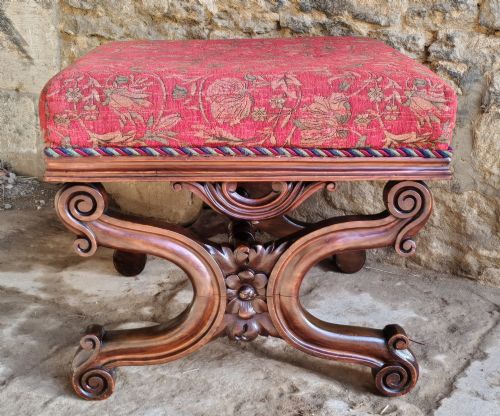
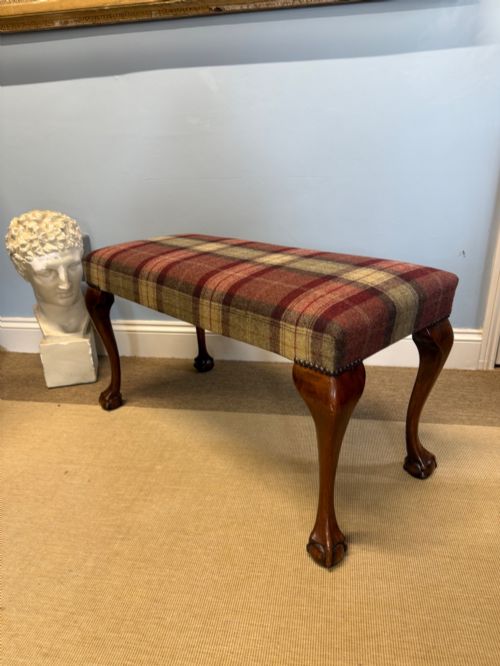
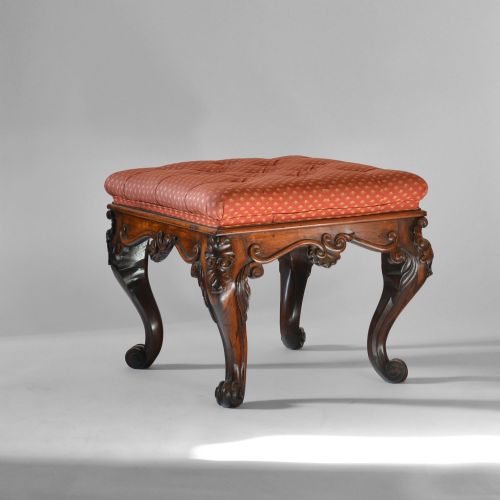
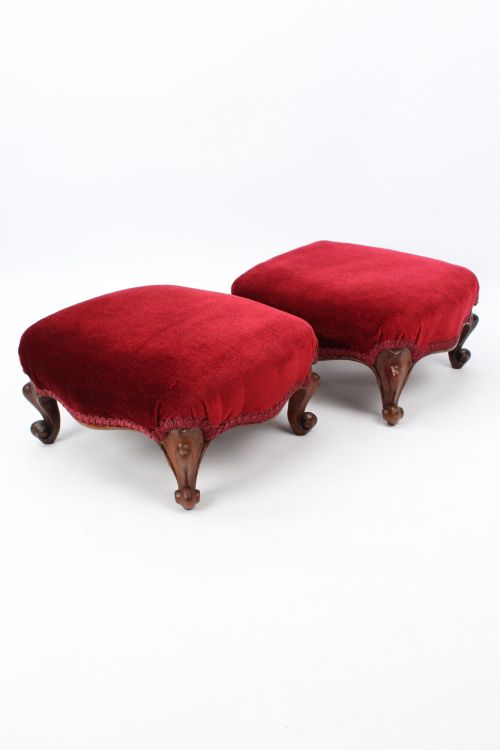
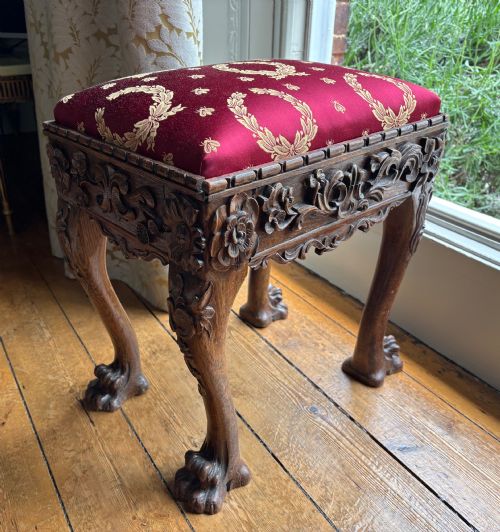
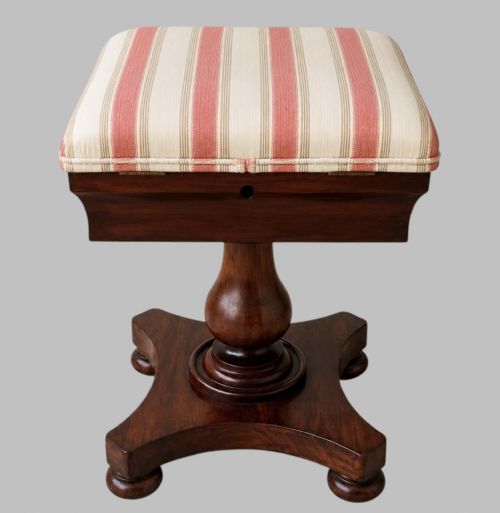
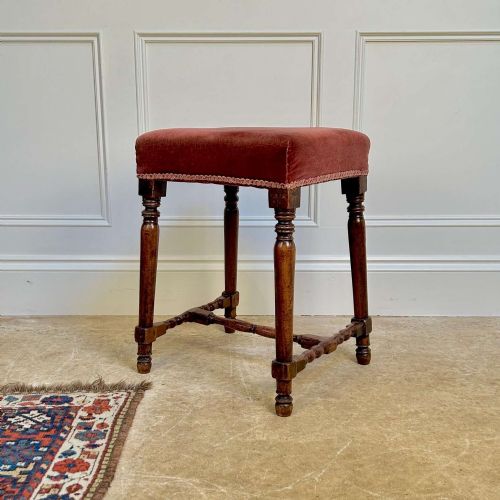
A red upholstered footstool appears in various historic forms across this selection, spanning compact fireside seats and grand long ottomans. These pieces range from 18th-century Georgian designs to Victorian styles, serving as both functional low seating and decorative furnishings.
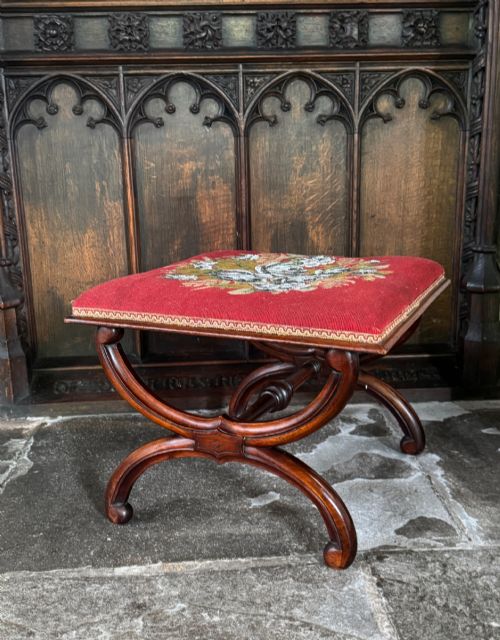
The category encompasses diverse structures including x-frame stools, dressing table benches, and low resting forms. Makers throughout the Georgian, Regency, and Victorian periods adapted these stools for drawing rooms, bedrooms, and grand country houses alike.
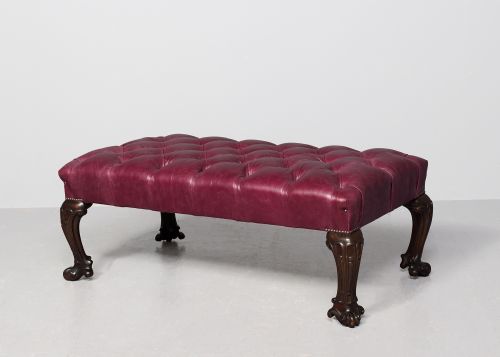
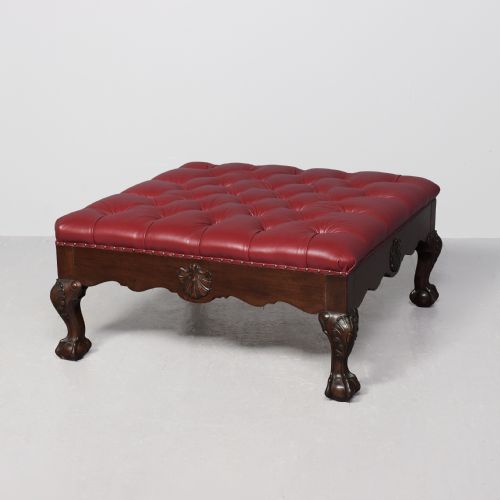
Buyers will encounter timber frames paired with rich textile coverings, offering options from buttoned leather hides to patterned damask and needlepoint seats. Each piece reflects the domestic habits and decorative tastes of its respective era.
How they were made
Cabinet-makers constructed the foundational frames using dense hardwoods such as mahogany, walnut, oak, and rosewood. These timbers were shaped through turning, carving, and joinery to form cabriole legs, x-frames, and sturdy stretchers.
Upholstery techniques combined traditional stuffing methods with secure fixings, often employing brass-studding to secure textiles like velvet, leather, damask, and silk to the wooden frames. Structural details frequently included castors for mobility and intricate hand-carved ornamentation.
The selection spans compact Victorian footstools, Georgian dressing table seats, and large country house storage ottomans.
What varies in quality
The standard of a piece rests heavily on the proportion and refinement of the wooden framework. Superior examples display crisp hand-carving, well-balanced proportions, and robust joinery that withstands centuries of use.
Material selection and execution drive the distinction between standard items and exceptional works. High-grade pieces utilise fine timbers, substantial brass hardware, and dense historic textiles that retain their integrity and visual weight over time.
Hallett & Sons·Howard & Sons
The Red Upholstered Footstool Glossary
- X-frame
- A structural furniture base formed by intersecting diagonal timbers that create an X-shape when viewed from the side. This ancient form provides robust weight distribution and appeared frequently during the Regency and Victorian revivals.
- Buttoning
- An upholstery method where depressions are pulled into the padding and secured with stitches or buttons to create a diamond pattern. This technique keeps thick leather or fabric tightly fitted to the internal stuffing.
- Cabriole leg
- A furniture leg that curves outward in a convex arc before tapering inward in a concave arc, ending in a pad, claw, or ball foot. This profile draws inspiration from animal limbs and defines many Georgian designs.
- Brass-studded
- A decorative and functional trim where individual brass nails are driven closely along the edge of upholstery to secure the fabric to the wooden frame. It adds a metallic outline that complements dark hardwood structures.
Red Upholstered Footstool: Frequently Asked Questions
What is a red upholstered footstool used for?
These low seats functioned traditionally as foot rests, dressing table benches, or supplementary fireside seating in period drawing rooms. Their sturdy frames and padded tops also allowed them to serve as small coffee tables or storage ottomans in larger spaces.
Today, they integrate easily into modern rooms as flexible accent pieces that provide an extra seat or a comfortable place to rest feet.
How can I tell a Georgian footstool from a Victorian one?
Georgian pieces generally showcase restrained classical proportions, featuring fine mahogany or walnut timbers and understated carving like cabriole or straight tapered legs. Victorian examples often lean towards heavier, more exuberant revival styles with buttoned leather, elaborate dark wood frames, and turned supports.
Examining the construction methods beneath the upholstery and the specific timber grain helps clarify the manufacturing period.
How do I care for antique wood and upholstery?
Historic timber frames benefit from occasional treatment with appropriate furniture wax to nourish the grain and protect the finish from drying out. Upholstery requires gentle vacuuming with a soft brush attachment and protection from direct sunlight to preserve the colour of the fabric or leather.
Avoiding excessive moisture and maintaining stable room temperatures will keep both the wood and the textile covering in stable condition.
Are these footstools sturdy enough for daily seating?
Most historic stools were built by skilled cabinet-makers using dense hardwoods designed to support regular weight. Traditional joinery methods provide strong structural integrity that usually remains sound after generations of use.
Checking the stability of the frame joints ensures the piece is well-suited for everyday seating in a modern home.