
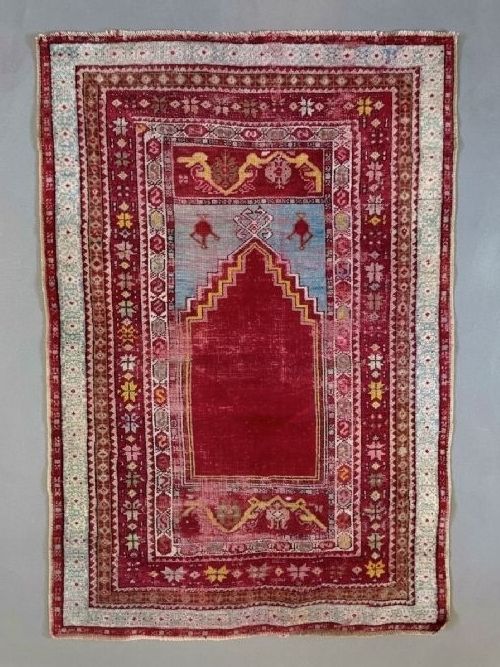

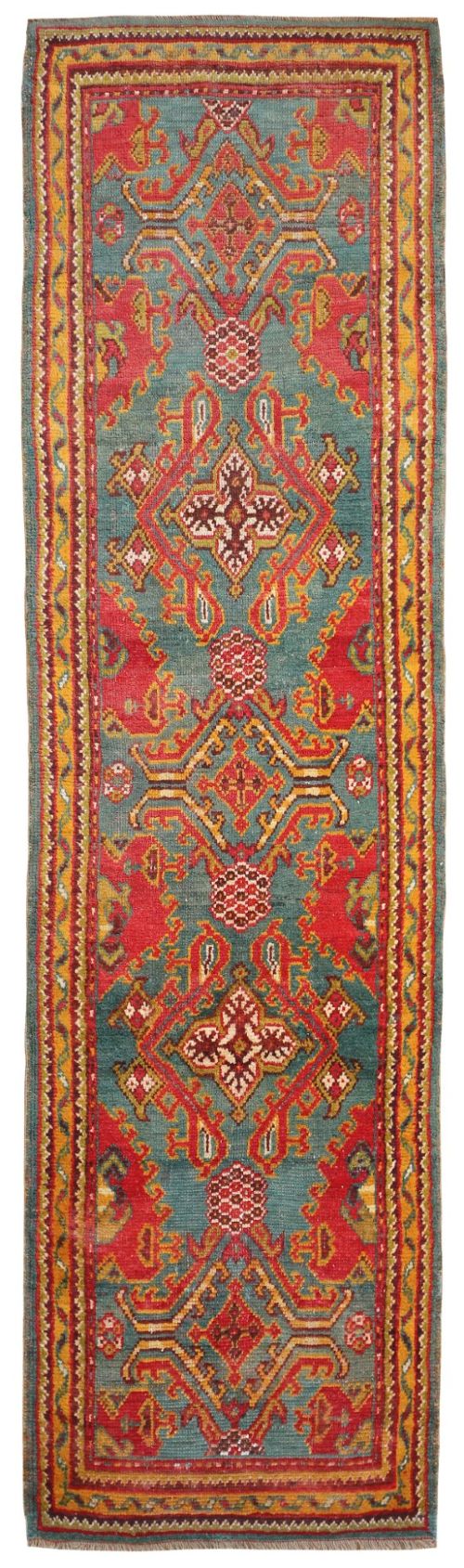
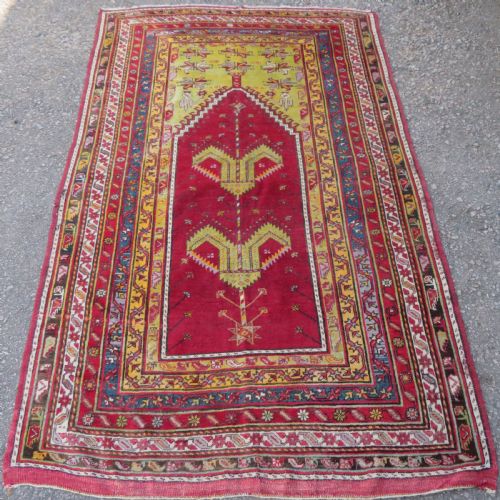
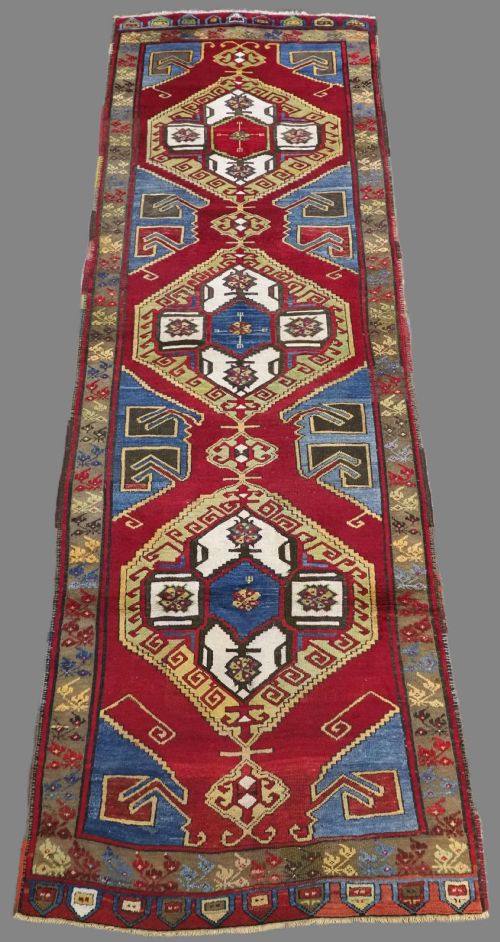


Red Turkish Runner
A red turkish runner brings centuries of Anatolian village weaving and distinct tribal geometry directly into a long hallway or narrow space.
Red Turkish Runner
A red turkish runner represents a long, narrow format woven across Anatolian villages and tribal centres, designed specifically for corridors, halls and stairways. These pieces span periods from the mid nineteenth century through to the early twentieth century, carrying traditional patterns handed down through generations.
The format on this page appears as narrow floor coverings, long rugs, and half kilim constructions, often distinguished by regional weaving styles such as Konya, Ushak, Melas and Kirsehir. Village weavers constructed these long carpets for domestic utility, resulting in hardwearing textiles suited to heavy foot traffic.
The dominant crimson and scarlet hues typical of these runners derive from natural plant and insect dyes, which mellow gracefully over decades of light and wear. Each piece reflects the specific tribal heritage and local wool supplies of the region where it was knotted.
How they were made
Weavers utilised hand spun wool, cotton foundations, and occasionally silk or metallic thread to construct these runners on upright vertical looms. The pile rugs employ Turkish or symmetric knots tied firmly by hand, while flatwoven kilims rely on slit tapestry techniques to create geometric patterns without pile.
Natural materials dominate the construction, utilising locally sourced sheep wool for the pile and foundation warps, sometimes combined with angora wool for added lustre. Dyers extracted rich red tones from madder root and other organic sources, creating complex variations in shade across a single field.
Some village weavers split long carpets into two distinct sections, creating matched runner halves to fit irregular corridor lengths.
What varies in quality
The standard of a red turkish runner depends heavily on the fineness of the knotting, the complexity of the tribal design, and the depth of colour achieved by the dyer. Finer wool preparation and tightly packed knots create a dense, resilient pile that holds crisp geometric lines.
The integrity of the original wool borders, selvedges and foundational structure dictates the long term durability of the runner. Pieces retaining their original end finishes and vibrant, uncompromised natural dye variations stand at the higher end of the weaving tradition.
Kirsehir weavers·Konya Karapinar·Milas village·Yagcibedir workshops
The Red Turkish Runner Glossary
- Kilim
- A flatwoven carpet or runner produced without a pile by tightly interweaving warp and weft threads. This technique creates a lightweight, reversible textile with sharp geometric patterns.
- Anatolian
- Pertaining to the geographic region of Asia Minor, which encompasses the historical heartland of traditional Turkish rug weaving. This label covers numerous distinct village and tribal traditions.
- Ushak
- A renowned weaving centre in western Anatolia known for producing large scale carpets and runners with distinctive floral or medallion layouts. These pieces often feature softer, subdued colour palettes.
- Prayer Rug
- A devotional rug featuring a mihrab or niche design indicating the direction of prayer. These formats were traditionally used for personal daily worship in homes.
- Selvedge
- The bound or reinforced side edges of a runner that protect the foundation threads from unravelling. Original surviving selvedges indicate careful preservation.
- Warp
- The vertical foundation threads stretched tightly on the loom before knotting begins. In these runners, wool and cotton serve as the primary warp materials.
Red Turkish Runner: Frequently Asked Questions
Where should I place a long runner?
These narrow formats work best in high traffic corridors, hallways, entryways and alongside beds where floor length warmth is desired.
The elongated proportions draw the eye down a passage while protecting wooden floorboards from daily wear.
How do I care for antique wool?
Regular gentle vacuuming without a rotating brush roll keeps dust from settling deep into the wool pile of these runners.
Professional specialist cleaning is recommended for washing to preserve the stability of the natural dyes and historical foundations.
Are these runners made with natural dyes?
Weavers traditionally relied on botanical and insect extracts, such as madder root, to achieve deep red and crimson tones across the wool pile.
These natural colourants interact with light over generations, producing subtle tonal variations known as abrash.
How do I distinguish regional styles?
Different Anatolian districts developed signature palettes, medallion structures and border motifs passed down through local weaving families.
Examining the specific geometry, knot density and wool texture helps identify whether a piece originates from Ushak, Melas or Konya.