

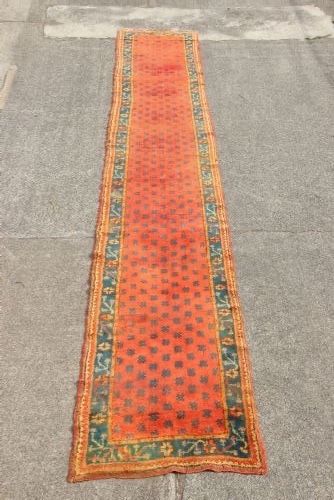
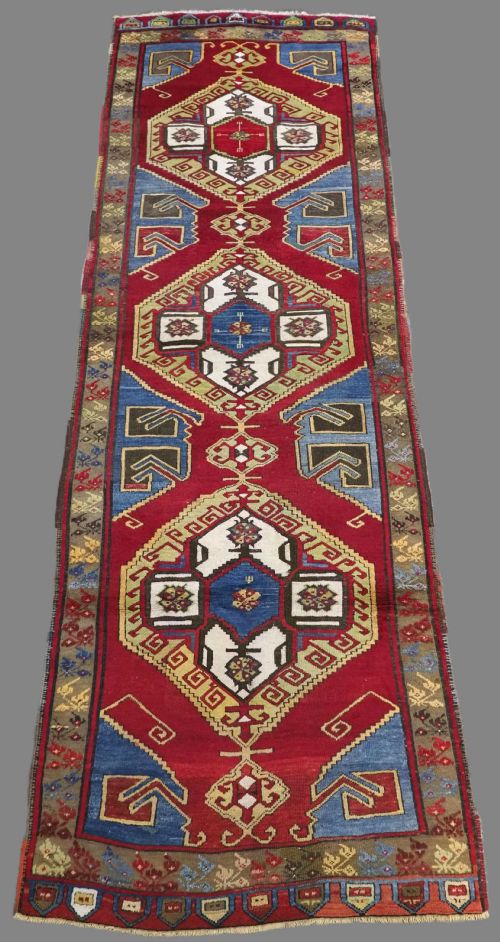


Anatolian Hallway Rug
An anatolian hallway rug brings deep regional character to a long floor space through traditional woven geometry and rich dyed wool.
Anatolian Hallway Rug
An anatolian hallway rug provides a narrow format designed specifically for corridors, passages and galleries, coming to us primarily from Turkish weaving regions. These pieces appear in runner proportions, stretching long and narrow to fit through transit spaces in period and modern homes alike.
The selections available range across several decades spanning the late nineteenth and early twentieth centuries. You will find distinct tribal and traditional regional designs, including Oushak, Konya, Taspinar, Yagcibedir, Kirsehir and Yuruk origins.
Forms include classic runner rugs as well as half kilim kelim constructions and prayer formats. Their formats accommodate narrow architectural layouts while displaying the heritage patterns characteristic of Anatolian craftsmanship.
Materials and construction
The pieces rely upon a foundation of sturdy cotton or wool, which supports the dense pile and flatweave structures. Hand-knotted and flatwoven techniques govern the production, creating durable surfaces meant to endure heavy foot traffic.
Natural wool provides the primary medium for both the foundational warps and the intricate surface designs. Dyestuffs impart the traditional palette seen across the pieces, giving each runner its characteristic visual weight.
Anatolian Hallway Rug Retail Price Guide 2026
Typical asking prices for anatolian hallway rug among the pieces listed under this phrase on Sellingantiques today, from the lower quarter to the upper quarter. They describe what is for sale here now, not the wider market.
Listings span production dates from eighteen eighty through to nineteen thirty, utilising wool and cotton across diverse regional Anatolian styles.
Assessing quality and finish
Quality rests upon the fineness of the knotting and the tightness of the weave, which dictate how crisply the geometric and medallion patterns resolve. Tightly packed foundations offer superior resilience underfoot over decades of daily use.
The condition of the wool pile and the integrity of the edges and ends distinguish better examples. Wear patterns tell the history of the piece, whilst solid structural foundations ensure the runner remains stable along corridors.
Oushak·Konya Karapinar·Malatya Konya·Yagcibedir·Kirsehir·Taspinar·Yuruk
The Anatolian Hallway Rug Glossary
- Runner
- A long, narrow carpet format intended for corridors, hallways and stairs. This shape dictates the proportions of the pieces.
- Kilim
- A flatweave textile produced without a raised pile by tightly interlocking the warp and weft threads. Half kilim variants combine flatweave sections with knotted pile.
- Medallion
- A central ornamental design motif placed symmetrically within the field of the rug. Many traditional pieces anchor their compositions around these geometric centerpieces.
- Warp
- The stationary vertical strings stretched on the loom that hold the structure of the rug. Cotton and wool serve this purpose in these regional examples.
- Pile
- The soft, raised surface of a rug formed by the cut ends of knots tied to the warp and weft. Shorter or denser pile structures alter the texture and handling of the textile.
Anatolian Hallway Rug: Frequently Asked Questions
How do I measure for a hallway runner?
Measure the clear walking length and width of your corridor, leaving an even border of exposed flooring around the perimeter. Account for door clearance so that the pile does not jam low-swinging doors.
Keep the runner centred to balance the architectural lines of the hallway. Allow sufficient breathing room at both ends rather than wall-to-wall coverage.
Are these runners suitable for heavy traffic?
Wool and cotton construction provides natural resilience against the constant footfall typical of entrance halls and corridors. Their traditional dense weaves were originally built for daily household utility.
Pair the textile with a quality underlay to prevent sliding and cushion the impact of footsteps. This practice protects the foundation threads from premature wear.
How do I clean an antique runner?
Regular gentle vacuuming without a rotating brush roll keeps dust from settling into the wool pile. Professional specialist cleaning remains safest for historic dyes and handmade foundations.
Avoid saturation and harsh chemical treatments which can damage natural wool fibres. Address spills immediately by blotting gently rather than rubbing.
How can I tell different regional styles apart?
Regional types display distinct colour palettes, knot counts and geometric motifs unique to their Anatolian weaving districts. Oushak runners often feature softer tones and larger medallions, whilst Yuruk pieces show bolder tribal geometry.
Examining the weave structure and edge finishes also helps identify whether a piece originates from town workshops or nomadic tribal traditions.