
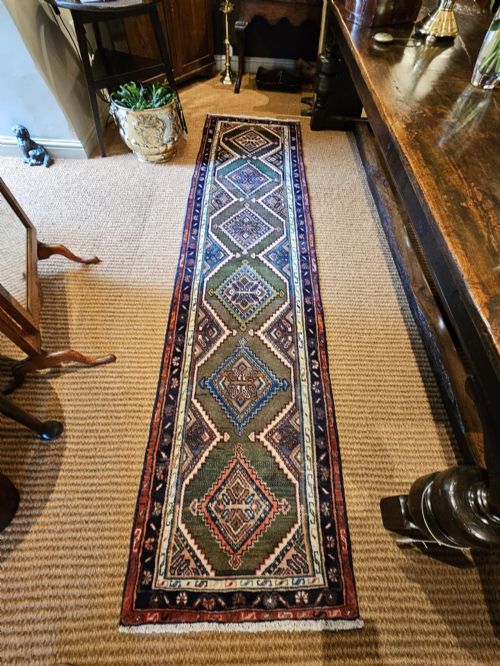
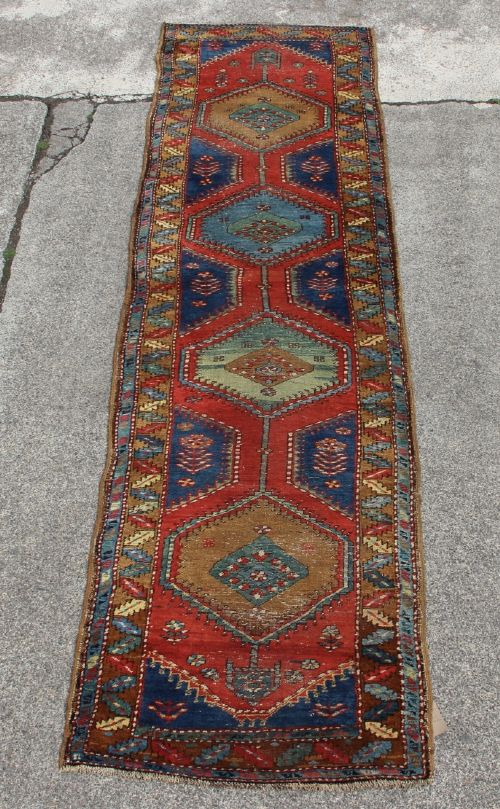
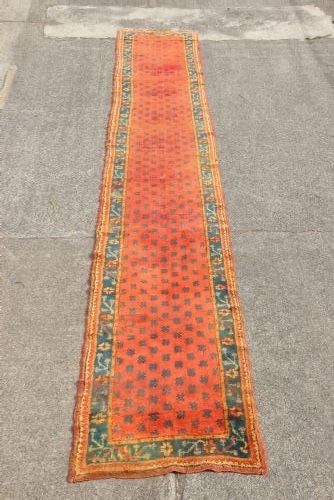
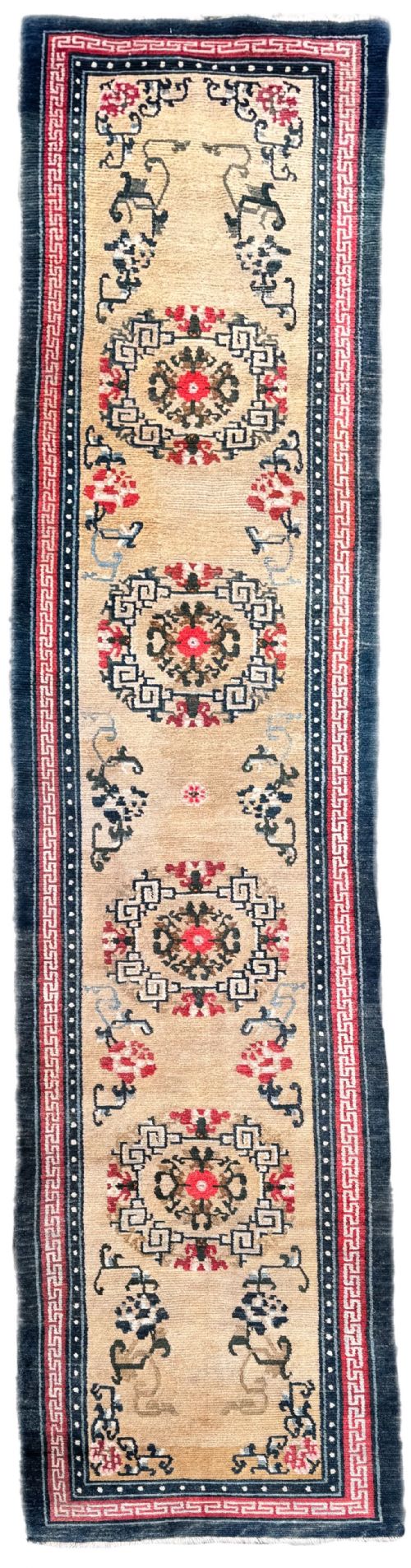

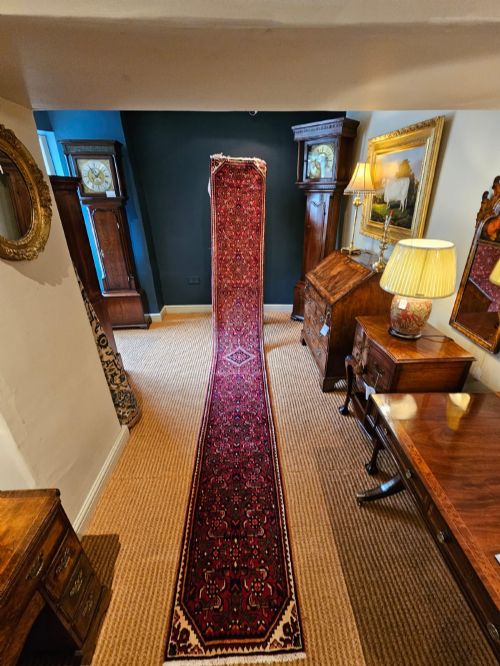
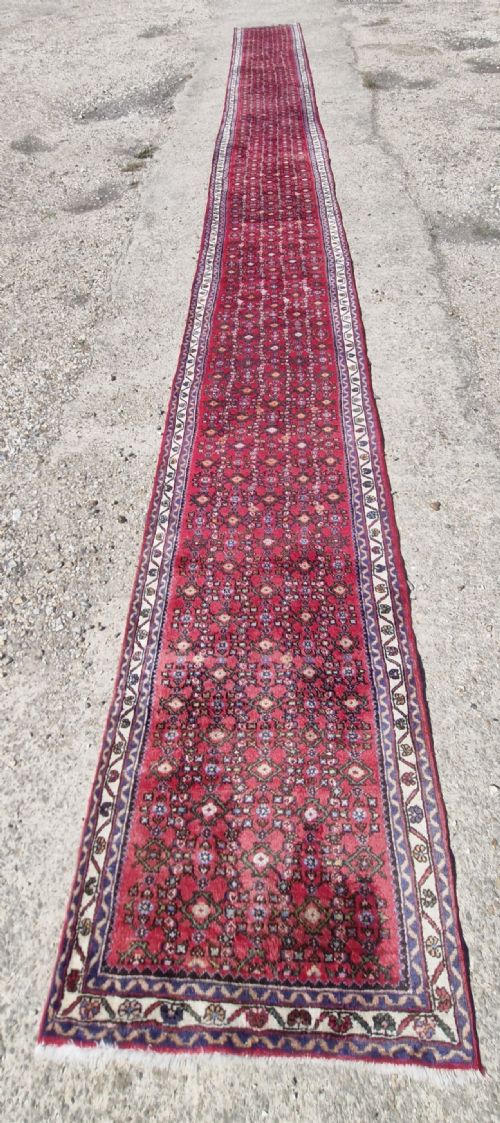
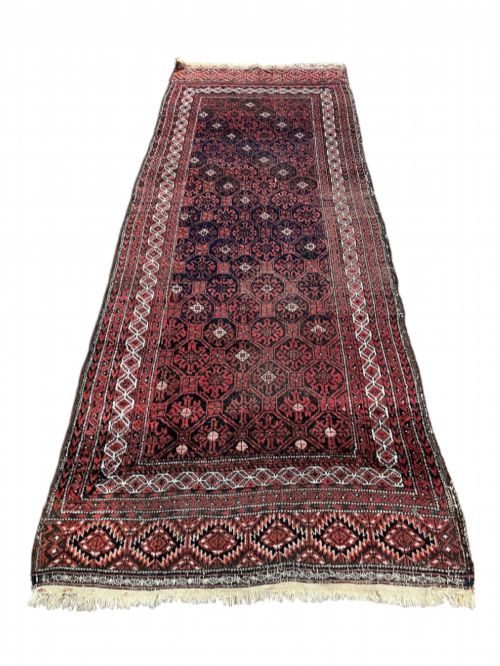
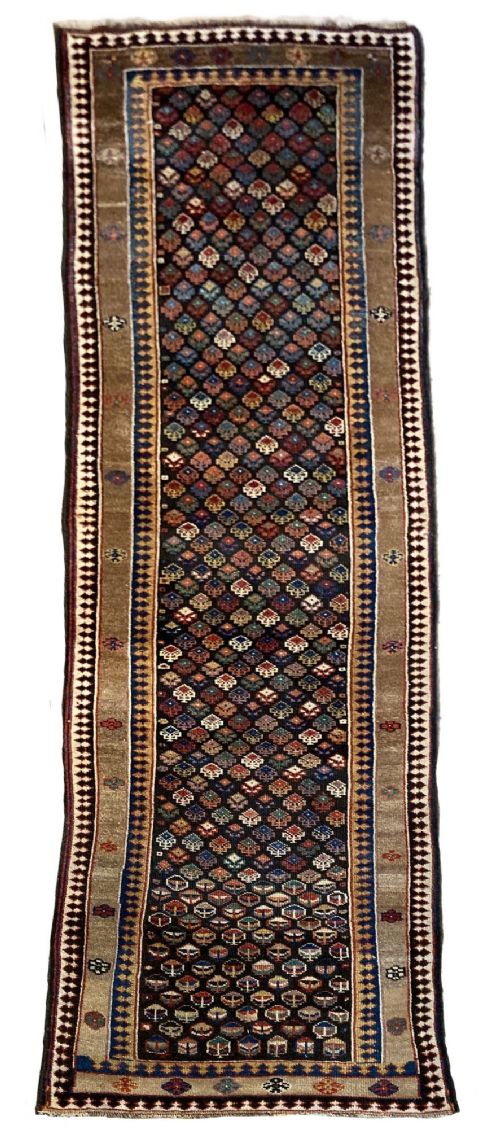


Long Narrow Rug
When you need a long narrow rug for a corridor, landing or hall, these extended floor coverings provide both warmth and directional flow.
Long Narrow Rug
A long narrow rug is designed specifically for hallways, stairs, and narrow landings where standard rectangular floor coverings do not fit. These pieces span origins from Persian and Turkish weaving centres to Moroccan and Caucasian regions, dating predominantly from the late nineteenth century through to the mid-twentieth century.
The most common formats found here are traditional runner rugs and long kelims, often measuring several metres in length while maintaining a narrow width. They serve to protect high-traffic wooden floors while adding pattern and colour to otherwise neglected transitional spaces in a home.
How they were made
Traditional weavers constructed these textiles using natural materials, predominantly wool, cotton, and camel hair, often incorporating hand-spun wool for the pile. These fibres were knotted or flat-woven onto sturdy cotton or wool foundations to withstand decades of foot traffic in busy hallways.
Dyes derived from natural sources yielded the rich indigo blues, reds, and mellow background tones seen across Persian, Turkish, and Caucasian examples. Flat-woven kilim sections and pile-woven carpets utilised distinct techniques, with some pieces combining both methods.
Long Narrow Rug Retail Price Guide 2026
Typical asking prices for long narrow rug among the pieces listed under this phrase on Sellingantiques today, from the lower quarter to the upper quarter. They describe what is for sale here now, not the wider market.
Some runners stretch to over thirty feet, proving that historical weavers understood the challenge of very long corridors.
What varies in quality
Knot density and the precision of the geometric or floral design determine the fineness of the weaving. Pieces originating from workshops in Heriz, Bidjar, or Senneh display tighter foundations and more intricate execution compared to simpler tribal variations.
The condition of the wool pile and the integrity of the original selvedges and ends dictate the structural longevity of the piece. Uniform wear across the surface indicates balanced usage over generations, whereas uneven pile depth reflects irregular material quality or localized heavy friction.
Persian Heriz·Turkish Oushak·Moroccan Berber·Kurdish Tribal·Caucasian Shirvan
The Long Narrow Rug Glossary
- Runner
- A long, narrow carpet format intended primarily for corridors, staircases, and hallways. These pieces typically measure significantly greater in length than in width.
- Kilim
- A flat-woven carpet or rug produced without a pile by tightly interweaving warp and weft strands. This technique creates a lightweight, reversible textile with sharp geometric patterns.
- Pile
- The upright yarn loops or cut ends that form the soft surface of a carpet. Density and height of the pile affect both texture and durability.
- Selvedge
- The reinforced side edges of a rug formed by wrapping the outermost warp threads. Good selvedges prevent the textile from fraying along its length.
- Warp
- The stationary vertical threads stretched taut on a loom that form the structural foundation of a woven rug. Weft threads are passed horizontally through these warp threads.
Long Narrow Rug: Frequently Asked Questions
Where should a long narrow rug be placed?
These pieces suit long corridors, narrow entryways, and landings where floor space is restricted. Their proportions guide the eye down a passage while protecting wooden floorboards from heavy foot traffic.
Ensure you measure the walkway carefully, leaving a uniform border of exposed floor on either side of the textile for a balanced aesthetic.
How do I clean an antique runner?
Gentle regular vacuuming without a beater bar removes surface dust trapped within the wool pile. Professional specialist cleaning is recommended for deeper maintenance to protect natural dyes.
Avoid soaking antique foundations or using harsh chemical detergents, as these can weaken older cotton and wool fibres.
Are these rugs suitable for high-traffic areas?
Traditional construction methods utilising dense wool and sturdy foundations make many of these historical runners robust enough for daily use. Camel hair and hand-spun wool provide additional natural resilience against wear.
Using a quality underlay beneath the textile prevents slipping and cushions the weave against hard subfloors.
How can I tell different tribal styles apart?
Styles vary by regional geometric motifs, colour palettes, and knotting techniques. Persian Heriz and Hamadan pieces often feature bold medallions and Herati patterns, whereas Caucasian Shirvan and Kurdish runners display sharper, highly geometric tribal motifs.
Turkish Oushak and Anatolian examples frequently exhibit softer pastel or mellow background tones with large-scale floral elements.