


Red Porcelain Display Vase
These red porcelain display vases bring striking colour and decorative presence into a room, offering distinct regional artistry from earlier centuries.
Red Porcelain Display Vase
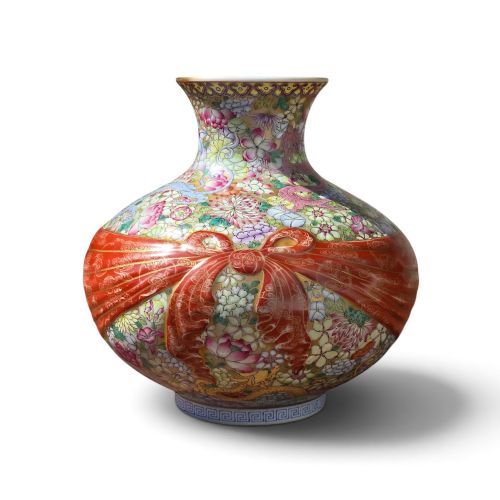
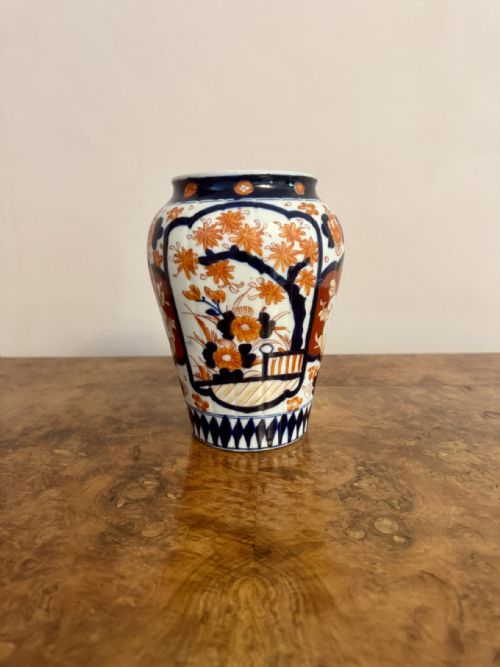
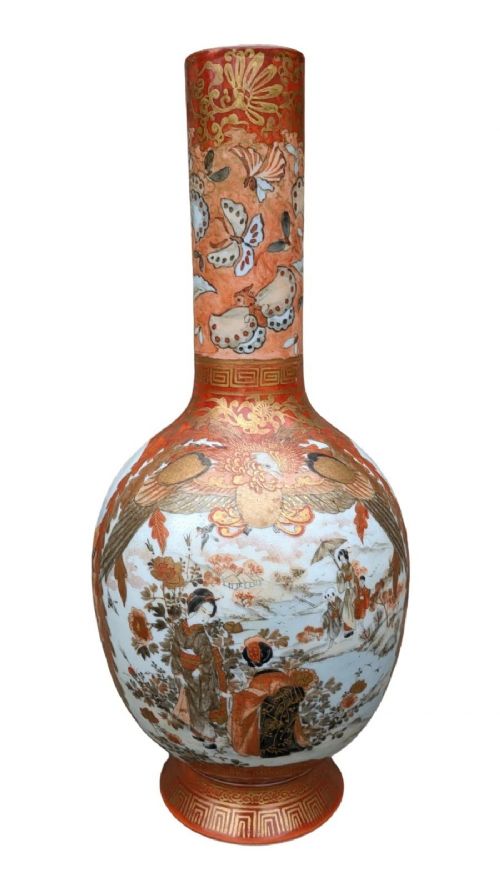
A red porcelain display vase comprises glazed ceramic vessels intended for visual presentation rather than practical utility. When exploring a red porcelain display vase on this page, the buyer encounters examples ranging from Japanese Imari and Kutani wares to Chinese porcelain.
The selection leans heavily towards Japanese Imari and Kutani pieces from the nineteenth century, including covered ginger jars and cylindrical vases. These objects showcase traditional hand-painted decoration that integrates prominent red tones with cobalt blue underglaze, enamel, and gilt details.
How they were made
The makers formed these vessels using refined porcelain clay before applying initial cobalt blue underglaze and firing the piece in a kiln. Subsequent layers of enamel paint, including iron-red pigments and gold leaf or gilding, were applied on top of the glaze and fixed with secondary low-temperature firings.
Certain pieces incorporate moulded ribbing or carved wooden elements to complement the ceramic body. The application of gold leaf and intricate enamel work required steady hand-painting skills passed down through specialised workshops.
Several vases arrive with lids that have happily stayed together with their jars for well over a century.
What varies in quality
Quality in these vases rests on the precision of the hand-painted enamel work and the crispness of moulded details such as bamboo patterns or dual dragons. Pieces decorated by recognised workshops exhibit superior control over the iron-red pigments and gold leaf application.
Scale and form also dictate distinction, with large lidded vases, chargers, and matched pairs demonstrating greater ambition from the makers. The integration of complex motifs like the millefleurs pattern separates standard decorative objects from finer examples.
Kinrin Workshop
The Red Porcelain Display Vase Glossary
- Imari
- A style of Japanese porcelain exported from the port of Imari, traditionally characterised by a palette of cobalt blue, iron-red, and gilt on a white ground. This style developed during the Edo period and remained popular through the nineteenth century.
- Kutani
- Japanese porcelain and pottery originating from Kaga province, known for bold colour schemes that frequently feature rich iron-red and gold details. Kutani pieces often depict pictorial scenes or natural motifs.
- Ginger Jar
- A high-shouldered ceramic vessel with a domed lid, originally designed for storing spices but frequently utilised purely for display in Western interiors. Many nineteenth-century examples feature Imari decoration.
- Millefleurs
- A dense surface pattern composed of countless small flowers tightly arranged across the porcelain body. This French term translates to a thousand flowers and appears on fine Chinese export wares.
- Cobalt Blue Underglaze
- A blue pigment applied to the raw porcelain body prior to glazing and high-temperature firing, ensuring the colour becomes permanently sealed beneath the glassy surface.
Red Porcelain Display Vase: Frequently Asked Questions
What is an Imari vase?
An Imari vase is a Japanese porcelain vessel decorated in characteristic palettes of iron-red, cobalt blue, and gold. These pieces were produced for export and domestic use alike.
They reflect centuries of ceramic tradition originating from the Edo period and continuing through the Meiji era.
How do I date a Kutani vase?
Dating relies on stylistic markers, materials, and workshop signatures recorded on the base. Nineteenth-century examples often display vibrant enamel colours combined with heavy gilding.
Examining the potting technique and glaze characteristics helps distinguish nineteenth-century production from later items.
Were lidded jars used for storage?
While originally designed to hold spices or tea, many lidded ginger jars served purely ornamental purposes in European and Japanese interiors. Their substantial size made them ideal focal points for rooms.
Over time, matching pairs became popular additions to mantelpieces and display cabinets.
How do I display a large vase?
Large vases and chargers require stable placement on sturdy furniture where their detailed enamel and gilt work can be appreciated. Pairs look effective when balanced symmetrically on buffets or tables.
Adequate lighting helps reveal the fine iron-red pigments and gold leaf details against the porcelain body.