





Gilded Dragon Ceramic Vase
These gilded dragon ceramic vase pieces bring together intricate hand painting, metallic leaf, and historic pottery forms.
Gilded Dragon Ceramic Vase
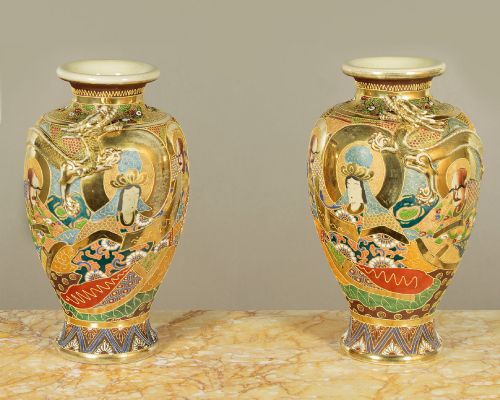
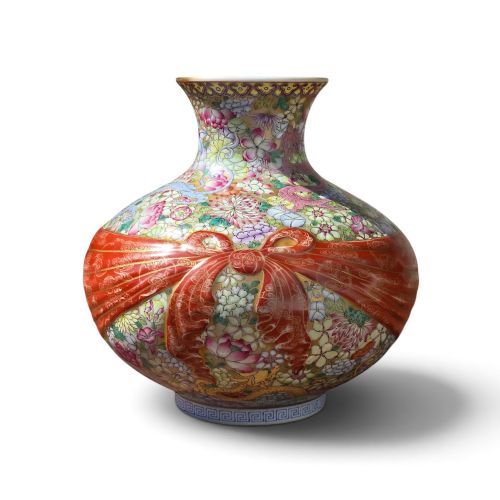
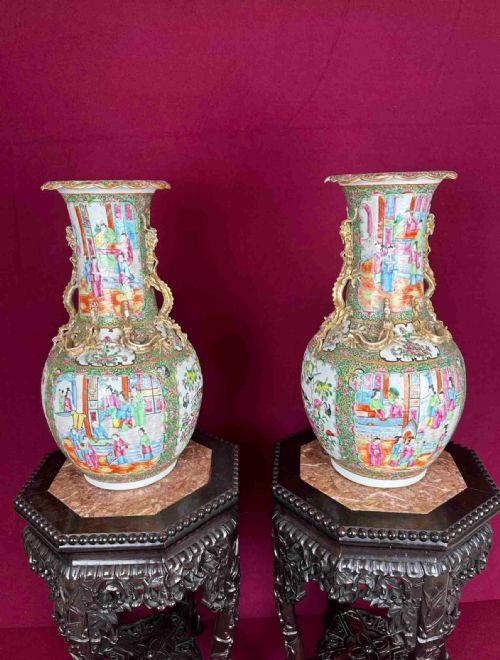
A gilded dragon ceramic vase brings together intricate hand painting, metallic leaf, and historic pottery forms. When searching for a gilded dragon ceramic vase, a buyer encounters examples originating from Japanese, Chinese, and British workshops spanning the nineteenth century through the early twentieth century. The selection on this page leans toward Japanese Satsuma wares from the Meiji period, alongside Chinese export pieces and occasional British earthenware.
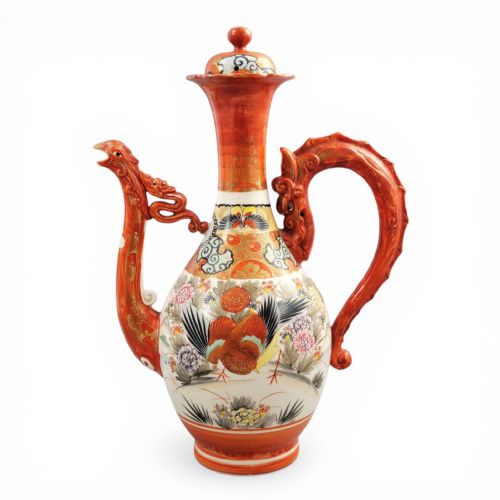
Forms range from traditional vases and hexagonal vessels to decorative ewers and bud vase trios. These objects reflect diverse cultural traditions, incorporating detailed motifs of dragons, arhats, and floral patterns rendered in enamel and gold leaf.
How they were made
The makers of these items utilised porcelain and earthenware as the primary ceramic bases. Artisans applied glazes, overglaze enamels, and hand-painted details to decorate the surfaces.
Gold leaf and gold gilt provide the metallic highlights that define the ornamentation. These materials combine with techniques such as transfer printing and freehand painting to achieve the finished appearance.
Dragons coil around ewers and vases alike, keeping a watchful eye on every mantelpiece they inhabit.
What varies in quality
The precision of the hand painting and the complexity of the figural scenes dictate the standard of execution. Pieces featuring dense, finely delineated arhats and dragons demonstrate a higher level of artisan skill than simpler designs.
The application and preservation of the gold leaf or gilding influence the visual impact of the surface decoration. Intact, lustrous metalwork and well-preserved overglaze enamels distinguish superior examples.
Hotoda·Wedgwood·Royal Worcester
The Gilded Dragon Ceramic Vase Glossary
- Satsuma
- A type of Japanese earthenware featuring a crackle glaze and intricate enamel and gilt decoration. It became widely exported during the late nineteenth and early twentieth centuries.
- Meiji Period
- The era in Japanese history spanning from 1868 to 1912. Objects from this period often display detailed narrative scenes and extensive gilding.
- Famille Rose
- A palette of Chinese ceramic glazes dominated by pink or rose opaque enamel. This style gained prominence during the Qing dynasty.
- Ewers
- Pitcher-like vessels with handles and spouts, often produced for decorative purposes rather than practical service. They frequently incorporate sculpted animal or dragon motifs.
- Enamel
- A glassy substance fused to the ceramic surface through firing to provide colour and decoration. Overglaze varieties are applied after the initial firing.
Gilded Dragon Ceramic Vase: Frequently Asked Questions
How do I date a satsuma vase?
Dating typically relies on stylistic indicators, marks on the base, and historical context. Pieces from the Meiji period often exhibit dense hand-painted compositions and specific regional signatures.
Examining the crackle of the glaze and the style of the gilding helps narrow down the decade of production.
What is the difference between porcelain and earthenware?
Porcelain is fired at higher temperatures, resulting in a vitrified, non-porous body that often rings when struck. Earthenware is a more porous ceramic material that requires a glaze to become impermeable.
Many Japanese and Chinese decorative vessels utilise these distinct clay bodies depending on the traditional workshop practice.
How should I clean a gilded vase?
Dusting gently with a soft, dry brush is the safest method for routine maintenance. Avoid using water, liquid cleaners, or abrasive cloths on the surface.
Moisture and friction can damage fragile overglaze enamels and delicate gold leaf details.
Where were these decorative ewers displayed?
These items served primarily as ornamental display pieces in nineteenth- and early-twentieth-century interiors. They were placed on mantelpieces, cabinets, or pedestals as focal points in a room.
Their elaborate dragon handles and painted scenes were designed for visual appreciation from a distance.