


Red Patterned Armchair
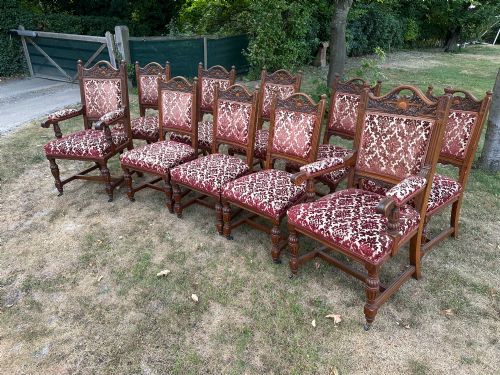
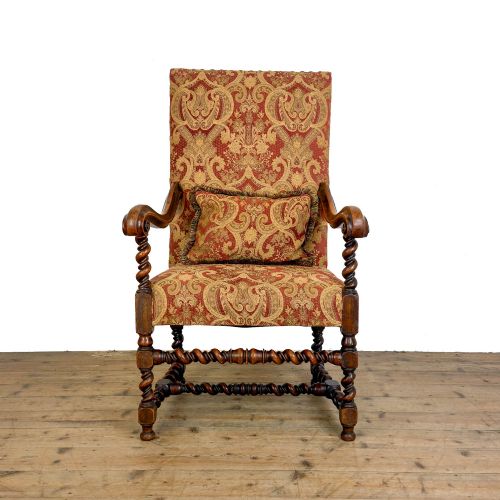
These red patterned armchairs combine traditional upholstery with striking crimson textiles, offering a comfortable and characterful seat for a traditional interior.
Red Patterned Armchair
A red patterned armchair covers a range of upholstered seating forms found across the nineteenth and twentieth centuries, including Victorian styles, Edwardian suites, and the occasional eighteenth-century wing chair. These pieces serve as practical seating while introducing rich crimson textiles and patterned upholstery to a room.
The selections on this page encompass various seating types such as open armchairs, folding campaign chairs, and barrel backs. These forms reflect the diverse domestic requirements of their periods, from formal dining sets to comfortable fireside seating.
Originating primarily from British workshops and country houses, these armchairs demonstrate the enduring appeal of patterned fabric combined with traditional wooden frames. Buyers seeking this style will encounter varied proportions and textiles rooted in Victorian and Edwardian design.
How they were made
The structural frames of these armchairs are constructed from solid timbers including mahogany, oak, walnut, beechwood, and standard wood, often shaped with turned or carved details. Joinery techniques varied by period, supporting both rigid dining forms and robust lounging chairs.
Upholstery relies on traditional textiles such as damask fabric, velvet, needlework, and kilim upholstery applied over padded foundations. Additional detailing incorporates brass hardware and wooden framing elements to secure the fabric and enhance the structural integrity.
Some chairs fold up for easy campaign use, proving that Victorians loved portable comfort.
What varies in quality
Quality in these armchairs rests upon the integrity of the wooden frame and the precision of the joinery, distinguishing sturdy period construction from lesser builds. Finer examples display carefully carved details such as barley twists or shaped backs that remain tight and stable.
The standard of the upholstery work and the choice of textile material significantly influence the overall character of the piece. Superior examples utilise durable damask, velvet, or kilim fabrics applied with attention to pattern alignment and edge finish.
Gillows·Howard and Sons
The Red Patterned Armchair Glossary
- Armchair
- A comfortable seat with supports for the arms, designed for domestic relaxation. These forms range from open frames to deeply padded lounge seats.
- Damask fabric
- A reversible figured textile traditionally woven on a jacquard loom, featuring intricate patterns created through the contrast of warp and weft threads.
- Barley twist
- A decorative turning technique resembling a twisted rope, commonly found on the wooden legs and supports of nineteenth-century furniture.
- Wing chair
- An armchair with high sides and side panels designed to shield the occupant from drafts, originating in the seventeenth century and persisting through later periods.
- Kilim upholstery
- A flatwoven textile used to cover furniture, bringing traditional geometric patterns and hard-wearing wool construction to nineteenth-century seating.
Red Patterned Armchair: Frequently Asked Questions
What periods do these armchairs come from?
The listings span several centuries, including eighteenth-century wing chairs, nineteenth-century Victorian designs, and early twentieth-century Edwardian pieces. Each era brings distinct proportions and framing techniques to the armchair form.
Buyers will find that Victorian and Edwardian examples predominate, reflecting the domestic output of those periods.
What materials are used in the frames?
Frames are constructed from a variety of traditional hardwoods including mahogany, oak, walnut, beechwood, and general timber. These woods provide the structural support necessary for upholstered seating.
Some pieces also incorporate brass elements to accent the woodwork and secure structural components.
How do I identify a Victorian armchair?
Victorian pieces often feature characteristic elements such as turned wooden supports, barley twist legs, or specific revival styles like Victorian Gothic. Upholstery choices from this era frequently include damask, velvet, or kilim.
Proportions tend to be generous, designed for comfort and domestic utility in nineteenth-century homes.
What kind of upholstery should I expect?
Upholstery materials vary from rich velvet and damask fabric to textured needlework and flatwoven kilim. These textiles provide the patterned finish that defines the appearance of the armchair.
Underneath the fabric, traditional padding supports the intended shape and seating comfort of the chair.